
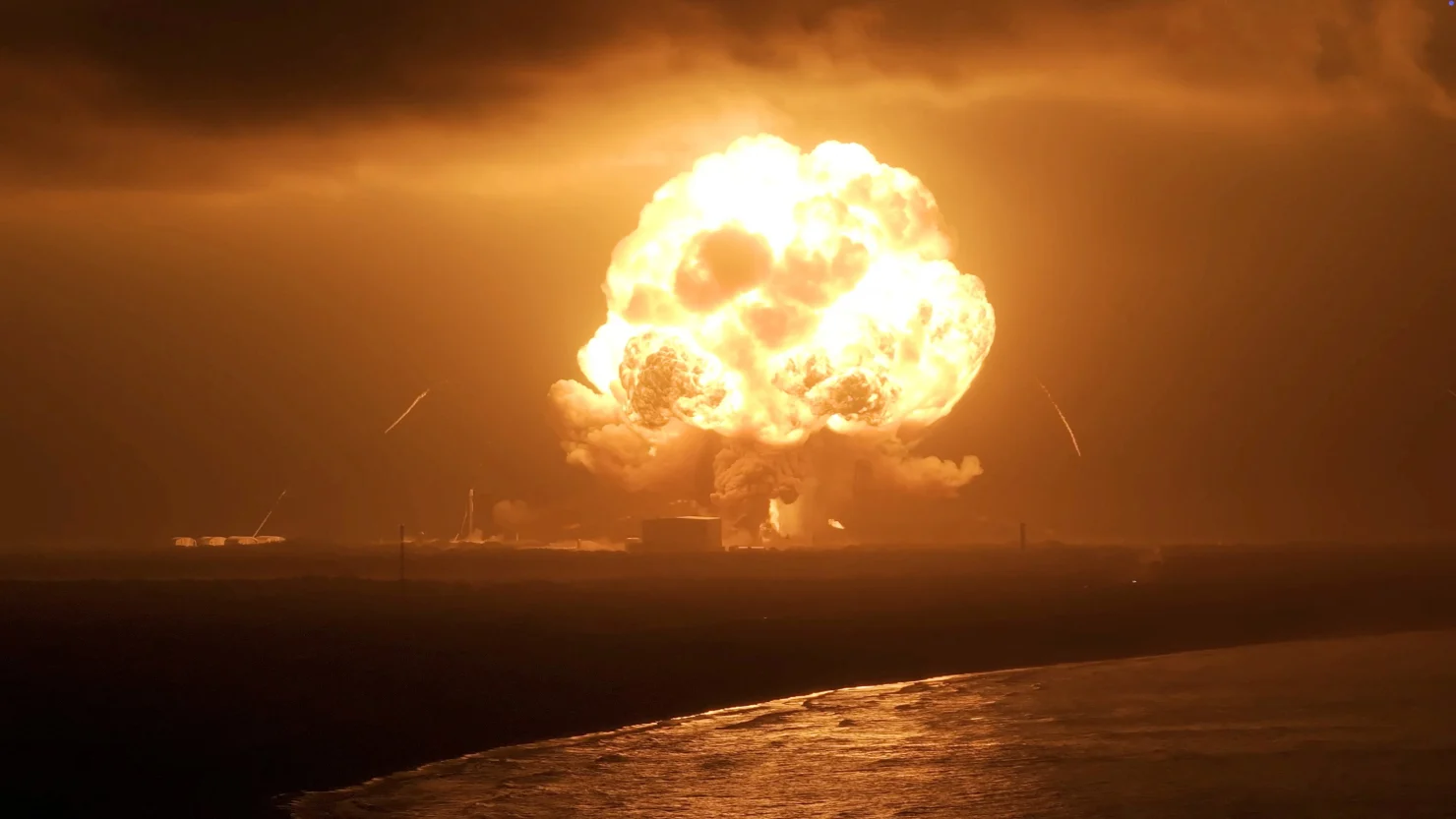
Blue Origin’s New Glenn rocket erupted into a fireball at approximately 9 p.m. Eastern Time on Thursday, May 28, during what was supposed to be a routine hot-fire engine test at Launch Complex 36 in Cape Canaveral, Florida. The vehicle was fully fuelled and bolted to the launch tower when the explosion destroyed the rocket and severely damaged the only operational East Coast launchpad the company currently runs. No injuries occurred – the site had been evacuated before the test, as required procedure. What follows now, according to NASA Administrator Jared Isaacman speaking Monday at the CNBC CEO Council Summit, is a recovery that will “take some serious time.” A 2028 timeframe for launchpad restoration, he said, sits “within the realm” of possibility. YourNewsClub flags that two-year estimate as the most consequential number to emerge from the accident so far – it runs directly into the timeline of the Artemis contracts Blue Origin holds with NASA.
Blue Origin CEO Dave Limp offered a different outlook on X on Saturday: “We will fly again before the end of this year. Gradatim Ferociter.” Both positions cannot simultaneously hold unless Limp means New Glenn flies from an alternate facility before the Cape pad is rebuilt. That alternate-site option exists but is not immediately available. Blue Origin recently negotiated a lease for Space Launch Complex 14 at Vandenberg Space Force Base in California. Industry estimates put that facility’s preparation timeline at approximately two years from lease signing – arriving operational in roughly the same window as the Cape pad restoration estimate, not earlier. Amazon was depending on New Glenn’s fourth mission to carry 48 Project Kuiper broadband satellites to orbit in preparation for commercial internet service later this year. That launch is now indefinitely postponed. The Vandenberg timeline means there is no near-term alternative launchpad that bridges the gap.
NASA holds several contracts with Blue Origin under the Artemis programme, including lunar lander development and the Moon Base I mission scheduled for autumn 2026. Isaacman joined Bezos and Limp on Friday in a tour of the damaged Launch Complex 36 and met with company employees. YourNewsClub reads that site visit as NASA signalling continued commitment to Blue Origin as a commercial launch partner rather than an agency quietly reassigning contracts. Isaacman said the agency is “getting organised” around the recovery and committed to providing subject matter expertise and root-cause analysis support.
Jessica Larn, who studies macro-level technology policy and the infrastructure impact of emerging technology systems, places the accident in commercial context: “A two-year pad outage does not simply reschedule Blue Origin’s missions – it forces NASA to restructure sequencing across the entire commercial launch architecture, determining which providers absorb which mission timelines and on what budget. That replanning process takes months regardless of what Blue Origin’s pad timeline ultimately proves to be.”
The SpaceX 2016 parallel is instructive and uncomfortable in equal measure. A Falcon 9 exploded on Pad 40 at Cape Canaveral during a pre-launch hot-fire test in September 2016, destroying the rocket and an Israeli communications satellite and severely damaging that pad. SpaceX restored its launch cadence within months by activating Pad 39A at the Kennedy Space Center and drawing on an established rapid-response culture across multiple vehicles. Blue Origin enters this incident with one operational Cape pad, a Vandenberg site two years from readiness, and New Glenn’s fourth flight still pending. Jeff Bezos himself posted on X that Blue Origin would rebuild “whatever needs rebuilding.” The pace of the investigation, the root-cause findings, and the credibility of Limp’s year-end flight claim will determine whether the aerospace desk at Your News Club assesses this as a six-month disruption or a structural 24-month gap in Blue Origin’s commercial launch capacity.
Three things to watch: the pace of the FAA investigation, the content of Blue Origin’s root-cause report, and whether NASA formally adjusts its Artemis mission schedule before that report arrives. YourNewsClub will also track Amazon’s Project Kuiper satellite launch timeline separately, since any Kuiper delay has direct broadband service revenue consequences for Amazon that are independent of NASA’s programme priorities.