
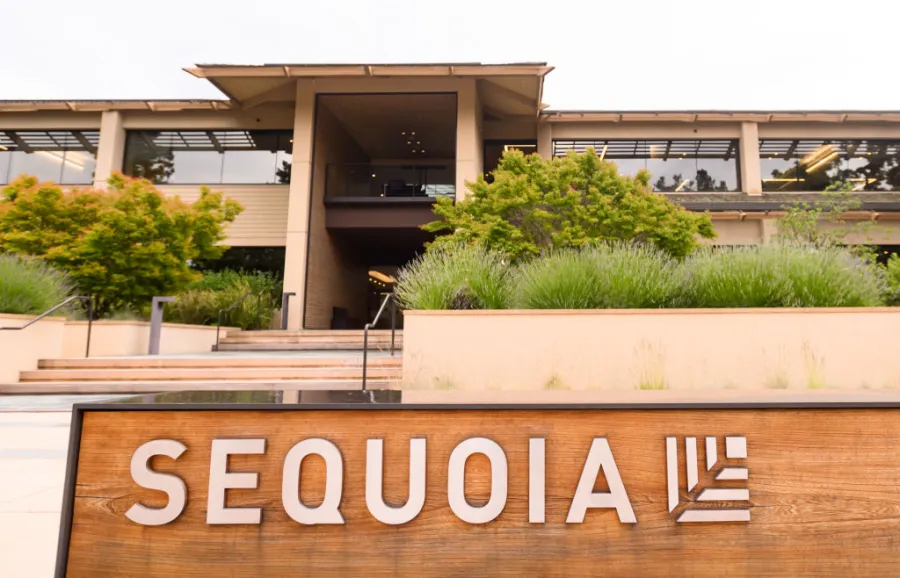
Brendan Foody, co-founder of the AI talent platform Mercor – last valued at $10 billion – published a post on X accusing Sequoia Capital of running what he called a “dual-pricing” scheme in venture rounds. The mechanism: Sequoia invests in two tranches within the same round, committing the bulk of its capital at a lower valuation and a smaller portion at a significantly higher price. The higher, headline-grabbing figure gets announced publicly. The actual average entry price for Sequoia remains considerably lower, and neither founders nor lead investors typically disclose the blended economics. “In the last 6 months I’ve seen a half dozen rounds where Sequoia invests in 2 tranches,” Foody wrote. “Everyone pretends they only did the higher valuation. Founders misrepresent this to their employees and then shop it to angels too.” YourNewsClub ranks this disclosure as the most direct public naming of a specific valuation structuring practice by a sitting founder in recent years.
The mechanics produce a specific distortion. When a startup announces a round at a $1 billion valuation and Sequoia is listed as the lead investor, employees whose equity was granted at a certain strike price make decisions about staying or leaving based on that headline. Angel investors evaluating whether to participate in the same round price off that number. If Sequoia’s actual average entry was half the announced figure – as Foody implied – the headline valuation manufactures a market position that neither the company’s fundamentals nor its lead investor’s actual commitment support. Foody cited the startup Serval, which announced a $1 billion valuation, as a case where Sequoia’s entry point was closer to $400 million according to subsequent reporting. Similar dynamics appear to have applied to Aaru, where Redpoint invested at $450 million despite a $1 billion headline.
Sequoia partner Shaun Maguire responded directly on X, contesting the framing. “This has happened approximately five times during my seven years at Sequoia,” Maguire wrote. He explained the dynamic as a market response rather than a deceptive practice: when other investors are willing to pay dramatically higher prices for hot AI companies than Sequoia considers warranted, Sequoia structures its participation in two tranches to maintain the company relationship while avoiding the highest price tier. “I’m not aware of anything shady here,” Maguire continued. “VC is a repeated game, so it just doesn’t make sense for us to try to mislead people.” He invited anyone with specific examples to share them privately.
The dispute exposes a real structural asymmetry. Angel investors and employees do not access cap tables the way institutional investors do, and they typically lack the legal or market expertise to identify split-tranche structures in documents that may not clearly disclose them. Maguire’s defence – that sophisticated parties can investigate and find the information – is technically accurate and practically incomplete for the majority of people whose financial decisions depend on understanding a round’s actual economics. YourNewsClub puts the question of founder disclosure obligations to employees directly at the centre of this debate: whether the practice is technically legal is a narrower question than whether it serves the people most dependent on accurate valuation information.
The timing of Foody’s post is not incidental. A week in which SpaceX prices its IPO at $135 per share and three major AI companies file for public listings is a week when valuation credibility sits at maximum public scrutiny. Dual-pricing practices that operated quietly in private markets become more consequential when the companies subject to them approach public listing and the gap between headline and actual economics could affect how public investors price the offering.
YourNewsClub rates the Foody-Maguire exchange as a structurally important disclosure moment rather than a routine founder-VC dispute: it names a specific mechanic, names a specific firm, and surfaces publicly at the same moment several dual-valuation companies are approaching IPO.
Whether regulators or institutional investors act on the information will determine whether this week’s post on X is a footnote or a catalyst. Your News Club assesses the most likely near-term outcome as further anecdotal disclosure from other founders, rather than regulatory action, but expects the IPO registration statements for AI companies affected by similar structures to receive unusually close scrutiny from public market investors.