
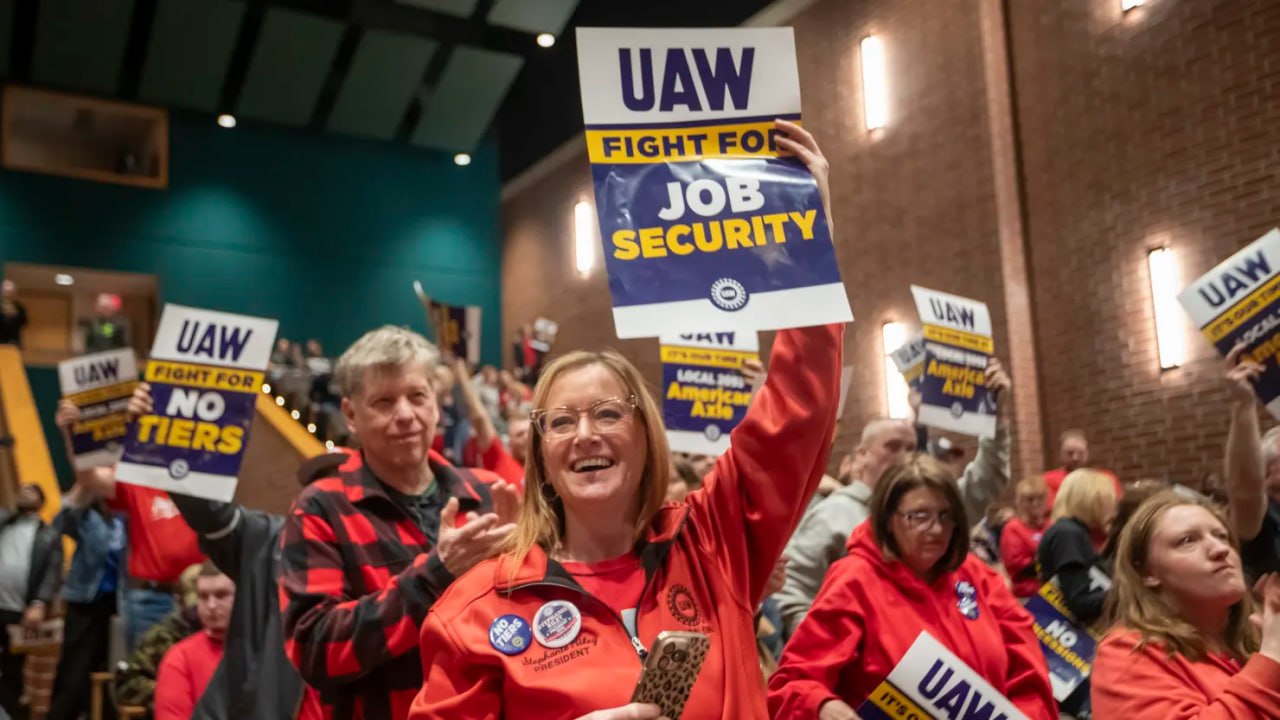
Nearly 1,000 workers at Dauch Corp.’s axle and components plant in Three Rivers, Michigan, walked off the job at 12:01 a.m. Monday after the United Auto Workers union and the company failed to reach a new contract before the May 31 deadline. UAW President Shawn Fain announced the walkout Sunday night: “We’ll stay out on strike until this company comes to its senses. American Axle, time is up. No contract, no axles.” YourNewsClub treats that slogan as more than rhetoric – it is an accurate engineering description of what this work stoppage does to General Motors’ truck production network.
The Three Rivers plant supplies axles for the Chevrolet Silverado and GMC Sierra full-size pickups, as well as the Chevrolet Colorado and GMC Canyon midsize trucks. Those four nameplates account for a disproportionate share of GM’s annual profit. The Flint, Michigan, assembly plant builds approximately 1,100 heavy-duty trucks per day and celebrated its 16-millionth vehicle in March 2026. GM had already planned to add a sixth day of weekly production at Flint in June to push Silverado and Sierra output higher. Competition arrived at an awkward moment too: Stellantis reported Ram truck sales up 23% in 2026 compared to a year earlier, according to Motor Intelligence data, applying GM margin pressure on a second front at the same time axle supply is in jeopardy.
GM carries roughly two weeks of axle inventory. That estimate came from Jon Krause, a 32-year Dauch employee and bargaining committee member for UAW Local 2093. The clock started Monday morning. A prolonged stoppage could push Flint into idle before the end of June, costing the automaker tens of millions of dollars per week in lost production revenue. The Oshawa, Ontario, truck assembly plant – which also assembles heavy-duty Silverados – draws from the same Three Rivers axle source. YourNewsClub counts two major GM assembly facilities simultaneously at risk once the current inventory buffer exhausts, and notes that neither location has an alternative axle supplier on a rapid-qualification timeline.
The wage dispute traces directly to 2008. Workers agreed to cut their hourly pay from as much as $29 down to $14.50 during the financial crisis to keep the plant operational when the company faced collapse. Current wages top out at $22 an hour after a five-year progression, the union said, and workers also seek improvements in healthcare benefits and retirement terms. Krause put the history plainly: “This local, when the company was sinking 18 years ago, kept them above water, and it’s time to return that favour.” Josh Jager, a 24-year employee and bargaining committee chairman, accused Dauch of stockpiling axles since January in anticipation of the dispute, a claim the company did not address in its public statement. A Dauch spokesman called the strike “disappointing” without providing a counter-wage figure. The full force of the UAW international union stands behind the strikers, Fain confirmed. YourNewsClub found no public signal from Dauch that it views the union’s wage recovery demand as negotiable in modified form.
Stack this against GM’s structural position: the automaker faces real production exposure without any seat at the negotiating table. Everything in the dispute sits between Dauch and the UAW, but the financial consequence lands on GM’s quarterly earnings. That asymmetry – Tier 1 supplier walkout with zero direct management leverage for the end-customer – is the dynamic the auto industry desk at Your News Club will track daily as the buffer drains. The first concrete test arrives mid-June, when Flint’s sixth production day was scheduled to start. The 98% strike authorisation vote among the affected workforce signals no appetite for a quick settlement. What comes next: any GM public statement on Flint production status, any Dauch wage counter-proposal, and whether the UAW expands pressure to related suppliers as additional leverage in the standoff.
A prolonged standoff here would be the first significant domestic auto supply chain disruption of 2026. Production stoppages at Flint would ripple quickly into dealership inventory and vehicle pricing, given how tight GM’s full-size truck stock already runs. YourNewsClub expects this dispute to draw congressional attention if GM formally announces production interruptions at Flint – the political optics of an American manufacturing shutdown ahead of a midterm-year jobs narrative make it a story Washington will struggle to ignore.