
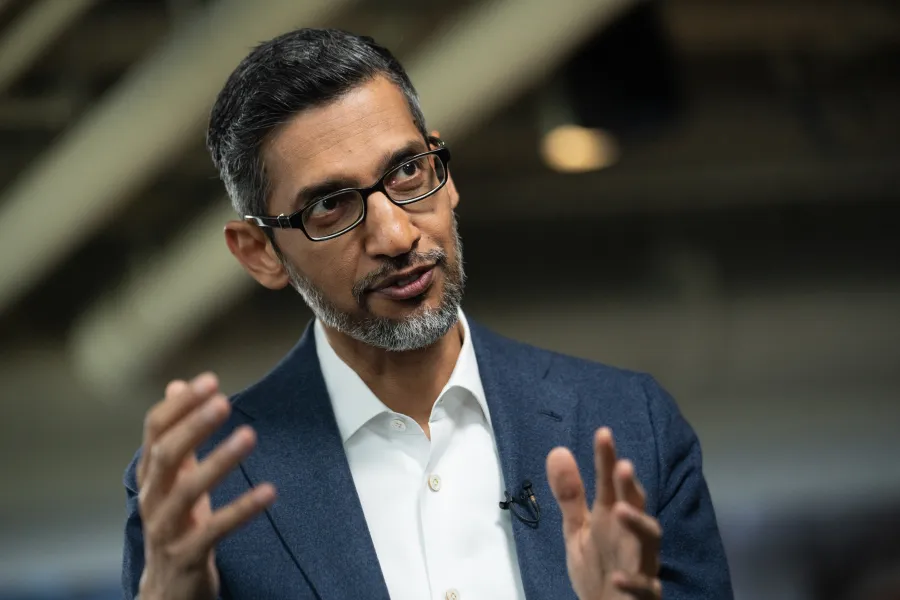
Alphabet Inc. announced Monday that it plans to raise $80 billion in equity capital to meet what it calls “unprecedented customer demand” for AI infrastructure and global compute capacity. The financing operates in three tranches: a $30 billion underwritten public offering split equally between mandatory convertible preferred stock and Class A and Class C common shares; a $40 billion at-the-market programme for common stock expected to begin in the third quarter of 2026; and a $10 billion private placement to Berkshire Hathaway, divided between Class A common at $351.81 per share and Class C capital stock at $348.20, adding to a Berkshire position built since Q3 2025. YourNewsClub reads the Berkshire participation as the signal that carries the most interpretive weight in the deal: institutional endorsement from the world’s most visible value investor for a technology capital expenditure cycle that looks nothing like any prior value-investing framework.
The spending trajectory that generated this raise warrants direct statement. Alphabet’s capital expenditures hit $52.5 billion in 2024, then $91.4 billion in 2025 – effectively doubling in one year. The 2026 guidance runs $180 billion to $190 billion, with 2027 projected to increase further. At the midpoint of that range, the $80 billion raise covers roughly five months of spending. First-quarter 2026 capital expenditures totalled $35.7 billion alone, the majority directed toward servers and data centres for AI workloads. Google Cloud revenue grew 63% year-on-year in Q1, and the division’s backlog nearly doubled quarter-on-quarter to over $460 billion. Developers using Google’s models now exceed 8.5 million monthly; first-party API token processing increased sixfold over the past year. YourNewsClub places the backlog figure – $460 billion and still accelerating – as the single data point that most directly justifies the infrastructure commitment rather than any quarterly revenue number.
Owen Radner, who models digital infrastructure as an energy-information transport system, separates the infrastructure bet from the model bet: “What Alphabet is buying with this raise is not model performance. It is capacity buffer against a supply constraint. The company says demand already exceeds available compute. You cannot solve a supply constraint with a software update – you build infrastructure. The logic is identical to a power utility adding generation capacity ahead of projected load growth.” The raise structure itself carries a nuance that the headline number obscures.
Approximately $30 billion of the ATM programme proceeds are committed to covering 2026 tax obligations tied to employee equity award vesting. Net new AI infrastructure capital is therefore closer to $50 billion. Still the largest single-year compute financing any public company has announced. Sundar Pichai described the first quarter as “off to a terrific start,” citing Search revenue up 19% with queries at an all-time high, 350 million paid subscriptions across Google services, and $174 billion in operating cash flow over the trailing twelve months. Alphabet said demand for AI solutions from enterprises and consumers is currently exceeding its available supply, and the equity raise is designed to close that gap while preserving balance-sheet flexibility. YourNewsClub notes that Alphabet carries debt exceeding $100 billion alongside that operating cash flow, making the equity choice – rather than further debt issuance – a deliberate signal about duration and leverage tolerance.
Alex Reinhardt, who tracks financial systems and liquidity control through digital protocols, reads the financing instrument: “Choosing equity over debt when the company generates $174 billion in annual operating cash flow signals management wants maximum balance-sheet room for a sustained, multi-year CapEx ramp – not a single-cycle deployment. That is structurally different from a bridge raise.” The capital markets desk at YourNewsClub will monitor the ATM programme drawdown pace across 2026 and 2027 as the most granular real-time indicator of whether AI demand continues to outrun Alphabet’s available compute supply.
The first substantive disclosure on drawdown pace should arrive at Alphabet’s Q2 2026 earnings call in late July, which will carry the first full-quarter CapEx number under the new structure. Your News Club expects that call to either validate or challenge Pichai’s supply-constraint framing – if Cloud backlog keeps compounding while capacity additions trail the spending curve, the thesis holds.