
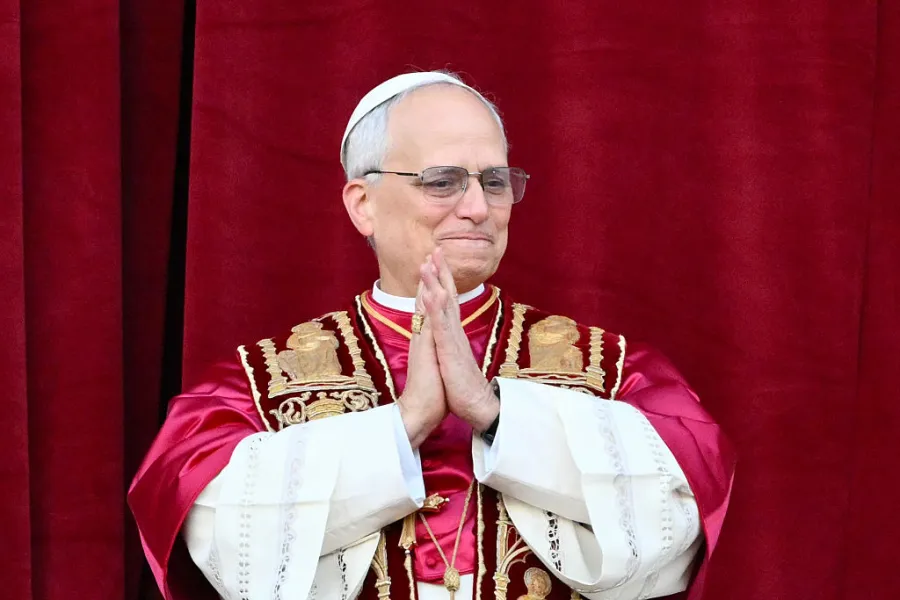
Pope Leo XIV published his first encyclical on Monday, May 25, titled Magnifica Humanitas, “on safeguarding the human person in the time of artificial intelligence.” The 200-page document was presented alongside Anthropic co-founder Chris Olah. YourNewsClub covers the publication as something more consequential than a papal opinion on tech: it is a formal document in the same genre as Leo XIII’s 1891 Rerum Novarum, which shaped labour law and social welfare policy for the following century. The question is whether this one reaches that institutional weight.
The encyclical’s surface subject is AI. Its actual subject is older. Leo XIV argues that concentrated power, erosion of democratic oversight, and a tech elite shaping information to its own advantage all predate AI by decades. He writes that technology built and governed by a small elite “cannot, by definition, serve the common good.” AI is a lens that makes visible a structure of power that existed before any current model was trained.
The most concrete policy call is a demand to end what Leo XIV calls the AI arms race for “ever more powerful algorithms and larger datasets.” He writes: “To disarm means discrediting the assumption that technical power automatically confers the right to govern.” YourNewsClub locates that line as the document’s sharpest edge – a direct challenge to the framing that technological leadership is a legitimate source of governing authority, which is precisely the framing both Washington and Beijing use to justify their AI strategies.
Maya Renn, who examines ethics of computation and access to power through technology, reads the encyclical as an institutional expression of the ethical critique she applies analytically: “Leo XIV says what many researchers in this space have been saying for years, but in a different register. The document is not primarily a technology analysis. It is a power analysis using technology as the current example. The Church has been doing this since the industrial revolution. Whether the tech sector hears it as a power critique or processes it as a religion story determines whether anything changes.”
The document appeared days after President Trump delayed signing an executive order that would have required government oversight of new AI models before release, reportedly on the urging of former White House AI czar David Sacks. His call for AI guided by “clear criteria and effective oversight” grounded in community participation directly addressed the regulatory vacuum the delayed order left open. YourNewsClub sees in the timing a deliberate choice to publish when the oversight question was most visibly unresolved.
Notre Dame Law School professor Paolo Carozza, chair of the Meta Oversight Board, said AI-driven misinformation had “corroded our capacity to recognize what’s true and what’s not true.” The tech industry’s practice of “harvesting and manipulating” human data, he added, poses “fundamental challenges to cognitive freedom.”
The historical reference Leo XIV chose was his predecessor’s. Rerum Novarum, issued by Leo XIII in 1891, addressed concentrated industrial capital and argued for workers’ rights before any legal framework existed to protect them. It helped lay the intellectual groundwork for labour protections governments enacted over the following fifty years. Leo XIV’s encyclical invokes that lineage explicitly, implying a similar ambition: to name a structural problem before the legal frameworks that address it exist. YourNewsClub considers that comparison the most ambitious claim in the document – and the most testable over a fifty-year horizon.
Jessica Larn, who covers macro-level technology policy, reads the encyclical’s institutional significance clearly: “A papal encyclical is not a policy document. It is a moral framework that informs what legislation looks acceptable when governments eventually write it. Rerum Novarum didn’t produce labour law directly – it shifted what was considered morally acceptable to demand. Magnifica Humanitas is trying to perform the same function for AI governance.”
The encyclical arrived alongside the wider AI governance conversation of the same week: Altman’s Sydney remarks on job displacement, Spain’s ban on prediction markets, ClickUp’s layoffs framed as AI transformation. Each story describes the same underlying contest – who governs powerful technology, by what authority, and at what point oversight arrives. Leo XIV’s answer is that governance must precede deployment, not follow it. Your News Club assesses that as the one position in the current debate structurally incompatible with the tech industry’s existing timeline.