
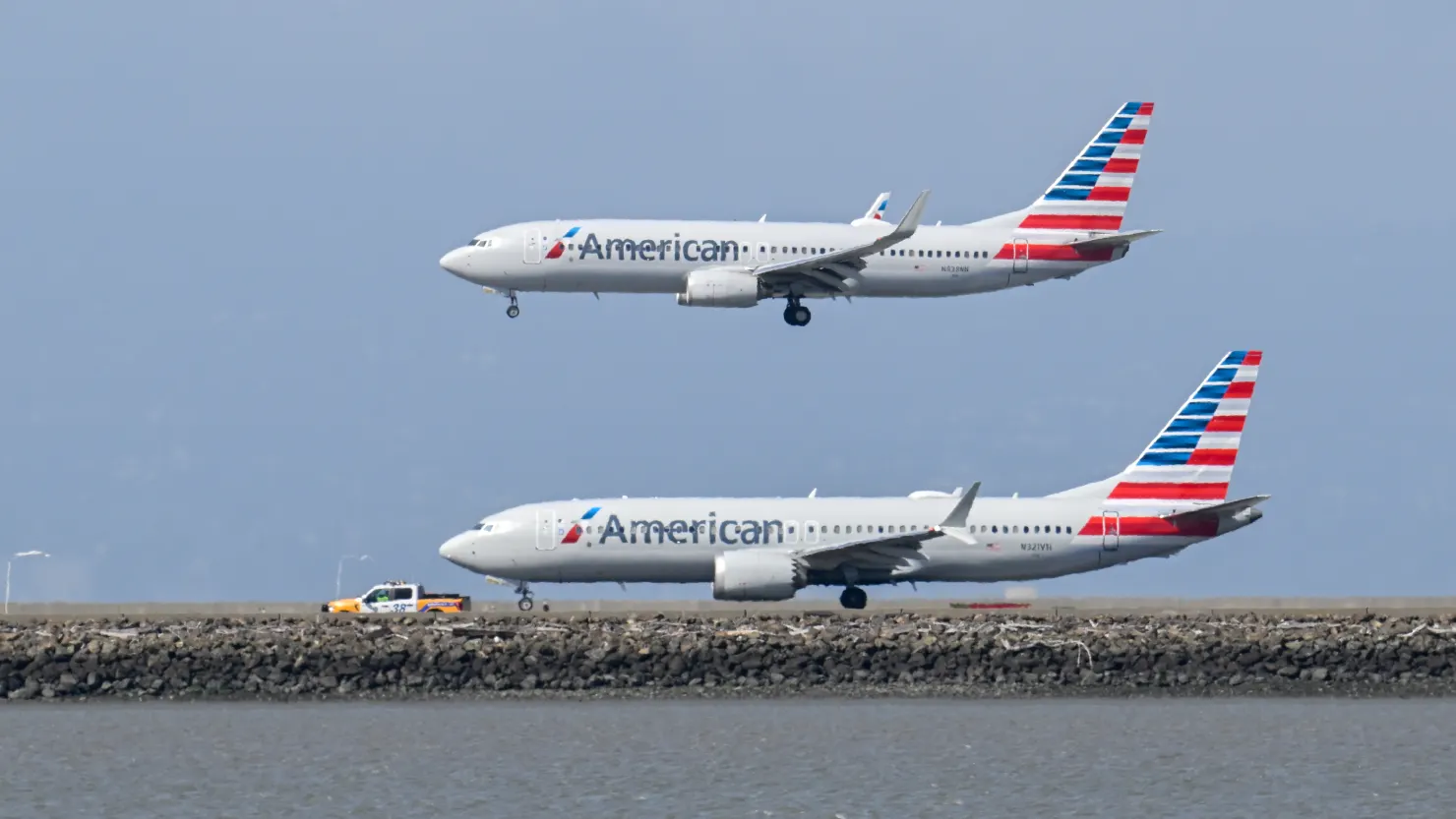
American Airlines announced on Tuesday, May 26, that it plans to install Starlink on more than 500 narrow-body Airbus aircraft from Q1 2027. YourNewsClub picks up the announcement as the most commercially significant inflight connectivity deal of the year so far – not for what it does to American’s passenger experience, but for what it means to SpaceX’s IPO story, which is now inseparable from Starlink. The contract covers domestic and short-haul international routes, with new A321XLR and A321neo deliveries in scope.
American was still weighing Starlink against Amazon Leo as recently as March. The decision landed for Starlink. Chief Customer Officer Heather Garboden said the technology would deliver “at-home level” connectivity for streaming, gaming, and video calls. The wide-body Boeing fleet stays on Viasat and Panasonic; the upgrade targets roughly half the main fleet.
The competitive split is now clearly drawn. United, Southwest, Alaska, and now American have selected Starlink. Delta and JetBlue went with Amazon Leo; Delta’s upgrade targets hundreds of jets from 2028. British Airways flew its first Starlink-equipped flight in March 2026, and IAG is deploying Starlink across Aer Lingus, Iberia, and Vueling. The constellation race is effectively over in commercial aviation. Over 10,000 Starlink satellites in orbit support the service.
Owen Radner, who studies digital infrastructure as energy-information transport systems, draws a product-versus-infrastructure distinction: “Once you have the satellite density and ground-station coverage to provide consistent speeds at altitude, the product layer becomes a commodity. Airlines choose Starlink because it is the only low-Earth-orbit network that delivers consistent throughput over a full flight path at commercial scale. That is an infrastructure moat, not a product advantage.” YourNewsClub reads that framing as the explanation for why Starlink keeps winning contracts despite competition from Amazon and legacy providers.
SpaceX’s connectivity unit posted revenue of $11.39 billion in 2025, making up 61% of total company sales. Starlink is the only SpaceX business unit that generates meaningful revenue. SpaceX is preparing for an IPO as early as next month, with a reported valuation target of $2 trillion and a fundraising goal of at least $60 billion. Every airline contract signed before that roadshow closes strengthens the commercial case that Starlink is a durable, recurring revenue business with defensible market position. American’s fleet is the third-largest in the US by passengers carried.
Freddy Camacho, who examines the political economy of computation and materials as dominance assets, reads the inflight connectivity race as a capital-positioning contest disguised as a passenger amenity: “Starlink’s aviation contracts are not about Wi-Fi. They are about securing the recurring revenue base that justifies a multi-trillion-dollar IPO. Each airline deal proves a stable, long-term licensing relationship. The infrastructure gets installed into the hull – it doesn’t churn. That is the sticky, contractual revenue institutional investors want to see before committing to a $2 trillion number.” YourNewsClub puts the American Airlines deal into that IPO context as the primary frame for assessing its significance.
The January 2026 rollout of free Wi-Fi for AAdvantage members, sponsored by AT&T, gave American a temporary loyalty advantage. The Starlink upgrade builds that into hardware. The open question – which Garboden did not address in the announcement – is whether American will maintain the free-access model once Starlink speeds make the service genuinely premium. Southwest and United kept free access for loyalty members when they rolled out Starlink. Delta has not committed to a pricing model for its 2028 Leo rollout.
Three things to watch: whether American confirms the free AAdvantage Wi-Fi model survives the Starlink upgrade in Q1 2027; whether the Boeing wide-body fleet eventually migrates to Starlink; and how the airline connectivity install base appears in SpaceX’s IPO prospectus as a recurring revenue argument. YourNewsClub tracks the airline connectivity market as a proxy for Starlink’s wider commercial penetration, and the American deal moves that proxy materially.
The cleanest way to read Tuesday’s announcement: American was the last of the four major US carriers to commit to a satellite upgrade, and it chose the market leader. The industry has voted. Your News Club assesses the next test as pricing – whether American keeps the free AAdvantage Wi-Fi model once Starlink speeds make the service genuinely premium. That decision lands in Q1 2027.