
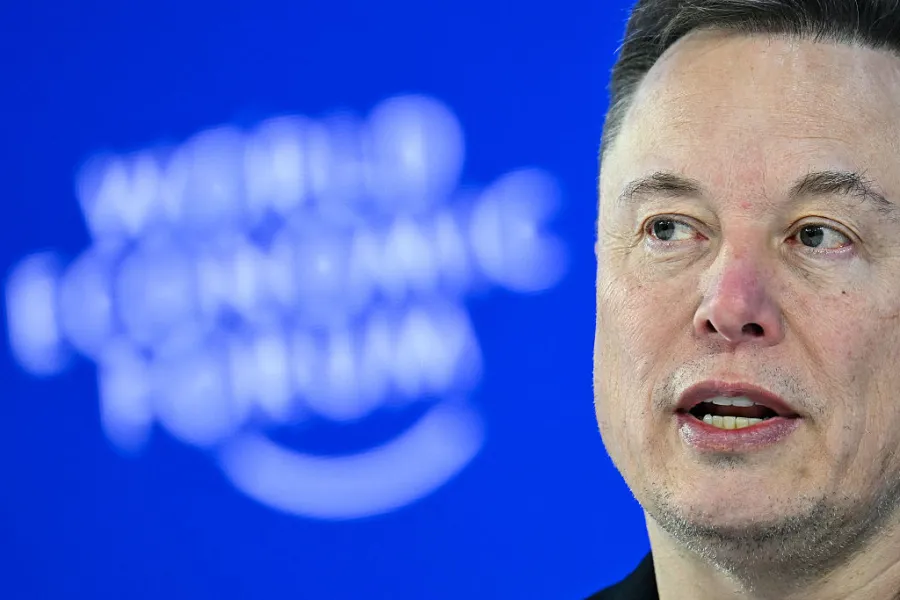
Elon Musk publicly reversed his stance on Anthropic this week, calling the company’s Mythos and Fable models the best currently available and pledging not to use SpaceX’s infrastructure to disadvantage the AI lab, even though the two companies compete directly. “I was clearly wrong about Anthropic,” Musk wrote on X on Thursday, referencing a September 2025 post in which he’d said “winning was never in the set of possible outcomes” for the company. YourNewsClub reads the reversal against its timing: Musk’s praise arrives months after Anthropic signed a deal to buy the entire output of xAI’s Colossus 1 data center near Memphis, an arrangement that makes Anthropic one of SpaceX’s largest customers even as it remains one of xAI’s most direct competitors in frontier AI models.
The comments were prompted by users on X suggesting Musk could simply cut Anthropic’s compute access as a way to hobble a rival, given that SpaceX now hosts a meaningful share of the infrastructure Anthropic’s model training depends on. Musk rejected the idea directly: “I would never cut them off in a way that hurt them badly, even as a competitor. That’s not my style.” He pointed to Tesla’s 2014 decision not to enforce its patents against good-faith users of its technology, and to Tesla’s open Supercharger network, as evidence of a broader pattern of not weaponizing infrastructure access against competitors. YourNewsClub flags the gap between that stated philosophy and Musk’s own public track record with competitors, including a lawsuit against OpenAI and a history of altering platform terms with little notice, as the reason the pledge reads as reassurance rather than settled fact.
Anthropic’s arrangement with SpaceX is reportedly structured as a three-year contract worth close to $40 billion in total payments, which gives the company contractual protection against an abrupt cutoff regardless of what Musk says publicly on any given day. Still, the dependency runs deeper than the payment terms alone: hosting a competitor’s compute gives SpaceX’s engineers a level of technical visibility into how Anthropic operates that few other counterparties would have access to, a dynamic Musk’s own past comments about AI “distilling” – the practice of one company probing a rival’s model to learn how it was built – make more pointed than it might otherwise be.
Owen Radner, who models digital infrastructure as energy-information transport systems, unpacks the structural bind: “Frontier AI has reached a point where only a handful of entities can build compute at the scale training now requires, which means competitors increasingly have to rent capacity from each other whether they’d prefer to or not. That’s a fundamentally different competitive dynamic than software companies have historically faced, where you could build a rival product without ever depending on your competitor’s physical infrastructure to do it.” Alex Reinhardt, who tracks financial systems and settlement infrastructure through digital protocols, places the payment-as-leverage angle: “A $40 billion, three-year contract is exactly the kind of commitment that makes a public promise mostly redundant – the contract terms, not Musk’s stated character, are what actually govern what happens if the relationship sours. But the public reassurance still matters for anyone evaluating Anthropic’s business risk, since it signals Musk sees more value in the revenue than in disrupting a competitor.” YourNewsClub weighs Musk’s own framing of xAI as “a much younger company” against the current balance of power as the more revealing admission in his comments than the praise itself: it’s an acknowledgment, from a competitor with every incentive to talk up his own position, that the compute relationship currently runs in Anthropic’s favor rather than his.
Your News Club calls the durability of this arrangement, more than Musk’s public statements about it, the thing actually worth tracking as the three-year contract progresses: infrastructure dependencies of this size tend to get tested exactly when competitive pressure is highest, which is also when public assurances like this one are hardest to keep.