
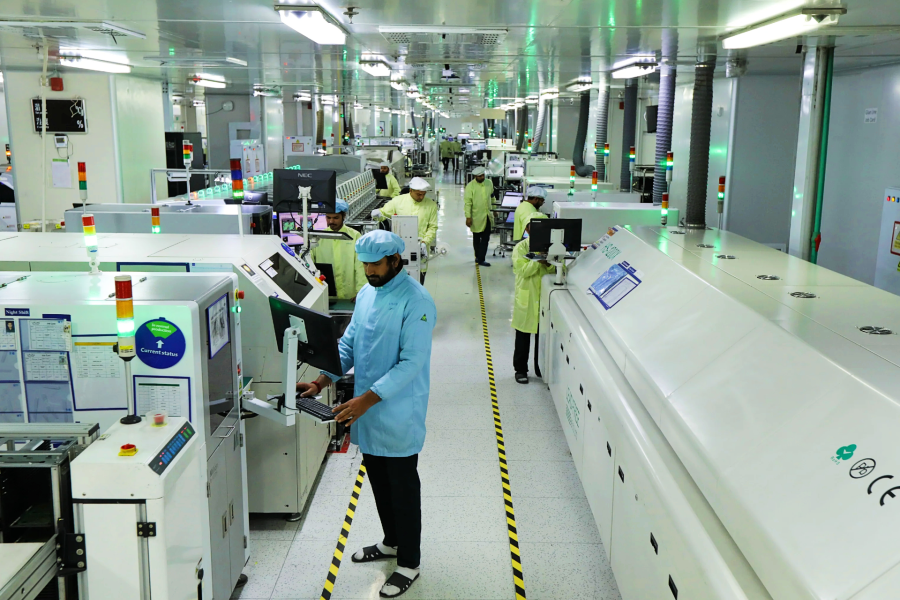
India approved a manufacturing joint venture between Vivo and Indian electronics manufacturer Dixon Technologies on Thursday, structured as a 51/49 split with Dixon holding the majority stake – a long-delayed deal first announced in December 2024 that had to clear investment rules requiring extra government scrutiny of capital from countries sharing a land border with India, a category that includes China. The new venture will acquire manufacturing assets from Vivo, produce part of the company’s smartphone orders inside India, and can also manufacture electronic products for other brands. YourNewsClub frames the ownership split as the actual story here, more than the manufacturing deal itself: Vivo is currently the top smartphone brand in India by shipment share, and it just agreed to hand majority control of its own India manufacturing to a domestic partner to keep operating there.
The approval marks what analysts describe as a potential template for how other Chinese smartphone brands operate in India going forward. Vivo, Oppo, and Xiaomi have all faced tax and regulatory investigations in India in recent years, and ceding majority ownership to an Indian partner is emerging as the more sustainable path to staying in the market rather than continuing to operate as wholly Chinese-owned subsidiaries. Dixon, India’s largest electronics manufacturing services company, already makes phones for Xiaomi, and the new venture could add annualized manufacturing volume of roughly 20 to 22 million smartphones based on Vivo’s current sales. YourNewsClub spots the underlying trade Chinese brands are now making across the industry: give up equity control to gain political and regulatory stability, a trade that would have been unthinkable for a market-leading brand a few years ago.
The deal also highlights an imbalance in India’s smartphone story that Apple, notably, doesn’t share. Apple accounts for 57% of India’s smartphone exports by volume today, built almost entirely through its Taiwanese-descended contract manufacturers Foxconn and Tata. Chinese brands, meanwhile, dominate India’s domestic smartphone sales with 72% of the market but contribute less than 10% of exports – meaning they’ve captured Indian consumers at a scale Apple hasn’t, while exporting almost nothing from the country, a gap the Dixon-Vivo structure is explicitly designed to start closing.
Freddy Camacho, who studies the political economy of computation, materials, and energy as dominance assets, draws out the ownership-as-leverage angle: “India isn’t just asking for local manufacturing jobs here, it’s asking for local equity control as the price of continued market access for Chinese brands. That’s a meaningfully more aggressive industrial policy than simply requiring a factory on Indian soil, and it puts India in a stronger negotiating position over the technology transfer and profit distribution that comes with hosting manufacturing at this scale.” Jessica Larn, who studies macro-level technology policy and infrastructure impact of AI, places the export angle: “The real test of India’s manufacturing ambitions isn’t whether Chinese brands build phones domestically, since they already do that at enormous scale for the local market. It’s whether structures like this one actually convert into export volume the way Apple’s supply chain has, and that conversion depends on India’s manufacturing quality and cost structure being competitive well beyond just the domestic Chinese-brand relationship.” Your News Club credits the export-versus-domestic-sales gap as the number that will determine whether this joint venture becomes a genuine second wave of India’s manufacturing boom or simply a regulatory workaround that lets Vivo keep selling phones domestically under a new ownership structure: manufacturing volume alone doesn’t build the kind of export-facing supply chain India is actually trying to construct.
YourNewsClub ranks the reaction of Oppo and Xiaomi, both of which face the same regulatory pressure Vivo just resolved, as the next signal worth watching: if either follows with a similar majority-Indian-owned structure in the coming months, it confirms analysts’ read that this becomes the standard operating template for Chinese smartphone brands in India, rather than a one-off deal specific to Vivo’s circumstances.