
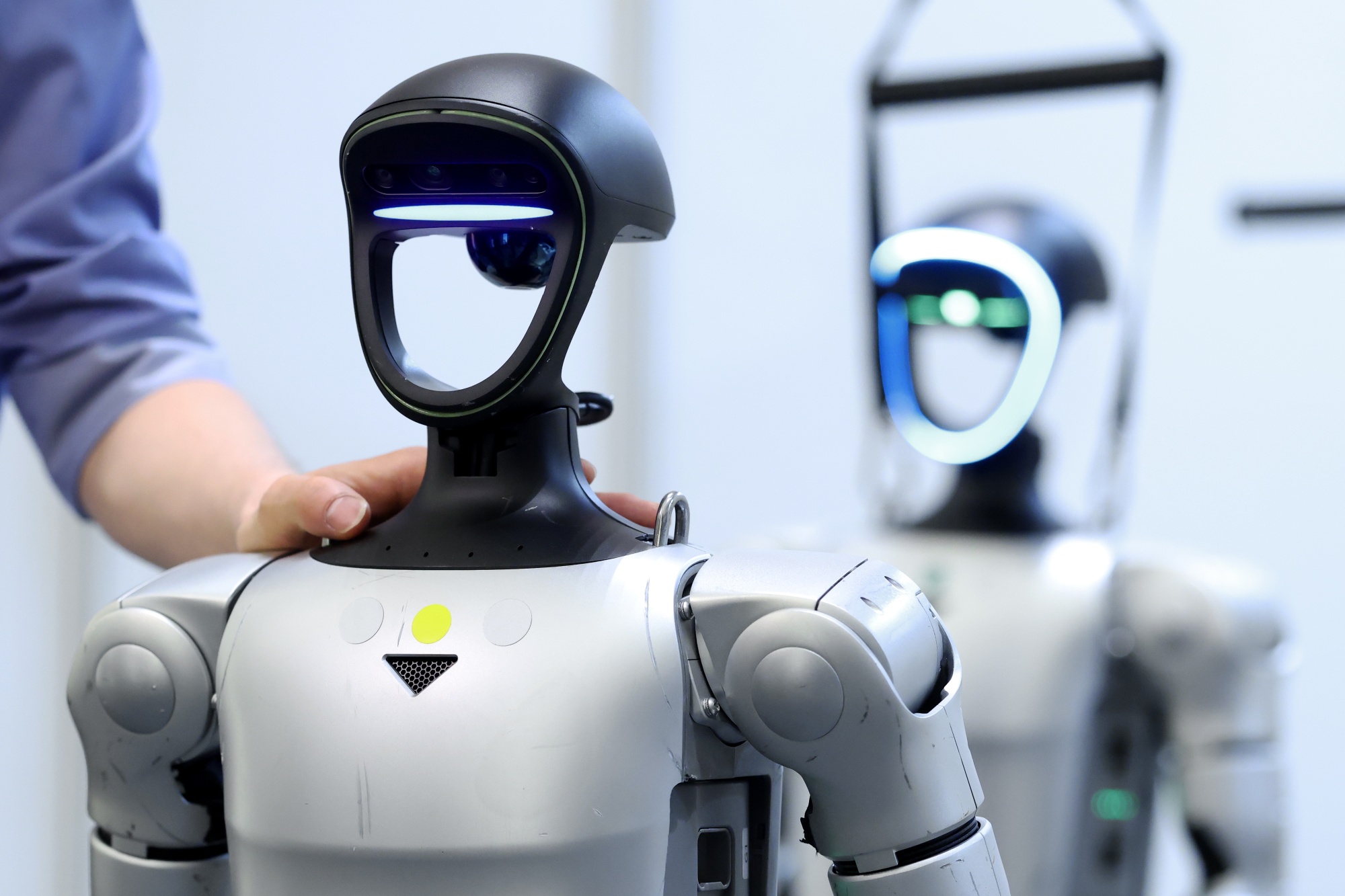
China’s robotics industry moved from demonstration to capital market this week. Unitree Robotics, the Hangzhou-based company whose humanoid robots practised martial arts in widely circulated footage and whose quadruped robots performed at Spring Festival broadcasts, received regulatory approval on June 1 for a listing on Shanghai’s STAR Market. The IPO prospectus targets a raise of approximately CNY 4.2 billion – around $608 million at current exchange rates – with proceeds allocated to R&D, new robot model development, and construction of a smart manufacturing facility. Founder and CEO Wang Xingxing controls roughly one third of the company through direct and indirect holdings. YourNewsClub places this approval as the opening signal in what Barclays analysts Zornitsa Todorova and colleagues described last month as “the decade of the robot” – a decade their research explicitly assigns to China.
The investor base behind Unitree reads as a cross-section of Asian industrial capital: Tencent, HongShan Capital, BYD, LG Electronics, Mirae Asset, and Hillhouse Investment all hold stakes. Unitree holds over 60% global market share in quadruped robots, according to Omdia data compiled through February 2026, and became the world’s leading humanoid robot seller in 2025. Its transition from niche robotics hardware to a central role in China’s physical-AI industrial strategy is reflected in a prospectus that reads as a manufacturing platform play rather than a startup pitch. Unitree is not the entire story, though. Hong Kong alone has at least 46 robotics-related companies in the IPO queue, accounting for more than 10% of all current exchange applicants; Leju Robotics and Deep Robotics have both filed applications. China’s robotics sector produced 50% of global industrial robots and 85% of humanoids deployed worldwide in 2025, according to Barclays data. YourNewsClub finds the 85% humanoid figure more revealing than the industrial robot share – it means China already dominates the segment that carries the largest long-term economic and strategic claims.
Valuations complicate the picture significantly. The sector trades at approximately 40 times forward earnings, against roughly 14 times for the CSI 300 Index. Shen Meng, a director at Beijing-based Chanson & Co., said investors at such levels are typically pursuing short-term price gains rather than long-term fundamentals. The ChinaAMC CSI Robot ETF has recorded net outflows for most of 2026, sitting uncomfortably alongside the IPO enthusiasm. Tuesday’s secondary market told a different story: OneRobotics shares jumped up to 18% in Hong Kong and component maker Leader Harmonious Drive Systems gained up to 11% on the mainland, suggesting primary-market discipline and secondary-market momentum are not yet aligned. YourNewsClub will catalogue valuation comparables across the Hong Kong pipeline filings as each prospectus is submitted, building a real-time map of how the sector prices physical-AI exposure relative to software-layer peers.
Freddy Camacho, who studies the political economy of computation and materials as dominance assets, frames the structural stakes: “The IPO queue is not purely a fundraising mechanism. It is an attempt to lock in global equity ownership in the industrial layer of AI before that layer becomes as geopolitically contested as the model layer already is. If Beijing controls both the production story and the equity story, the strategic leverage runs deep and lasts.”
Three data points will tell the most: whether Unitree prices at the upper end of the expected HK$40 billion to HK$50 billion valuation range, how the first-week secondary trading holds, and whether the approval triggers accelerated Hong Kong filings from the 46-company pipeline. The Unitree debut sets the effective benchmark for the entire pipeline – every subsequent listing prices off that opening day. What comes next beyond the IPO calendar: whether institutional money flows that have been leaving robot-sector ETFs in 2026 re-engage when individual companies list, and whether global investors treat the Barclays “decade of the robot” thesis as an entry signal or as a valuation ceiling. The technology IPO desk at Your News Club will track Unitree’s first week of trading as the primary read on investor conviction behind China’s robotics capital market push.