
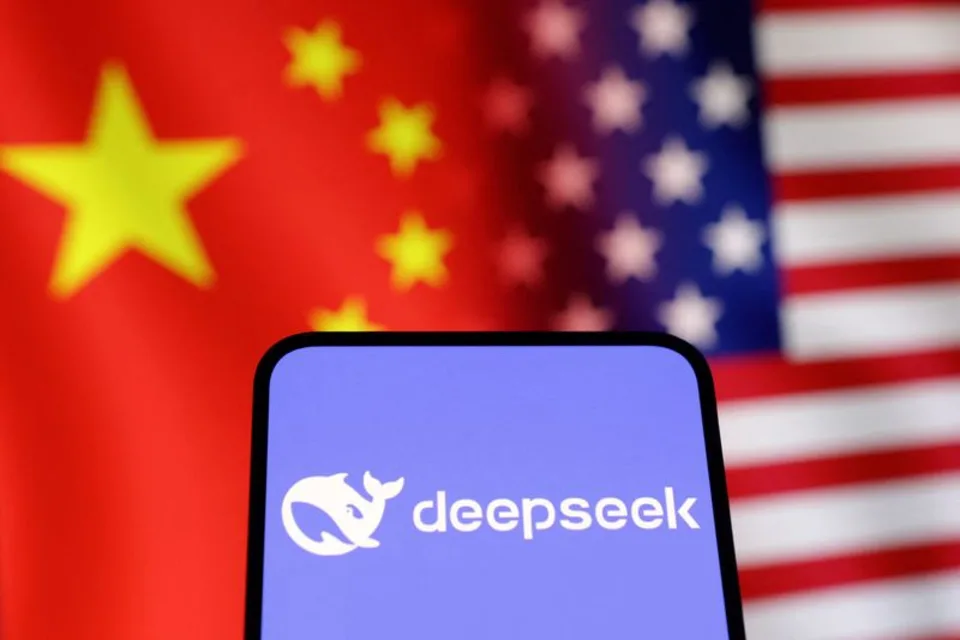
The Trump administration has held off publishing more than 100 Chinese companies on the Commerce Department’s Entity List despite those companies having cleared the interagency approval process last year. The companies include DeepSeek, the AI startup that disrupted US technology markets with its low-cost models in January 2025, and CXMT, China’s leading memory chipmaker. At least 75 are active in advanced semiconductors, equipment, or AI modelling. The interagency committee completed its approvals. Commerce has not published the designations. YourNewsClub puts the gap between interagency approval and publication at the most structurally unusual aspect of this story: the standard review mechanism produced its output, and the executive branch chose not to implement it.
The stated reason for the pause is a desire to avoid escalating tensions with Beijing. The Trump administration reached a trade framework with China in May 2026 and wants to preserve that diplomatic opening. The Entity List, however, is not a tariff instrument – it restricts US companies from supplying goods, software, and technology to designated firms without a licence that is likely to be denied. Adding DeepSeek to the list would prevent US cloud providers from serving its infrastructure needs and would restrict any US company from selling it components or software. Adding CXMT would constrain US semiconductor equipment companies from supplying the memory chipmaker. The Bureau of Industry and Security, which oversees the list, did not directly respond to questions about why updates have not been published since last year.
The backdrop is a documented national security concern. A senior State Department official stated last year that DeepSeek had supported China’s military and intelligence operations and had tried to use Southeast Asian shell companies to illegally access advanced US chips. That assessment came from the national security apparatus. The decision to withhold publication is being made by the political apparatus. Those are different calculations, and the divergence between them is what makes the delay significant.
Freddy Camacho, who studies the political economy of computation and materials as dominance assets, frames the structural tension: “The Entity List is supposed to be an enforcement mechanism, not a negotiating chip. When a company clears the review process and the publication is withheld for diplomatic reasons, the list loses its credibility as a rules-based system. Every future Entity List decision now carries the implicit caveat that it might not be implemented if the bilateral relationship is in a sensitive phase.” Alex Reinhardt, who tracks financial systems and settlement infrastructure through digital protocols, draws the capital allocation implication: “US companies that compete with DeepSeek or supply CXMT’s competitors are making investment decisions based on a regulatory environment that is being selectively enforced. A competitor that should be blacklisted but is not changes the market structure for everyone operating on the assumption that the rules apply uniformly.” YourNewsClub counts the pause as the longest gap in new Entity List publications in over a decade, and considers the DeepSeek and CXMT designations – both approved, neither published – as the two most commercially consequential pending decisions in US-China technology policy right now.
The competitive stakes are visible. CXMT competes with Samsung and SK Hynix for the HBM supply that Nvidia’s AI accelerators require. If CXMT is not on the Entity List, US semiconductor equipment companies can continue supplying it. DeepSeek’s continued access to US cloud infrastructure, despite cleared interagency approval for blacklisting, means US data centres are likely still running Chinese AI workloads against the wishes of the national security review process. Your News Club catalogues any Commerce Department Entity List publication as the most immediate indicator of whether the diplomatic pause is temporary or structural.
The longest gap in new Entity List publications in over a decade, combined with over 100 cleared-but-unpublished designations, already constitutes a structural outcome in practice. YourNewsClub frames the DeepSeek and CXMT decisions as the two most commercially consequential pending calls in US-China technology policy – not because publishing them would immediately harm either company, but because withholding them signals that the enforcement mechanism is available as a diplomatic concession, which changes every calculation US companies make about the reliability of the rules.