
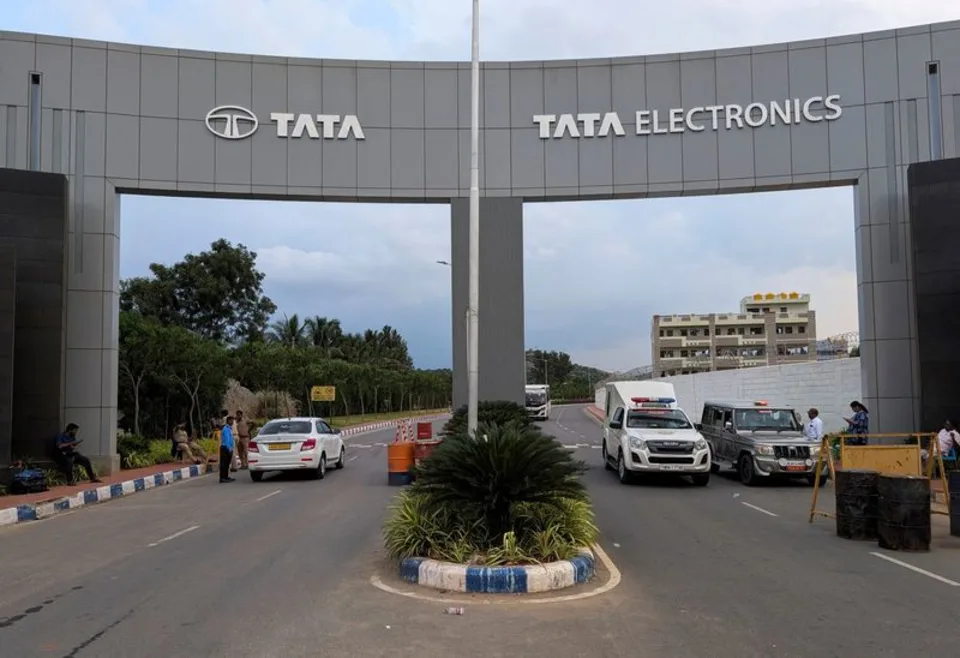
India’s Tamil Nadu Pollution Control Board issued a regulatory notice to Tata Electronics on May 25, 2026, alleging that wastewater discharged from its Hosur plant contaminated groundwater used by nearby farms and open wells. The notice, reviewed by Reuters reporters Munsif Vengattil and Aditya Kalra, warned that Tata could face a power cutoff and forced shutdown unless the company provided a satisfactory explanation. The probe followed five state inspections of the facility between December 2025 and May 2026, conducted after farmland owners near the plant complained for months to the pollution board. YourNewsClub treats the power-cutoff threat as the most operationally significant element of the notice – a forced shutdown at Hosur would directly interrupt a supply chain Apple is actively expanding to reduce its China dependence.
The Hosur plant in southern Tamil Nadu makes back panels and other components for iPhones. Tata Electronics is Apple’s second-largest supplier in South Asia, after Taiwan’s Foxconn. India is projected to produce 26% of global iPhones in 2026, up from 6% four years ago, according to Counterpoint Research. Apple assembled roughly 55 million iPhones in India in 2025, representing about a quarter of its global output. That scale makes Tata’s compliance posture in Hosur a supply chain risk, not just a corporate governance story.
Tata pushed back. The company told Reuters that an independent accredited laboratory had certified its wastewater meets applicable standards. The Tamil Nadu Pollution Control Board has not yet issued a final order. The factual dispute between Tata’s independent certification and the board’s inspection findings is precisely the kind of gap that invites regulatory escalation. YourNewsClub assesses the most likely near-term outcome as an extended regulatory process rather than an immediate shutdown, but notes that the very existence of a power-cutoff warning in a formal notice creates an Apple supply chain monitoring obligation.
The Hosur plant’s compliance history is uneven. A fire there in September 2024 briefly halted iPhone component production. A separate fire in September 2023 at former Apple supplier Pegatron’s Indian plant shut production for days. In 2024, a finding emerged that major Apple supplier Foxconn systematically excluded married women from iPhone assembly jobs at one of its plants in India. Each incident has so far proven containable. But the cumulative record describes a supply chain that is expanding rapidly – Apple sourced from India for supply chain diversification reasons, not because Indian manufacturing was the world’s most mature – into an environment where environmental, labour, and safety compliance infrastructure has not always kept pace with the growth targets Apple set for its suppliers.
Jessica Larn, who studies macro-level technology policy and infrastructure impact of AI and supply chain, places the regulatory risk in strategic context: “Apple’s India supply chain expansion is a direct response to tariff exposure and geopolitical risk concentration in China. A pattern of compliance failures across Indian suppliers changes that calculus. The question is whether Apple can scale Indian manufacturing while ensuring supplier compliance discipline that is not yet embedded by default.” Owen Radner, who models infrastructure as an energy-information transport system, frames the operational exposure: “A power cutoff is not just a production stop – it is a cold restart of machinery and systems that can take weeks to recover from at the component level. The pollution board has put Tata in the position where a wastewater dispute carries production-timeline consequences for Apple’s global iPhone schedule.” Your News Club will monitor the Tamil Nadu Pollution Control Board’s response to Tata’s submission and any subsequent formal enforcement action as the near-term indicators of how seriously the Indian regulatory environment will test Apple’s supply chain assumption that India is a lower-friction manufacturing alternative to China.
What comes next: Tata’s formal response to the board; any updated state laboratory testing; and Apple’s supplier communication on whether Hosur remains in its primary component supply chain for the next iPhone generation. YourNewsClub places the last item at the top of the watchlist – Apple’s procurement decisions about Tata’s role in future product cycles will be the most commercially consequential signal of how much risk the company assigns to the current compliance dispute.