
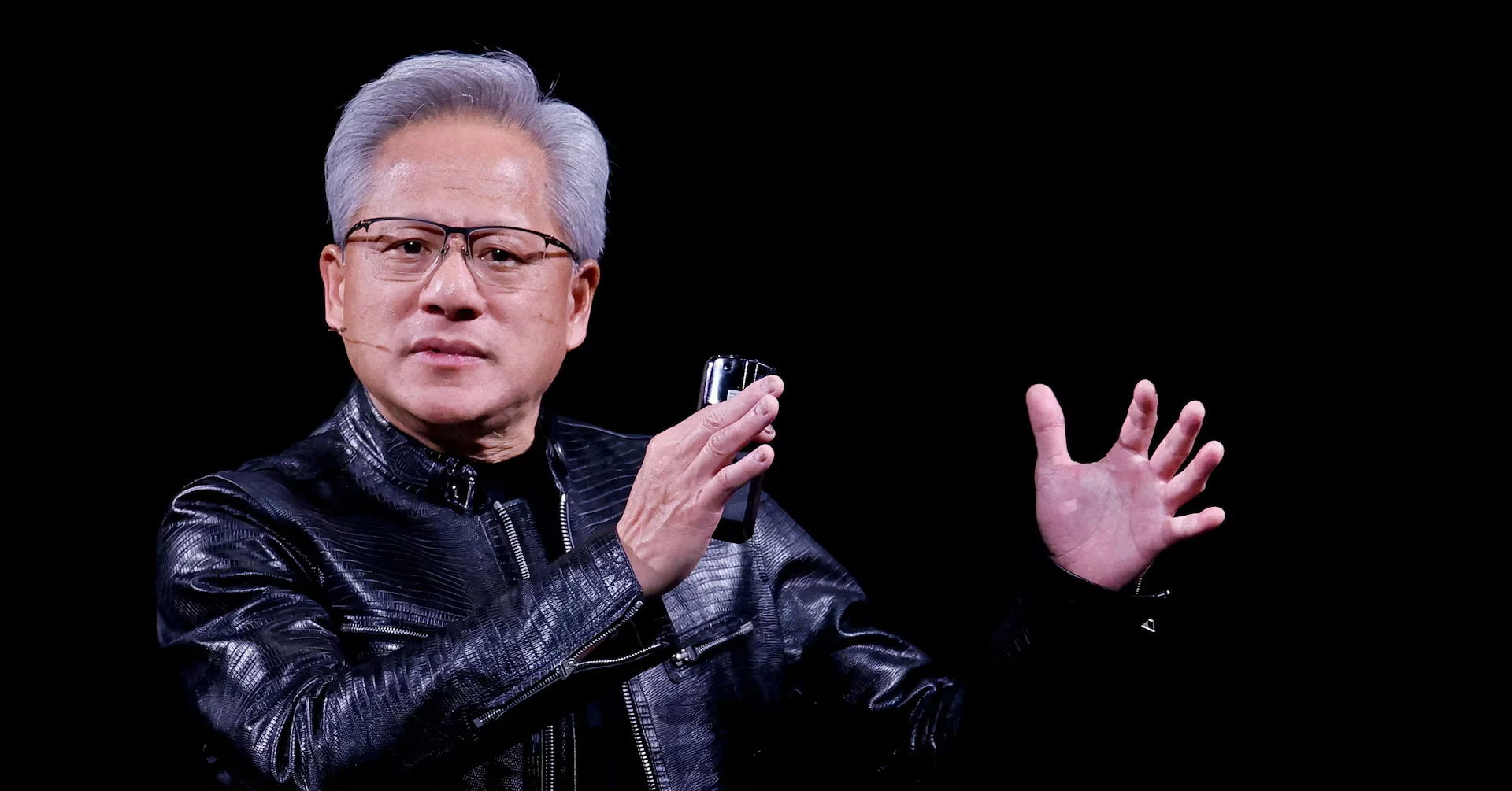
Jensen Huang arrives in South Korea this week for his second visit in seven months, and the schedule communicates more than a supplier check-in. He will appear on “You Quiz on the Block,” one of South Korea’s most widely watched talk shows. He will throw the ceremonial first pitch at a Doosan Bears home game at Jamsil Baseball Stadium in Seoul. According to local media, a Korean barbecue dinner in Seoul’s Seongsu neighbourhood is being arranged for the evening of June 5 with executives from SK Group, Hyundai Motor, and LG Group, including LG Group Chairman Koo Kwang-mo. Meetings with Naver executives are also on the agenda. This is not a supplier visit. YourNewsClub identifies it as a market-building campaign conducted at a public-relations intensity that Huang has previously applied only to China, which makes the South Korea targeting notable.
The reason is supply chain arithmetic. Samsung Electronics and SK Hynix together produce approximately 70% of the high-bandwidth memory chips that Nvidia’s AI accelerators require. Jeff Kim, an analyst at Seoul-based KB Securities, wrote in a recent research note that “Nvidia’s dependence on South Korean suppliers is rising” and that Huang “needs a manufacturing site for physical AI.” South Korea’s strength in manufacturing and robotics, combined with its 50-million-strong domestic market, positions it as the primary candidate for the kind of physical-AI production base Nvidia will need as the market for embedded AI in robots, vehicles, and factory systems scales. Huang addressed this directly at a dinner with South Korean tech executives at Computex in Taipei on Monday: “Korea is a critical part of our ecosystem,” he said, and highlighted robotics specifically when asked where Nvidia could invest in the country.
The trip comes at an unusual moment in the Asian semiconductor landscape. SoftBank fell 10% in Tokyo trading on Wednesday. TSMC and Foxconn also saw declines in the same session. Samsung fell 1.25% and SK Hynix dropped 2.75% in the prior session, even after both had crossed $1 trillion in market valuation during May. Huang’s arrival in Seoul while sector valuations are under pressure is either well-timed or deliberately counter-cyclical – a physical vote of confidence in the relationship when financial markets are unsettled. YourNewsClub expects the Seongsu dinner to generate the clearest public signal of which specific partnerships advance, based on which executives actually attend and what Huang says about them afterward.
Freddy Camacho, who studies the political economy of computation, materials and energy as dominance assets, frames the calculation: “Huang visiting South Korea with baseball pitches and TV appearances is not theatre. It is the visible layer of a capital-allocation negotiation. Nvidia needs Korean HBM at scale, and the Koreans know it. The charm offensive is how both sides demonstrate public commitment before private terms are set.”
What comes next: the specific corporate announcements during the Seoul visit, whether Samsung or SK Hynix confirm expanded HBM supply commitments to Nvidia, and whether Hyundai Motor or LG Group disclose robotics or physical-AI infrastructure agreements. The semiconductor supply chain desk at YourNewsClub will log each announcement against this context to map which relationships convert from dinners and talk shows into binding commercial agreements.
The HBM supply commitment question is the watchlist priority: whether Samsung or SK Hynix disclose expanded capacity allocations to Nvidia before Huang’s June 8 departure. Your News Club puts that disclosure – or its absence – as the single most commercially significant output of a visit whose real content is measured in supply agreements, not stadium pitches.
The broader geopolitical background shapes what this charm offensive means. Nvidia took a $4.5 billion inventory charge in Q1 FY2026 tied to H20 export restrictions, and the China AI accelerator market – projected at $50 billion – remains partially inaccessible. South Korea carries none of that access risk. Building deeper supply chain infrastructure there serves both a commercial purpose and a geopolitical hedge: Nvidia deepens relationships with the country controlling the memory supply most critical to its current product line, while reducing dependency on any single geography. The baseball pitch and the TV show are the visible layer. The underlying logic is supply chain resilience at a moment when the semiconductor trade map is being redrawn.