
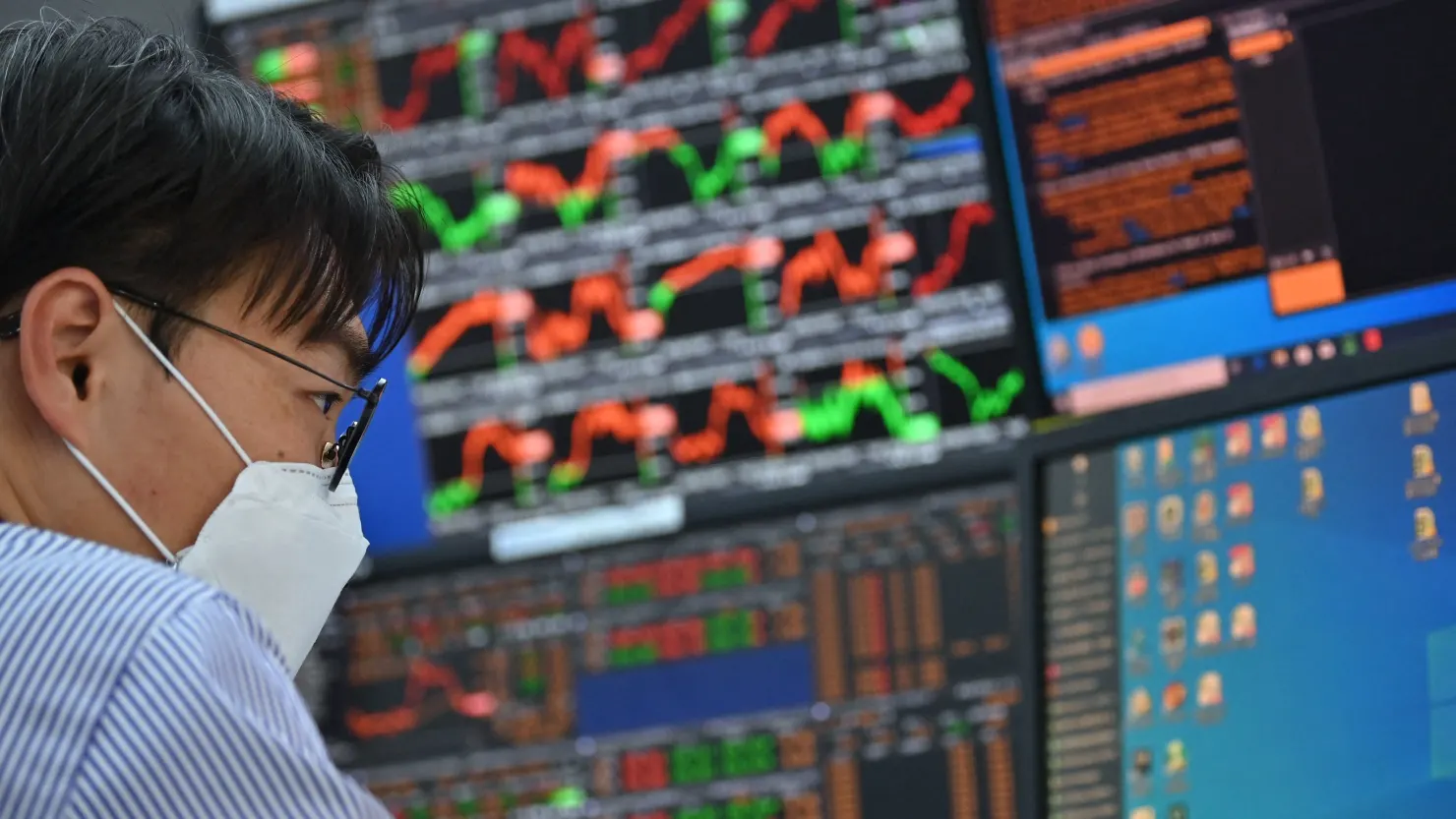
Foreign investors have now offloaded a net 80 trillion won – approximately $53.6 billion – worth of South Korean equities since last November, and yet their ownership ratio of the Kospi has risen from 31% to 38% over the same period. That optical illusion is at the centre of what is happening in Seoul’s equity market right now. The reason ownership has climbed despite sustained selling is that Samsung Electronics and SK Hynix – the two companies foreigners sold hardest – appreciated so dramatically in price that even reduced share counts translated into higher portfolio weights. On Monday, the Kospi plunged as much as 8%, triggering a circuit-breaker mechanism after Kospi 200 futures fell 5% and suspending programme trading for five minutes. Samsung closed down 10.18% and SK Hynix fell 7.68%, between them accounting for more than 40% of the index. YourNewsClub reads the ownership-ratio paradox as the cleanest explanation for why this week’s selling does not constitute capital flight from Korea, even though the headline numbers look alarming.
The proximate trigger for Monday’s correction was Broadcom’s fiscal second-quarter revenue guidance. Broadcom projected AI chip sales for its third fiscal quarter at $16 billion, which came in below the most optimistic market estimates. That miss – or relative miss – cascaded through every equity market with heavy semiconductor exposure. The VanEck Semiconductor ETF lost over 9% in Friday’s US session. Arm Holdings fell nearly 13%. Micron dropped more than 13%. By Monday morning in Seoul, those losses were repriced into the Kospi’s two dominant names. The sell-off hit a market that had already accumulated a year-to-date gain exceeding 100% at one point, with total Kospi market capitalisation having more than tripled over twelve months.
Nomura’s Seth said the selling feels “mechanical right now” and does not reflect a negative fundamental view on Korea – a characterisation consistent with the rebalancing and profit-taking interpretation. Goldman Sachs, meanwhile, raised its twelve-month Kospi target to 12,000 following Friday’s session, implying a further 37% upside from current levels. That is an unusual bullish stance to maintain during a circuit-breaker day. YourNewsClub treats Goldman’s maintained conviction as the most commercially significant counter-signal to the immediate sell-off, given the bank’s role as the institution that quantified the $62 billion in total foreign net selling through late May. Foreign sellers offloaded around $801 million in a single Monday session alone.
Stack this against the structural position. Samsung and SK Hynix both crossed $1 trillion in market capitalisation in May. TSMC fell 2.96% and Foxconn dropped 5.27% in the same session. The Korean market’s correction is the most visible because its concentration in two names is the most severe – but the underlying dynamics run across every Asian market with material AI hardware exposure. YourNewsClub puts the Broadcom guidance read-across as the near-term catalyst and the ownership-rebalancing dynamic as the structural reason the selling does not map onto fundamental deterioration in Korea’s semiconductor outlook.
Three metrics will tell what happens next: weekly foreign net purchase or sale data from the Korea Exchange, whether Samsung and SK Hynix close above their Monday intraday lows, and the US Consumer Price Index for May, due June 10, which will either accelerate or ease pressure on AI hardware valuations. A softer inflation print would relieve pressure on long-duration technology names. Another upside shock would extend the correction. The markets beat at Your News Club will track all three as the week progresses, placing particular weight on whether foreign selling slows once the mechanical rebalancing effect exhausts itself.
The broader conclusion here is structural. Korea’s equity market built a 100%-plus year-to-date gain on a very narrow base – two companies, both leveraged to AI memory demand, both dependent on a handful of hyperscale customers whose AI capex cycles can shift on a single quarterly guidance call. That concentration is not a Korean anomaly; it is the global AI trade’s defining feature replicated in a specific index. YourNewsClub considers the Kospi circuit-breaker event a useful stress test of how index-level AI concentration behaves under sentiment reversals, and expects the same mechanics to surface in other semiconductor-heavy markets when the next guidance miss arrives.