
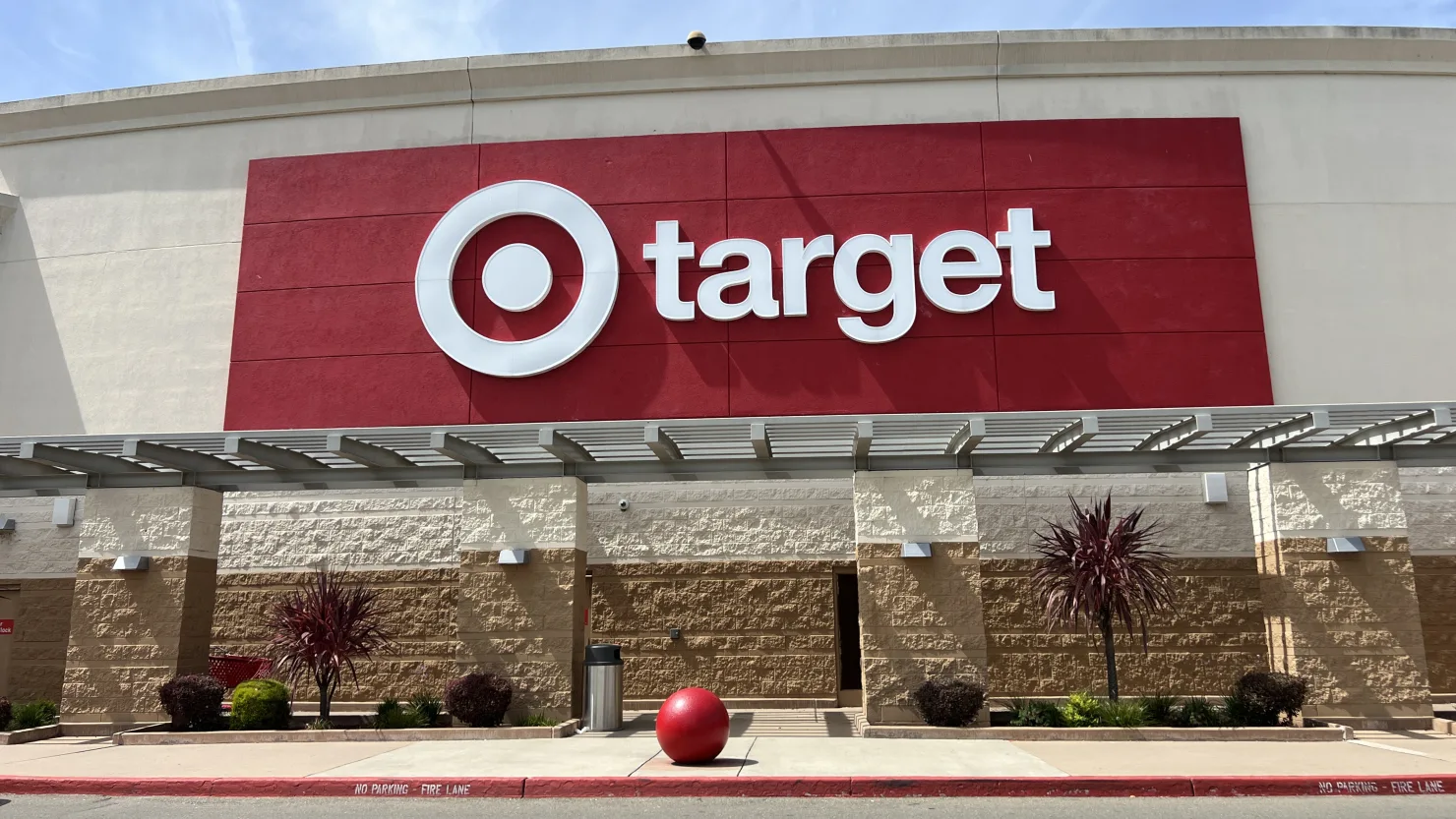
Target reports its fiscal first-quarter 2026 results Wednesday morning, and the release carries more weight than a typical quarterly print. CEO Michael Fiddelke – who assumed the role earlier this year – is running a public turnaround case. The Minneapolis-based retailer has spent the last four years roughly flat on annual sales. Its stock fell more than 40 percent over the five years through Tuesday’s close, though it has recovered roughly 30 percent this year. Wall Street, per an LSEG analyst survey, expected earnings of approximately 1.41 to 1.46 dollars per share on revenue of around 24.37 to 24.66 billion dollars – representing year-on-year growth of roughly 2 to 3.6 percent. Among this quarter’s major retail reports, YourNewsClub puts Target squarely at the top of the read-through list for consumer sentiment.
The wider retail context is unfavorable. Consumer spending faces pressure from elevated gas prices and persistent macro uncertainty. Traffic has been declining at Target for multiple quarters, and winning it back means convincing shoppers who drifted toward Walmart or Amazon that the assortment, price points, and store experience justify returning. Fiddelke told analysts last quarter that strong February sales gave him confidence about the direction. That was before the spring tariff noise hit discretionary spending patterns again. On the guidance, YourNewsClub reads the full-year net sales target of approximately 2 percent growth as deliberately conservative – management set a bar it needs to clear, not impress.
On Tuesday, Target named former Walmart executive Jeff England as its chief supply chain officer as part of its broader revitalization effort. The timing is intentional. A visible external hire announced the day before Q1 results gives the earnings call a credibility anchor before the numbers even appear. Sequencing a supply chain hire against an earnings date is a communications tactic YourNewsClub catalogues as a pattern across distressed retail turnarounds. The company plans capital expenditures of approximately 5 billion dollars for fiscal 2026, more than 1 billion above the prior year – funds directed toward supply chain upgrades, store remodels, and digital and AI capabilities. Alex Reinhardt connects the spending level to the company’s market credibility: “What Target reports this quarter will recalibrate sell-side models for the entire second half. A clean beat stabilizes the refinancing calculus – the company has been spending heavily and needs credit markets to believe the spend is generating returns.”
Non-merchandise revenue – including Roundel advertising and Target Circle 360 membership – grew over 25 percent in Q4 2025, with membership revenue more than doubling year on year. That high-margin stream is the most credible structural improvement in the business model. But it does not yet compensate for weak traffic on the core retail floor. The categories to watch in Q1: food and beverage, where Target has been gaining; and discretionary apparel and home, where it has been losing. The retail beat at YourNewsClub ranks the non-merchandise revenue trajectory as the single most structurally important number in Wednesday’s release, because it is the one line that suggests a business model evolution rather than a cyclical recovery.
Maya Renn connects the consumer pressure environment to structural access questions: “Discretionary retail pressure is not uniform – it concentrates on households most exposed to fuel costs and credit conditions. The population that Target most needs to retain is also the population most constrained right now.”
Target said last quarter it expects net sales to climb roughly 2 percent for the full fiscal year, with growth in every quarter. The earnings call at 8 a.m. EDT will tell investors whether Fiddelke has moved from promising a comeback to actually delivering one. Here is the uncomfortable calculus if Q1 disappoints: four consecutive years of flat annual revenue becomes very hard to explain away as macro noise, and a 5-billion-dollar capex commitment without near-term revenue recovery starts to look like a bet rather than a plan. The results this morning will tell that story in one direction or the other – and Your News Club assesses a clean revenue beat as the more likely outcome given the February strength Fiddelke cited last quarter.