
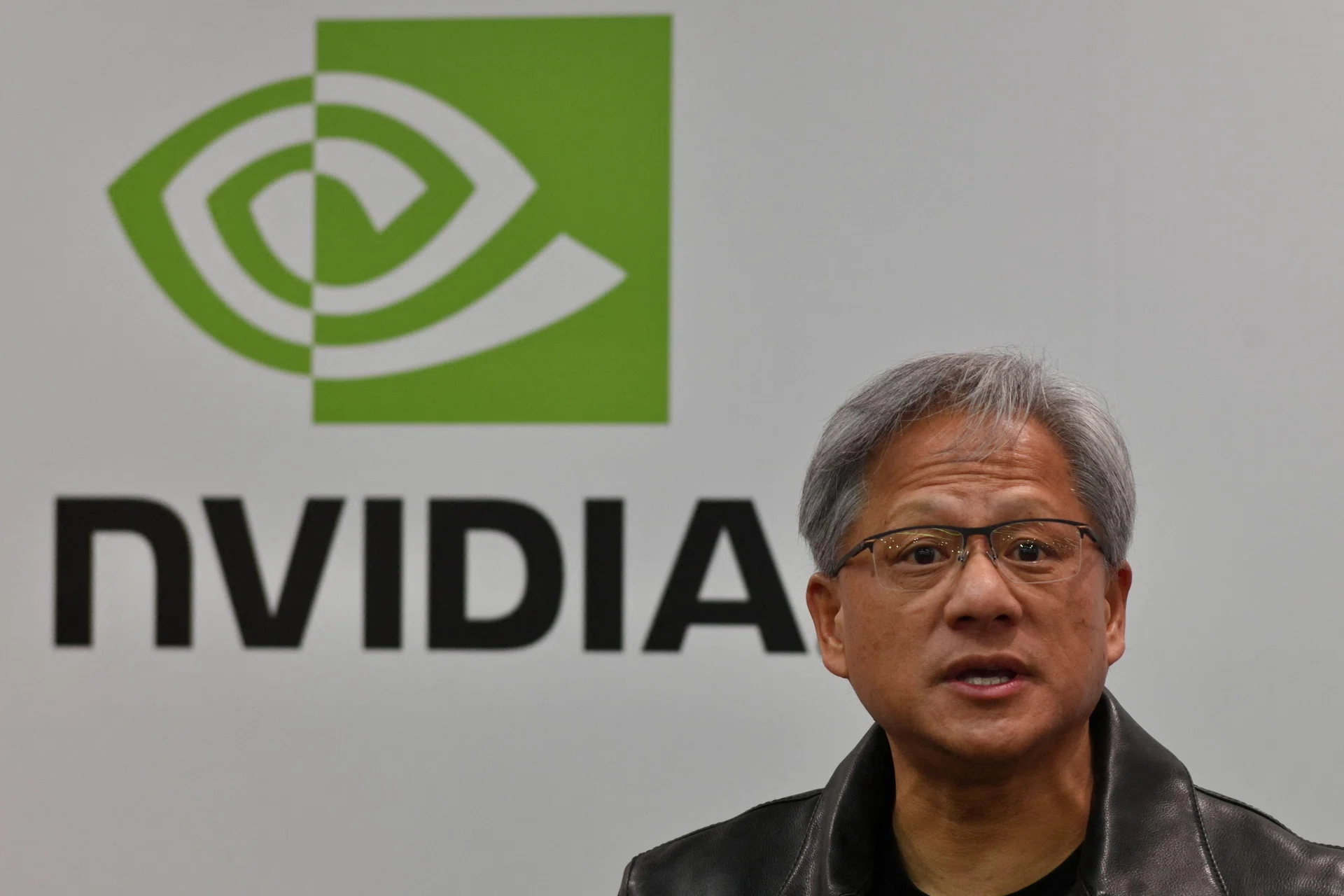
Nvidia will open its first research hub in Singapore, the company announced Wednesday at the opening of the ATxSummit technology conference. The facility represents Nvidia’s second research presence in the Asia Pacific and marks a formal commitment to embodied AI deployment – covering robotics, autonomous vehicles, and drones – in a city-state that has been aggressively positioning itself as a regional testbed for physical AI applications. The new lab will work alongside university researchers, industry partners, and government agencies, with a dual focus on advancing embodied AI and reducing the energy and compute costs of AI infrastructure more broadly. For Nvidia, it is the first Singapore footprint – the company’s second Asia-Pacific research presence overall – and YourNewsClub treats the choice of location as a deliberate infrastructure positioning move rather than a straightforward research decision.
The announcement came alongside a cluster of complementary measures from the Singapore government. The city-state plans to launch a multi-operator robot testbed later this year, providing private companies with space to co-design, deploy, and validate commercially viable AI robotics services. Industry players expected among the first users include Certis, DHL, Grab, and QuikBot. The government also said it would collaborate with robotics firms Slamtec, Unitree, and QuikBot through a new Center for Intelligent Robotics, piloting use cases across food and parcel delivery, cleaning, and security patrolling. In terms of where AI hardware demand is heading, YourNewsClub views this cluster of announcements as a signal that the next compute growth cycle runs through physical automation, not just cloud inference.
Owen Radner separates the product layer from the underlying infrastructure commitment: “The interesting signal is not the research center itself – it is the testbed. Public district deployments are where you learn what a network of robots actually needs in terms of compute, latency, and power routing. Singapore is building an instrumented environment, not just a marketing story.”
The location of the planned testbed, reported by The Edge Singapore as the Punggol Digital District, fits the pattern Radner describes. Punggol is a dense urban district purpose-built for smart infrastructure trials, with fiber, sensors, and data routing already embedded at the street level. A correspondent at YourNewsClub spoke with logistics sector officials this week who confirmed that last-mile delivery automation ranks as the highest-priority use case for the testbed’s first operational phase.
The Singapore play carries geopolitical subtext. Nvidia’s revenue for the fiscal year ended January 2026 surged 65 percent year-on-year to 215.9 billion dollars, with Southeast Asia emerging as a key geography amid ongoing chip access restrictions affecting Chinese customers. Singapore’s data center density – among the highest in the region – makes it a natural relay point for AI compute that cannot flow directly to certain markets. Jessica Larn connects the location choice to the broader policy landscape, and her framing aligns with what YourNewsClub expects policymakers in the region to say publicly at ATxSummit over the next two days: “Singapore is not selected for this kind of hub by accident. It sits at the intersection of U.S. trade compliance, regional AI governance ambitions, and proximity to markets where AI deployment is advancing fastest. Nvidia is buying optionality, not just a lab.”
The embodied AI focus may partially mask broader infrastructure buildout serving a wider regional function – and the infrastructure desk at YourNewsClub anticipates that tension between stated research purpose and de facto compute relay to grow more visible as the Punggol testbed comes online. The bigger question over the next 18 months: whether the research hub produces robotics breakthroughs that justify the facility on their own terms, or whether the real value sits in the compute and connectivity scaffolding built around it. Both outcomes are plausible. Neither is guaranteed.