
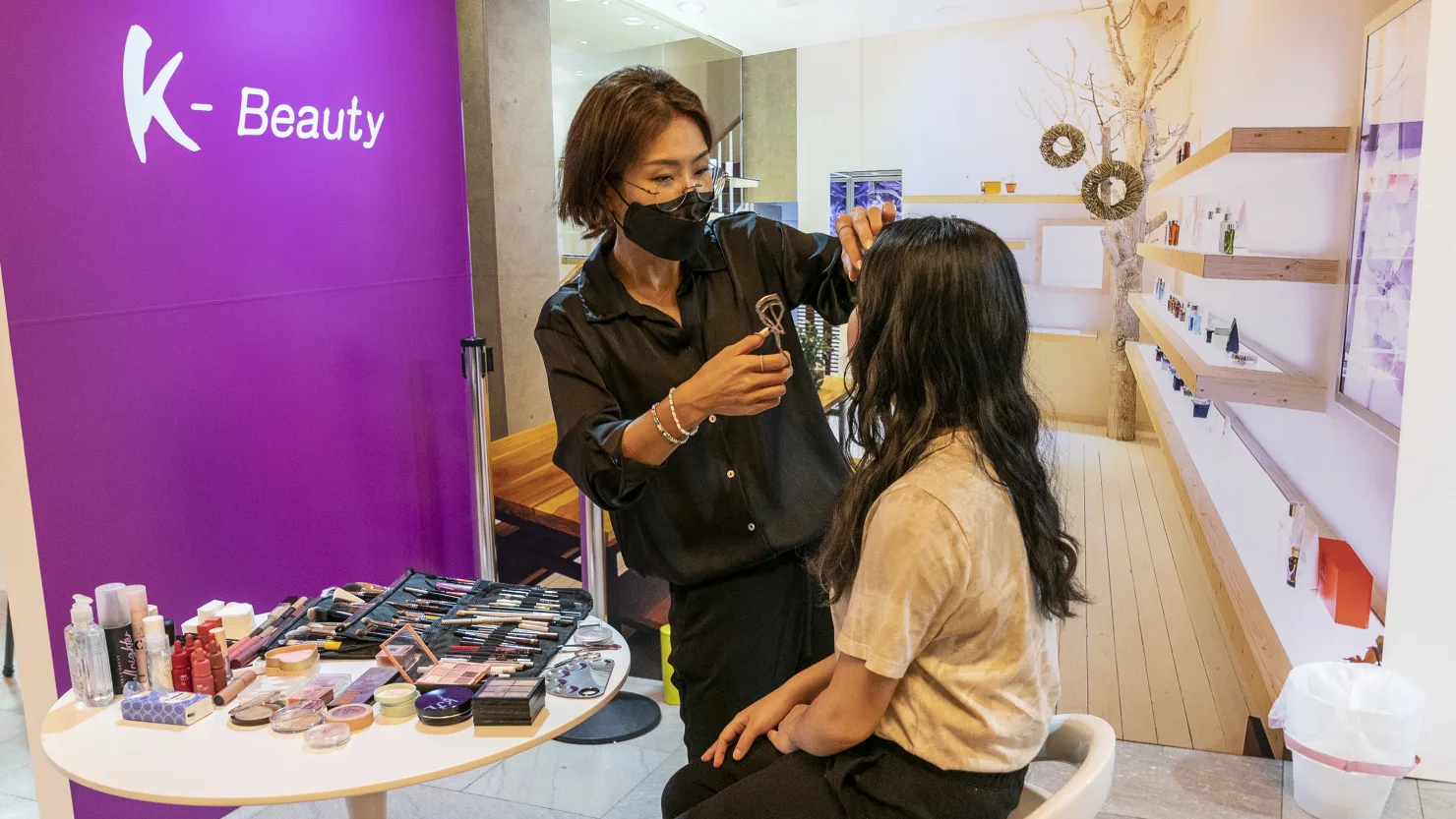
K-beauty was once a niche obsession – a universe of glass skin, snail mucin and 10-step rituals reserved for beauty insiders. But heading into the 2025 holiday season, those days feel distant. Today Korean beauty isn’t trending; it’s transforming the U.S. market from within. At YourNewsClub, we see not just a surge in sales, but a shift in the global center of cosmetic innovation – away from European luxury houses and toward one of the most competitive consumer markets on earth: South Korea.
Across the U.S., the evidence is everywhere. In a Manhattan Ulta store, parents buy viral TikTok sunscreens and cushion foundations they barely understand. Sephora dedicates full walls to Korean skincare. Walmart, Costco and mass retailers scramble to expand their assortments. What once looked like an import trend has become a structural reshaping of American beauty retail.
Sales data makes the trend impossible to dismiss. Korean beauty is projected to surpass $2 billion in the U.S. in 2025 – a 37% year-over-year jump, outpacing the broader cosmetics market by several multiples. Meanwhile, South Korea posted record exports of $5.5 billion in the first half of the year, overtaking France as America’s leading cosmetics supplier.
Jessica Larn, YourNewsClub’s analyst of macro-level technology policy, calls the phenomenon “a consequence of infrastructural innovation, not marketing hype.” As she notes, “K-beauty is what happens when a nation’s internal pressure – fast cycles, demanding consumers, dense competition – forces elite decision-makers to convert capital into better formulas, better testing, better manufacturing. The results spill into global markets almost instantly.”
Retailers are racing to claim territory before the next phase of expansion. Ulta launched “K-beauty World,” securing exclusive deals with tech-forward brands like Medicube. Sephora introduced U.S.-only releases from Aestura and Hanyul. Costco and Walmart are building out shelves of essences, toners and hair-care hybrids as demand rises across demographics. The competition is intensifying precisely as Olive Young – often called “the Sephora of Seoul” – prepares to open its first U.S. store in Los Angeles. For American retailers, this is more than another entrant: it’s a reminder that the world’s fastest-moving beauty ecosystem is no longer offshore.
TikTok, however, remains the accelerant. Tags like #kbeauty and #koreanskincare pull in more than 250 million weekly views, turning unknown brands into sellouts overnight. But at YourNewsClub, we also see the systemic risk: overreliance on one platform can destabilize entire categories. Maya Renn, our analyst of computational ethics, puts it plainly: “When consumer access is governed by a single algorithm, the issue is no longer beauty – it’s the politics of visibility. Virality becomes gatekeeping.”
South Korea’s internal dynamics explain why product cycles feel almost unnervingly fast. More than 28,000 licensed beauty manufacturers, double the number from five years ago, churn out new formulas daily. Local consumers demand constant novelty and clinically verified performance. Trends emerge, peak and mutate at a pace most Western brands cannot match.
This environment fuels not only better products but more experimental science. Biotech-driven ingredients – from salmon DNA to regenerative peptides – are entering the mainstream. As we at YourNewsClub note, these shifts reflect not a fleeting trend but a structural evolution in how the beauty industry integrates biotech into everyday routines. Hybrids like tinted serums and skincare-infused cushion compacts now define the category rather than fringe it. What once sounded eccentric is becoming global standard.
Yet the “second wave” of K-beauty faces its pressures. Trade tensions have pushed brands to absorb tariffs, reroute logistics or explore U.S.-based manufacturing. Algorithmic volatility can erase a best-seller overnight. And extreme competition within Korea makes longevity harder than breakout success.
Still, consumer appetite remains unwavering. Young shoppers trust results-driven formulas that feel gentle, look aesthetic, and don’t cost luxury prices. Diversity helps too: brands now offer dozens of shades, sensorial textures and barrier-friendly formulations that align with dermatology-first beauty. From the editorial desk of Your News Club, the implications are clear. This is one of the few global markets where cultural export directly maps onto economic influence. K-pop may have opened the door – K-beauty is institutionalizing it.
In closing, our recommendations follow the direction of the data. Brands should diversify beyond TikTok, strengthening offline experiences, community education and clinical proof. Retailers must treat K-beauty as a strategic pillar rather than a seasonal trend, investing in displays, sampling and exclusive partnerships. Consumers, meanwhile, should use virality as inspiration but choose products based on testing, ingredients and personal skin response.
K-beauty is no longer a trend to watch – it has become a global infrastructure of innovation. And if the current trajectory holds, the next era of beauty will be written in Seoul long before it reaches New York or Paris.