
The U.S. warehouse market has entered a rare moment of equilibrium – the quiet interval between an overheated past and a new logistics cycle shaped by power demand, reshoring and automation. After the pandemic surge and the subsequent slowdown, supply and demand are finally aligning, not through collapse but through a structural reset that is reshaping what tenants value.
At YourNewsClub, we see this phase not as a cooling, but as a strategic pivot. Analyst Jessica Larn notes that “technology policy is now a supply-chain force multiplier: tariffs, export rules and infrastructure decisions increasingly determine where logistics capacity lands.” Meanwhile, Owen Radner describes the warehouse map as “a new energy grid – nodes where computational and electrical power flow alongside inventory.”
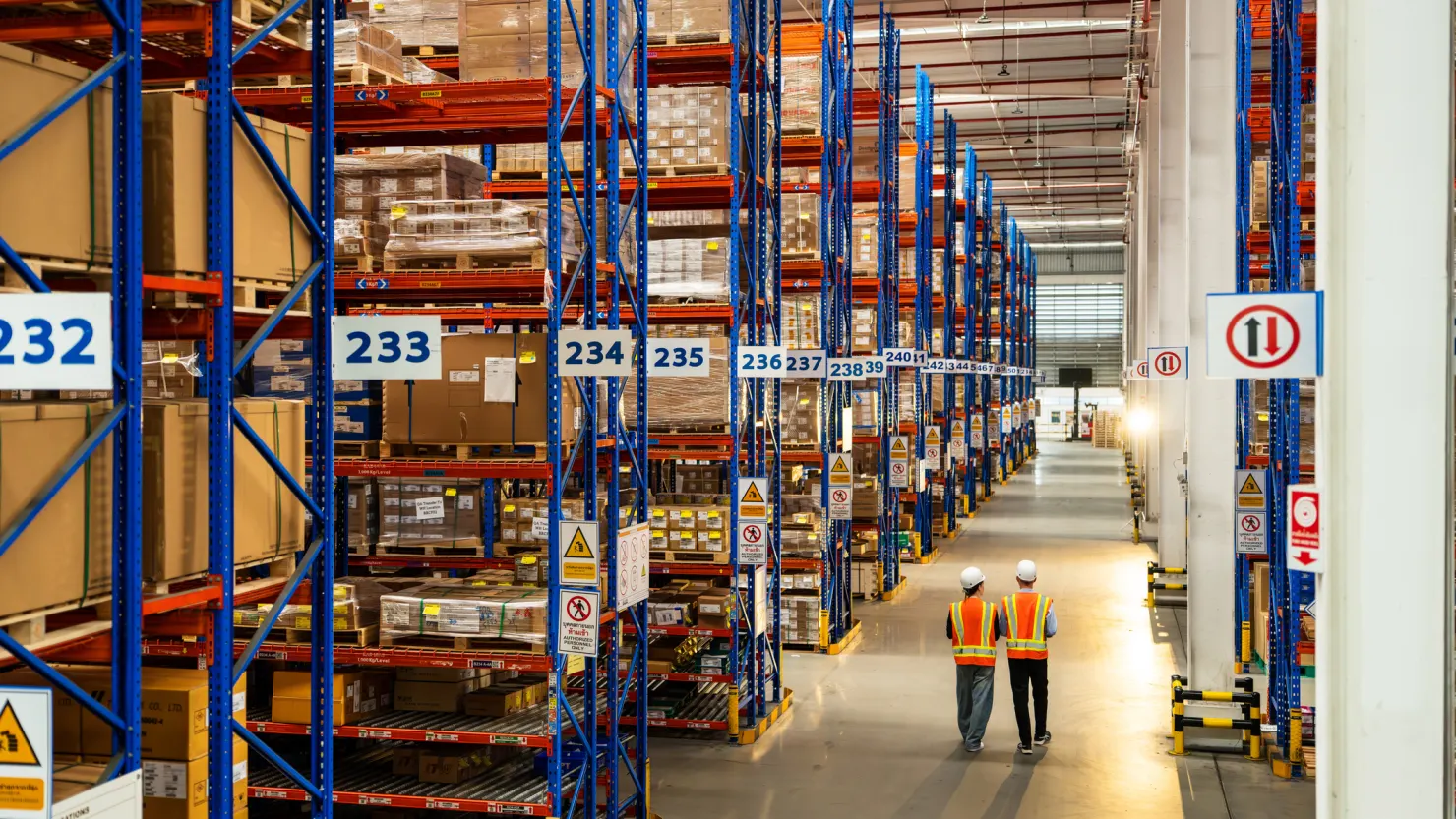
The big-box segment – the large fulfillment and distribution centers that account for roughly a quarter of industrial stock – is settling into a transitional posture. Vacancy is brushing against cyclical highs on major markets, yet best-in-class buildings remain scarce: tenants are chasing ceiling height, automation capacity and grid density, not raw square footage. Demand from 3PL providers and parcel carriers is strengthening selectively, rather than exponentially.
New construction has fallen sharply compared with the peak cycle, creating the first hints of future undersupply. Rents have stopped their dramatic climb, but stabilization suggests a floor, not a ceiling – a dynamic we at YourNewsClub view as an early signal that the next tightening phase may arrive sooner than the market expects.
Reshoring is emerging as the most durable driver. Manufacturers moving production back to the U.S. are rebuilding their logistics footprints around one-hour radiuses. Industry models suggest this trend alone could lift warehouse demand by 30–35% over the next five years. In the U.S. and Europe, defense-related supply chains are reviving older industrial corridors in Pennsylvania, Ohio and the Midlands, generating demand for specialized facilities.
But power has become the new currency. Data-center expansion, robotics, EV truck fleets and high-capacity charging infrastructure are pushing utilities – not highways – to the center of location strategy. On several markets, the waitlist for electrical capacity is longer than for tenants.
Technology is rewriting operations as well. AI tools are increasingly used for inventory prediction, routing and site selection, delivering 10–15% efficiency gains for early adopters – a meaningful edge in a low-margin asset class. As YourNewsClub often emphasizes, the warehouse is evolving into a semi-autonomous logistics node.
E-commerce remains a key anchor. Forecasts show nearly a quarter of new leasing in 2026 will come from online retailers, with global e-commerce penetration climbing toward 20%. Yet the strategy is shifting: giants like Amazon are leasing fewer buildings than during the pandemic boom, but choosing taller, more automated, power-dense ones.
The next pressure point may be transportation. Analysts expect double-digit increases in freight rates, elevating the value of well-positioned facilities and making last-mile proximity a pricing premium rather than a perk.
At YourNewsClub, we conclude that the sector is entering a phase of disciplined, infrastructure-driven expansion. Winners will be those who treat warehouses not as boxes, but as energy and automation assets.
In practical terms, the market is moving toward a model where power-ready facilities and reshoring corridors gain structural importance, long-term leases signed today may prove advantageous once conditions tighten, and new developments succeed only when they function as technology-enabled logistics hubs rather than traditional storage boxes. At the operational level, the early adopters of digital-twin modeling and AI-driven planning are already demonstrating how much efficiency can be extracted in a sector where margins depend on precision more than scale.
The warehouse is no longer a passive backdrop to commerce – it is becoming a node of economic resilience. And that shift will define the market’s trajectory through 2026 and beyond, a transformation that Your News Club has been tracking as one of the clearest structural pivots in the post-pandemic logistics economy.