
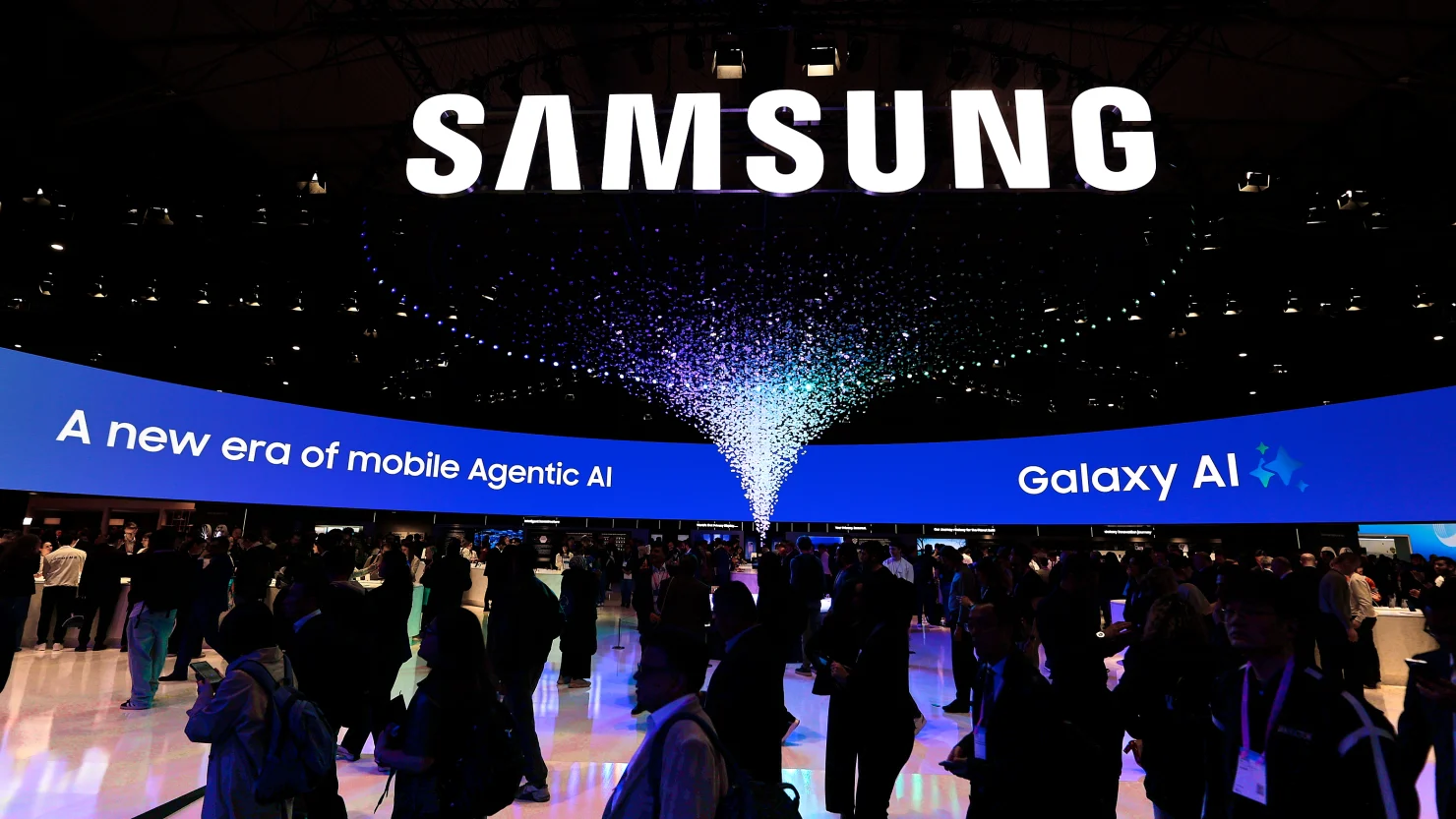
The race to define the next generation of AI-powered consumer devices is increasingly centered around smart glasses. Samsung has now revealed early details about its upcoming entry into this category, signaling that the company sees wearable AI interfaces as a key frontier in the post-smartphone era. According to executives, the device will feature an eye-level camera and connect directly to a smartphone for processing. YourNewsClub sees this move as a sign that major technology companies are repositioning wearables as real-time AI gateways rather than simple accessory devices.
Jay Kim, executive vice president of Samsung’s mobile division, said the glasses will include a camera positioned at eye level and rely on a connected smartphone to process visual data. This architecture suggests Samsung is prioritizing practicality over spectacle. By shifting heavy computation to the smartphone, the company can reduce power consumption, weight, and heat – three of the hardest problems in wearable hardware design.
Jessica Larn, a macro-level analyst of technology infrastructure and AI policy, argues that Samsung’s approach reflects a broader shift in AI device strategy. Early XR products focused on immersive headsets and standalone computing power. The new wave instead favors lighter devices that fit naturally into daily life, which may give smart glasses a better chance at mainstream adoption.
The timing is strategic. Smart glasses are starting to gain real traction, with Meta’s Ray-Ban models currently leading the category. At the same time, companies across the U.S. and Asia are accelerating their own development. Samsung’s advantage may lie in its ecosystem, since it is building the glasses with Qualcomm and Google, combining Qualcomm chips with Google’s Android XR platform. For YourNewsClub, that partnership matters because the next generation of wearable AI is unlikely to be won by hardware alone; it will be shaped by ecosystems that merge chips, software, and AI services into one user experience.
In practice, the glasses would capture visual information through the camera, send it to the smartphone for processing, and return contextual insights to the user. Owen Radner, who analyzes digital infrastructure as energy-and-information transport networks, says this points toward a new class of ambient computing interfaces. Instead of opening apps or typing commands, users could interact with AI systems that understand what they are seeing and respond in real time. YourNewsClub views that as one of the most important shifts in the category: smart glasses may evolve from passive wearables into continuous AI sensors embedded in everyday environments.
Samsung has remained cautious about one key design element: whether the glasses will include an integrated display. Kim declined to confirm that detail, which likely reflects the trade-off between functionality and comfort. Displays add complexity, cost, and battery strain – all factors that have historically limited wearable adoption.
The broader significance of Samsung’s strategy lies in how artificial intelligence is reshaping the interface between humans and digital systems. As models such as Gemini and ChatGPT become more capable, companies are searching for ways to integrate AI into daily life beyond the smartphone. Smart glasses offer a compelling platform because they sit close to the user’s eyes, ears, and voice. Your News Club believes Samsung’s project is more than another gadget launch: it is a direct experiment in redefining how people interact with AI in the physical world. If the company tightly integrates the glasses into its Galaxy ecosystem, it could become one of the few players capable of seriously challenging Meta’s early lead.