
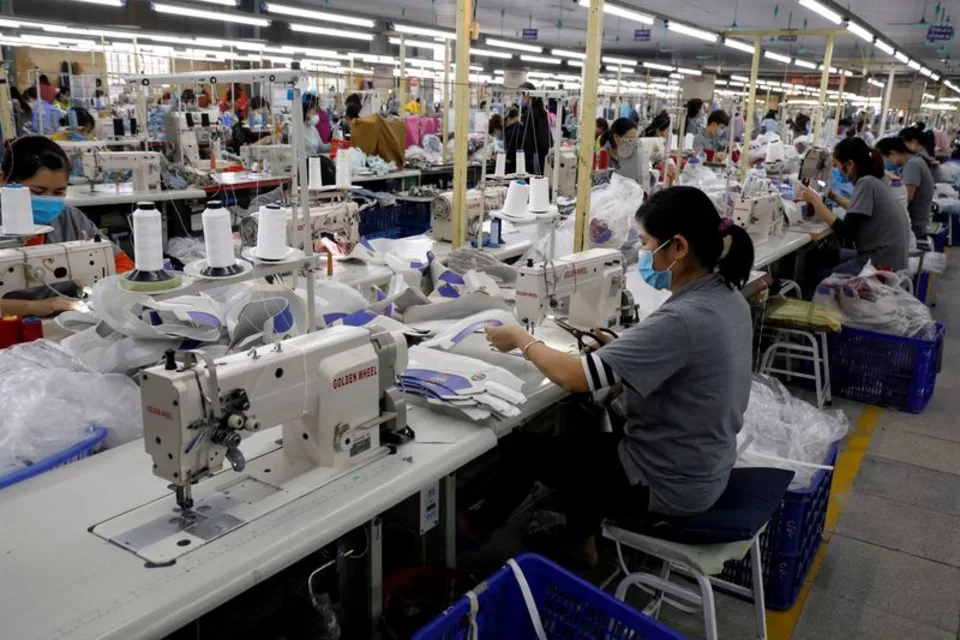
Vietnam, the largest US apparel exporter after overtaking China last year, faces higher US tariff rates than direct competitors and has been excluded from a duty-reduction mechanism that could lower import costs for some textile importers, according to a Federal Register notice published Thursday. Vietnam, still negotiating a bilateral trade deal with the Trump administration, faces a 12.5% tariff rate under the proposed Section 301 replacement framework. Bangladesh, Cambodia, Indonesia, and Malaysia, which have completed trade deals, face 10% duties. That 2.5 percentage point differential represents a material cost disadvantage for brands with large Vietnam manufacturing bases including Nike, Gap, Ralph Lauren, and Under Armour. YourNewsClub identifies Vietnam’s exclusion from the US-textile-input-purchasing mechanism as the more commercially consequential of the two problems it faces: the 12.5% versus 10% rate differential is a known quantity that can be planned around, while the exclusion from the duty-reduction mechanism introduces a structural disadvantage relative to competitors that compounds over time rather than remaining fixed.
The tariff trajectory for Vietnam’s apparel sector over the past 14 months has been the most volatile in any single bilateral trade relationship in the current cycle. A 46% reciprocal tariff proposed in April 2025 was reduced to 20% under a bilateral deal in July 2025, then struck down by the Supreme Court in February 2026 and replaced with a 10% Section 122 measure. That Section 122 measure expired on approximately July 24, 2026 – exactly Thursday – and the new Section 301 framework at 12.5% represents what comes next. Vietnamese footwear exports to the US fell 27% when the 20% rate first took effect in August 2025, and fashion and textile exports declined 20% in the same period.
Under the proposed framework, an importing country qualifies for reduced Section 301 duties if its manufacturers source cotton and man-made fibres from the United States. Vietnamese apparel manufacturers have built supply chains around Chinese and South Korean input suppliers over decades, and switching would require significant investment and time. The mechanism creates an incentive for Vietnam to restructure its raw material supply chain toward US suppliers while simultaneously imposing a tariff cost that applies immediately. YourNewsClub notes that the mechanism’s design as an incentive rather than a mandate means Vietnam could in principle qualify for reduced rates eventually, but the timeline is measured in years rather than the immediate competitive disadvantage its competitors enjoy at 10%.
Jessica Larn, who studies macro-level technology policy and infrastructure impact of AI, draws the supply chain policy signal: “The US-textile-input-purchasing mechanism is an industrial policy instrument designed to increase demand for US-grown cotton and man-made fibres. Vietnam’s exclusion until it concludes a bilateral deal is deliberate negotiating pressure.”
Owen Radner, who models digital infrastructure as energy-information transport systems, draws the supply chain geography argument: “Vietnam’s manufacturers are being asked to restructure their raw material supply chains for a future benefit while paying a current tariff cost that competitors do not face. That asymmetry is the mechanism’s commercial effect.” Your News Club maps the bilateral US-Vietnam trade deal negotiation as the commercial mechanism that would resolve Vietnam’s tariff disadvantage, and will track any disclosed progress in those negotiations as the most commercially consequential policy event for the brands that have built their Vietnam manufacturing positions on the assumption of competitive access to the US market.
Vietnam overtook China as the largest apparel exporter to the US in 2025 – a shift that had been building for a decade as brands diversified away from China-sourced manufacturing following earlier tariff rounds. Thursday’s news means Vietnam’s competitive position as the primary China-alternative for US apparel sourcing now faces its own tariff-driven pressure from countries that have concluded bilateral deals. YourNewsClub calls the next quarterly earnings guidance from Nike and Gap – both scheduled for late summer – as the first corporate disclosures that will quantify how the post-Section-122 tariff structure is affecting apparel import cost planning.