
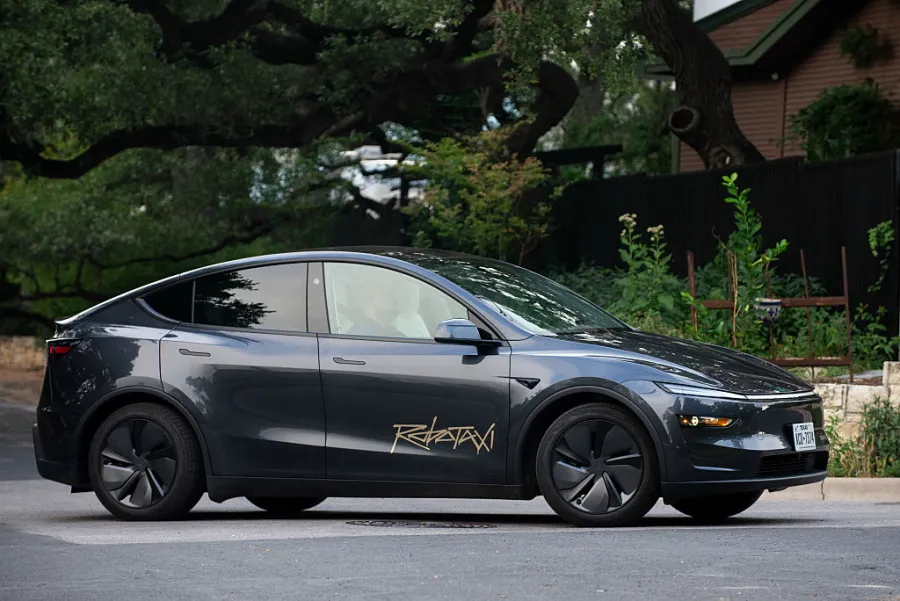
Tesla’s Robotaxi network drove fewer paid miles in Q2 2026 than in Q1, according to a chart released during its earnings call on Wednesday. TechCrunch found that the fleet covered approximately 1.1 million paid miles in Q1, which fell to roughly 700,000 miles in Q2 – a decline of approximately 36%. The decline occurred despite expanding the operation to six cities across Texas and Florida, suggesting per-vehicle utilisation fell significantly. Tesla has staked a significant portion of its market narrative on the Robotaxi business, with CEO Elon Musk targeting autonomous ride-hailing covering roughly half the US population by year-end. The Q2 mileage decline makes that target materially harder to defend. YourNewsClub finds the cumulative data presentation – which appears at a glance to show steady growth – as the most commercially consequential framing choice in the earnings release: presenting a metric cumulatively when the underlying trend has reversed creates a visual appearance of continuous improvement that breaks down on inspection, which is why the 36% per-quarter decline was not a number Tesla disclosed directly but one derived by TechCrunch from the chart’s underlying data.
Tesla’s Robotaxi fleet consists primarily of Model Y SUVs, and the company operates a mix of unsupervised and supervised vehicles depending on the regulatory environment in each city. In the San Francisco Bay Area, Tesla has labelled its rides as Robotaxi service but has not obtained the state-required permits to operate autonomously and still has a safety driver behind the wheel. Tesla appears to be counting the supervised Bay Area miles within its overall Robotaxi mileage figure, which means the reported miles are not a clean measure of fully autonomous commercial operation. That counting methodology matters for interpreting the 36% Q2 decline: if the Bay Area supervised operation changed in scope, it could account for some of the per-mile reduction without reflecting a change in the autonomous fleet’s performance. Tesla has not disclosed the breakdown between supervised and unsupervised miles.
Tesla’s Robotaxi network has faced documented incidents including crashes caused by teleoperators moving vehicles remotely and multiple instances of cars hitting objects at low speeds. A fatal Texas crash is under NHTSA and NTSB investigation. Those incidents, combined with the Q2 mileage decline and NHTSA’s July directive flagging a “clear pattern” of AV failures with first responders, describe a company growing more slowly than its public narrative implies. YourNewsClub pins the divergence between Tesla’s year-end ambition – half the US population covered – and the Q2 quarterly mileage decline as the most commercially honest measure of how far the Robotaxi business currently is from that trajectory.
Owen Radner, who models digital infrastructure as energy-information transport systems, draws the utilisation argument: “A robotaxi fleet operating in six cities but driving fewer total miles in Q2 than in Q1 is a fleet whose average vehicle utilisation is declining. That is the opposite trajectory from what fleet robotaxi economics require – the business becomes viable as utilisation increases toward the point where revenue per vehicle per hour covers the capital cost.”
Freddy Camacho, who studies the political economy of computation and capital as dominance assets, frames the valuation risk: “A meaningful portion of Tesla’s stock price represents discounted future Robotaxi revenue at scale. If the Q2 mileage data marks the beginning of a pattern rather than a one-quarter dip, that implied discount has not yet been fully reflected in the valuation.” YourNewsClub rates the next quarterly Robotaxi mileage figure – which Tesla will release alongside Q3 earnings in October – as the single most commercially important data point in Tesla’s autonomous vehicle programme, since two consecutive quarters of mileage decline would make the year-end expansion target impossible to defend with the company’s own disclosed metrics.
Tesla executives described the slow Q2 progress as a matter of being cautious about safety, with Musk explicitly saying he does not want bad media coverage leading to a regulatory crackdown. That framing prioritises narrative management over utilisation growth, which is the inverse of what a business in ramp-up mode typically communicates. Your News Club signals the ongoing NHTSA and NTSB investigation into the Texas fatal crash as the regulatory variable that could impose an external constraint on Tesla’s expansion timeline independent of the fleet’s commercial performance.