
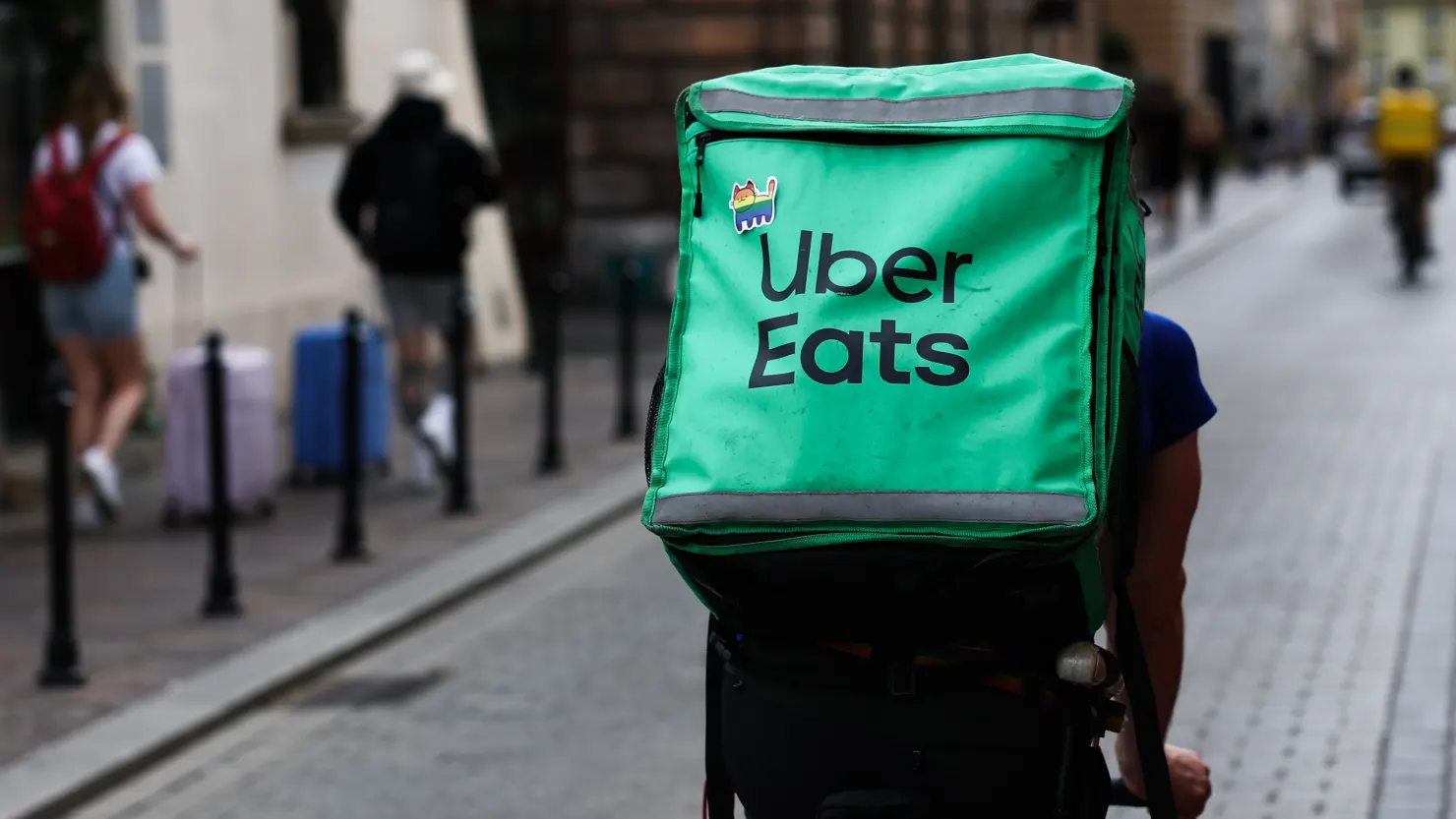
Uber is expanding deeper into retail logistics, introducing a new feature through Uber Eats that allows customers to return purchased items directly from their phones. Couriers will pick up eligible goods and deliver them back to retailers such as Best Buy, Dick’s Sporting Goods, and Petco, with refunds triggered as soon as the item is collected. The service – which applies to purchases above $20 – adds a new layer to Uber’s delivery ecosystem, one that YourNewsClub increasingly identifies as a strategic attempt to capture post-purchase friction in e-commerce.
Returns have long represented a weak point in online shopping. Consumers often face multiple steps – printing labels, repackaging items, and locating drop-off points – before receiving a refund. Survey data shows that delays in reimbursement remain the most frustrating element, surpassing even logistical inconveniences. Retailers, meanwhile, absorb significant operational costs tied to reverse logistics, including inspection, restocking, and potential product loss.
That friction has already attracted attention from major players. Amazon built a network of physical return points through partnerships with stores like Kohl’s and Staples, reducing the burden on customers. Uber’s approach diverges by leaning into its existing courier network, effectively turning return logistics into an on-demand service rather than a destination-based process. This shift reframes returns as a mobility problem – one that can be solved through time and distance optimization. Insights developed through YourNewsClub coverage highlight how companies increasingly compete not just on delivery speed, but on how seamlessly they handle the entire lifecycle of a transaction.
Owen Radner, whose work examines digital infrastructure as energy-information transport systems, views Uber’s move as part of a broader transformation in logistics architecture. Each return becomes a node in a distributed network, where couriers act as connectors between consumers and retailers. The efficiency gains depend not only on routing algorithms but also on how effectively these micro-transactions integrate into existing delivery flows. Observations tracked across YourNewsClub narratives suggest that the distinction between forward and reverse logistics is beginning to dissolve within unified platforms.
The financial dimension introduces another layer of complexity. Alex Reinhardt, focused on financial systems and liquidity control through digital protocols, points to the instant refund mechanism as a notable shift in cash flow dynamics. By issuing refunds at pickup rather than completion of the return process, platforms effectively front liquidity while assuming operational risk. This approach can enhance user trust and accelerate transaction cycles, yet it also requires robust verification systems to prevent abuse.
Uber’s delivery business continues to grow rapidly, generating $4.9 billion in revenue in the latest quarter and reinforcing its position beyond ride-hailing. Integrating returns into this ecosystem expands the addressable market without requiring entirely new infrastructure. Within YourNewsClub discussions, this strategy appears less about incremental feature development and more about embedding Uber deeper into everyday commerce interactions.
For retailers, the appeal lies in reducing customer friction while outsourcing part of the operational burden. However, dependence on third-party platforms introduces new trade-offs, including margin pressure and reduced control over the customer experience. As more companies experiment with similar models, the competitive landscape may shift toward platforms capable of managing both delivery and returns with equal efficiency.
Consumers, on the other hand, may begin to treat returns as a near-instant, low-effort process – a behavioral change that could drive higher purchase volumes but also increase return rates. The balance between convenience and cost will shape how widely such services are adopted. As these systems evolve, Your News Club continues to follow how platforms redefine not only how goods reach customers, but how they flow back through the system when expectations are not met.