
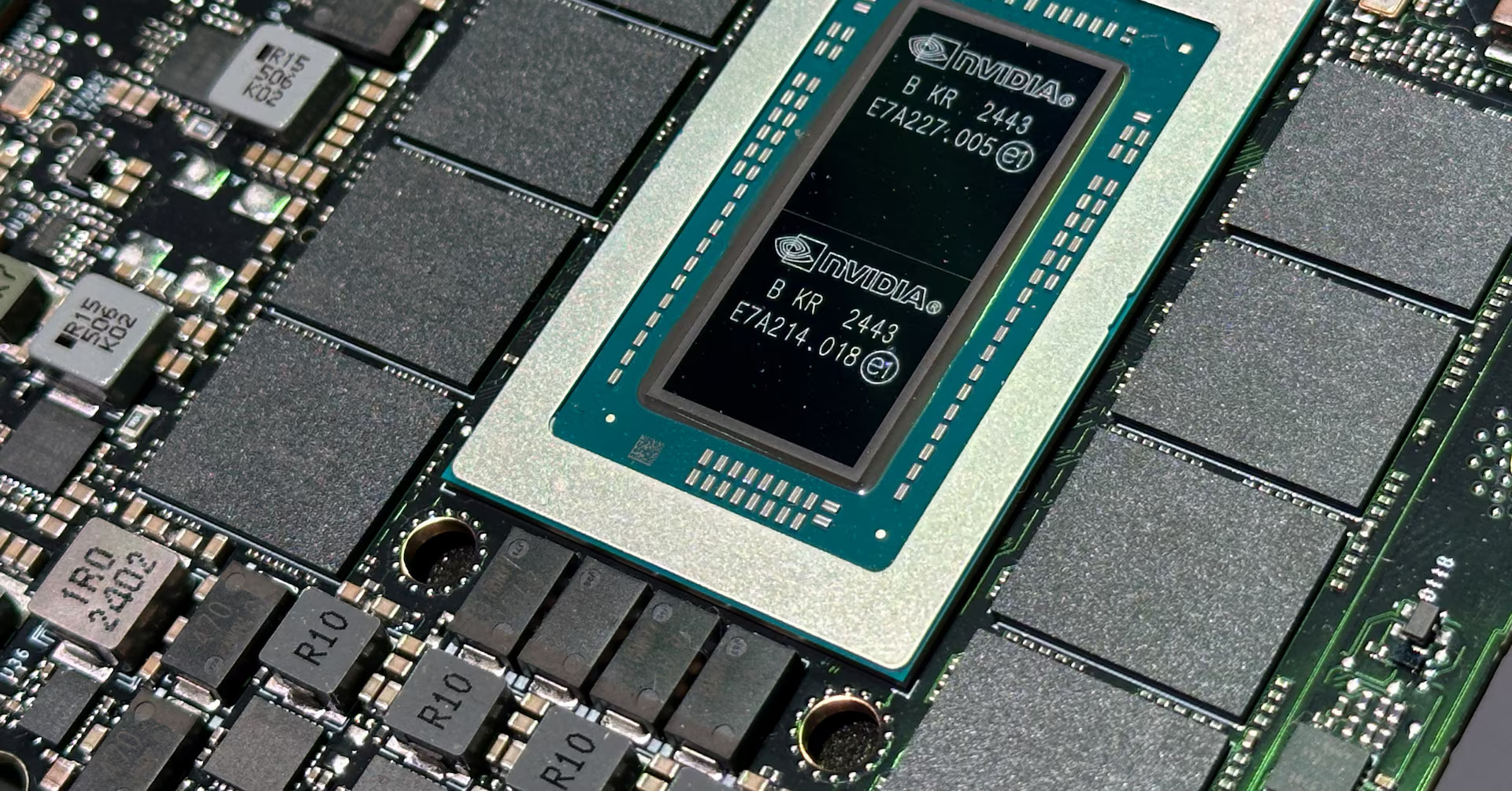
Nvidia remains the central force behind the artificial intelligence surge, yet a wave of well-funded challengers is rapidly forming around it. Startups focused on alternative chip architectures raised $8.3 billion globally in 2026, as investors increasingly back efforts to disrupt Nvidia’s dominance in AI hardware. While the company continues to invest heavily in research and acquisitions, momentum is shifting toward new designs aimed at improving efficiency in real-world deployment – a dynamic that YourNewsClub tracks closely as capital begins to diversify across the ecosystem.
The foundation of Nvidia’s success lies in its graphics processing units, originally built for gaming but later adapted for training large AI models. That adaptation created a de facto standard, locking developers and cloud providers into a tightly integrated hardware-software stack. Yet the next phase of AI development no longer centers exclusively on training massive models. Attention has turned toward inference – the stage where trained systems deliver outputs at scale, often under strict cost and energy constraints.
This shift opens space for experimentation. Startups such as Cerebras, Ayar Labs, and Etched are designing chips specifically for inference workloads, arguing that GPUs carry structural inefficiencies when deployed in production environments. European players, including Axelera and emerging firms planning nine-figure funding rounds, add further pressure to a market that once appeared closed. Observations emerging across YourNewsClub coverage point to a growing consensus that specialization, rather than general-purpose performance, may define the next competitive frontier.
Freddy Camacho, who studies the political economy of computation with a focus on materials and energy as dominance assets, views the surge of funding as a response to mounting infrastructure costs. Training and running AI models consumes vast amounts of electricity, and even marginal improvements in chip efficiency translate into substantial economic advantages at scale. In that context, alternative architectures represent not just technological bets but attempts to reshape the cost structure of the entire AI economy.
Jessica Larn, whose research centers on macro-level technology policy and infrastructure impacts of AI, frames the competition through a geopolitical lens. Supply chains for advanced semiconductors remain highly concentrated, with fabrication capacity anchored in a small number of regions. As demand intensifies, governments and private investors alike push for diversification, both to secure access and to reduce systemic vulnerability. Within YourNewsClub narratives, this intersection of policy and infrastructure emerges as a defining force behind the surge in capital directed at new chip ventures.
Nvidia, for its part, is not standing still. The company has deployed tens of billions of dollars toward acquisitions, photonics research, and internal development, reinforcing its position while attempting to anticipate shifts in workload demands. Its recent moves into inference optimization and next-generation chip design indicate awareness that dominance in training alone may not guarantee long-term control.
Parallel developments across the broader technology landscape reinforce the stakes. Strong earnings from major semiconductor manufacturers, rapid expansion plans from leading AI firms, and intensifying competition in cloud infrastructure all feed into a system that demands ever-increasing compute capacity. Market reactions, including volatility in companies tied to chip production, reveal how expectations around AI growth already stretch far into the future – sometimes beyond what current fundamentals can support.
For investors, the influx of capital into unproven technologies introduces both opportunity and risk. Many of these startups have yet to demonstrate scalability under real-world conditions, yet their potential to reduce costs or unlock new performance thresholds keeps funding pipelines open. The tension between established dominance and emerging innovation continues to define the sector’s trajectory, a dynamic that Your News Club follows as it reshapes the balance of power within the global AI stack.