
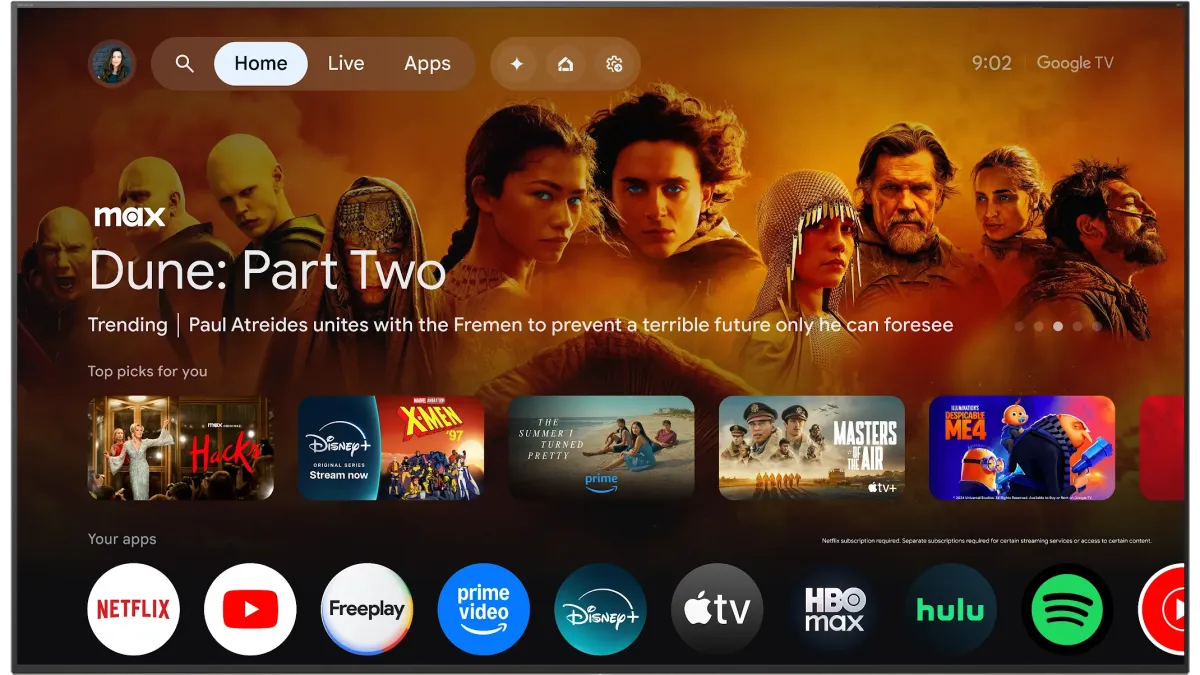
Google is pushing television beyond passive viewing into something closer to an interactive AI surface. Its latest Gemini features for Google TV – visual answers, deep-dive explanations, and AI-driven sports summaries – signal a broader shift in how users interact with content. Within YourNewsClub, this evolution is interpreted as part of a larger move toward embedding intelligence directly into everyday interfaces.
What stands out most is how responses are now delivered. Instead of returning plain text, Gemini builds layered outputs that combine real-time data, video, and contextual suggestions. A simple query becomes a multi-format answer. Jessica Larn, who studies interface behavior, would see this as an extension of Google’s core strength – collapsing the distance between a question and a usable result. Another important change lies in how the TV itself is positioned. Rather than acting as a final destination for entertainment, it becomes a starting point for exploration. YourNewsClub highlights that users are gradually shifting away from app-based navigation toward interacting with a unified AI layer that organizes information across multiple sources.
Equally significant is the introduction of the “deep dive” feature. By delivering structured, narrated explanations, Gemini turns the television into a tool for understanding, not just consumption. From an expert perspective, this places the product somewhere between search and long-form video platforms, offering curated insight instead of scattered content. A different user need is addressed through AI-generated sports summaries. As content volume grows, attention spans shrink, and viewers increasingly prefer condensed updates over full-length broadcasts. Short, narrated recaps allow users to stay informed without committing significant time – a shift that aligns with broader consumption trends.
Looking at the system as a whole, the common thread becomes clear. Owen Radner, who focuses on infrastructure design, would point out that all these features aim to reduce friction. The goal is not just to provide answers, but to deliver complete, actionable responses in a single interaction. Beyond individual features, the ecosystem implications are equally important. YourNewsClub notes that Gemini already integrates with device controls, personal media libraries, and AI-driven customization. As these capabilities expand, the television becomes less of a standalone device and more of a node within a tightly connected platform.
Geographic rollout patterns also reveal a deliberate strategy. By launching first in select markets and expanding gradually, Google is testing both technical performance and user behavior before scaling globally – a typical approach for products that rely heavily on interaction patterns.
Still, several risks remain. Increased functionality can introduce complexity, and if the interface becomes harder to navigate, adoption may slow. Accuracy is another critical factor – inconsistent or irrelevant outputs can quickly erode trust. At the same time, competition is intensifying as other tech players integrate similar AI capabilities into their own ecosystems. From where YourNewsClub stands, the direction is strategically sound, but execution will determine the outcome. The technology must feel intuitive and seamlessly fit into daily routines rather than forcing behavioral change.
The broader takeaway is straightforward. The future of television will be shaped not by screen quality, but by the quality of interaction it enables. Ultimately, Your News Club emphasizes a recurring pattern: as AI interfaces mature, the devices that host them evolve into central control points within the digital landscape, redefining how users search, learn, and engage with content.