
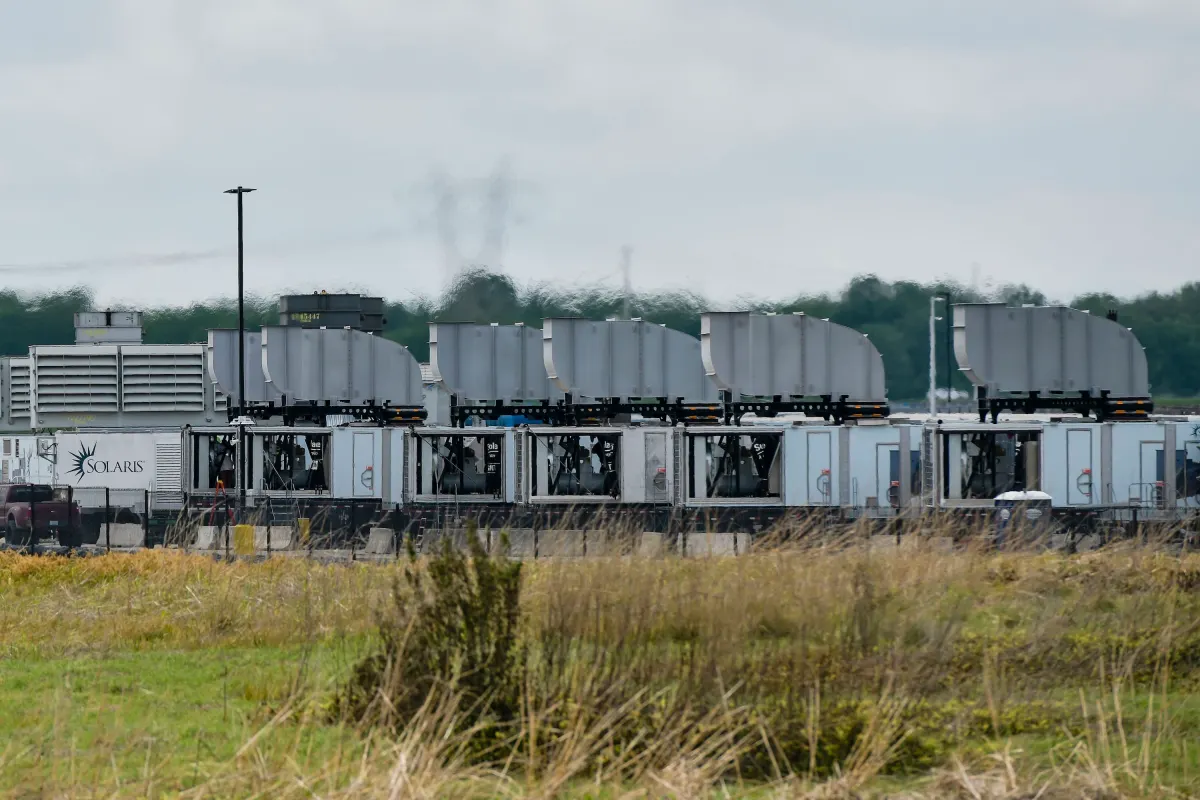
What looks like a simple land deal in Kentucky is, in reality, a micro-version of a much larger conflict shaping the AI economy. A local farming family declined a $26 million offer to sell part of their land for a data center, choosing instead to resist a development model they see as disruptive to their environment and way of life. Within YourNewsClub, this is viewed not as an isolated case, but as a growing friction point between digital infrastructure expansion and physical resource constraints.
The key issue is not the price – it is the trade-off. Data centers bring capital, construction activity, and tax potential, but they also require long-term commitments of land, energy, and water. Jessica Larn, who examines infrastructure economics, would frame this as a classic asymmetry: short-term financial incentives versus long-term resource allocation. For local communities, that balance is not always favorable, especially when the benefits are less visible than the costs. YourNewsClub highlights that expectations around job creation often drive these tensions. While large-scale projects generate employment during construction, long-term operational roles tend to be limited and highly specialized. This creates a mismatch between public perception and actual economic impact, particularly in rural regions where diversified employment is more critical than temporary spikes.
Environmental concerns add another layer. Modern AI-driven data centers require significant electricity and, in many cases, substantial water resources for cooling. As demand for computational power accelerates, these facilities increasingly compete with local ecosystems and residential needs. Owen Radner, who focuses on system-level constraints, would argue that scaling digital infrastructure inevitably exposes physical bottlenecks – energy grids, water systems, and land availability. YourNewsClub notes that policy dynamics are intensifying this trend. States offering tax incentives and favorable zoning conditions attract data center investment, but often without fully resolving how resource costs are distributed. This creates a scenario where local communities host infrastructure that serves global demand, while bearing a disproportionate share of environmental and operational pressure.
At the same time, the economic argument remains valid. Data centers can expand the tax base, support regional development, and anchor broader technology ecosystems. The tension lies in distribution – who benefits, how much, and over what timeframe. From the perspective of YourNewsClub, the Kentucky case illustrates a shift in negotiating power. Landowners are no longer passive participants in development – they are increasingly aware that their assets sit at the intersection of critical infrastructure demand. This awareness changes the dynamic. Refusing a high-value offer is no longer irrational if the perceived long-term costs outweigh immediate financial gain. In that sense, the decision reflects strategic positioning rather than resistance to progress.
The broader implication is clear. As AI infrastructure expands, conflicts over land use, energy allocation, and environmental impact will become more frequent. These are not edge cases – they are structural features of the next phase of technological growth. Your News Club returns to a consistent pattern: digital expansion ultimately depends on physical resources, and those resources are finite.
For developers, this means that future projects will require more transparent value propositions and clearer commitments to local impact. For policymakers, it raises the need for frameworks that balance innovation with sustainability. For communities, it reinforces the importance of understanding the long-term implications of short-term deals. In the view of YourNewsClub, this is not simply a story about one rejected offer. It is an early signal that the AI infrastructure boom is entering a phase where acceptance is no longer guaranteed – and where negotiation will define how and where that growth unfolds.