
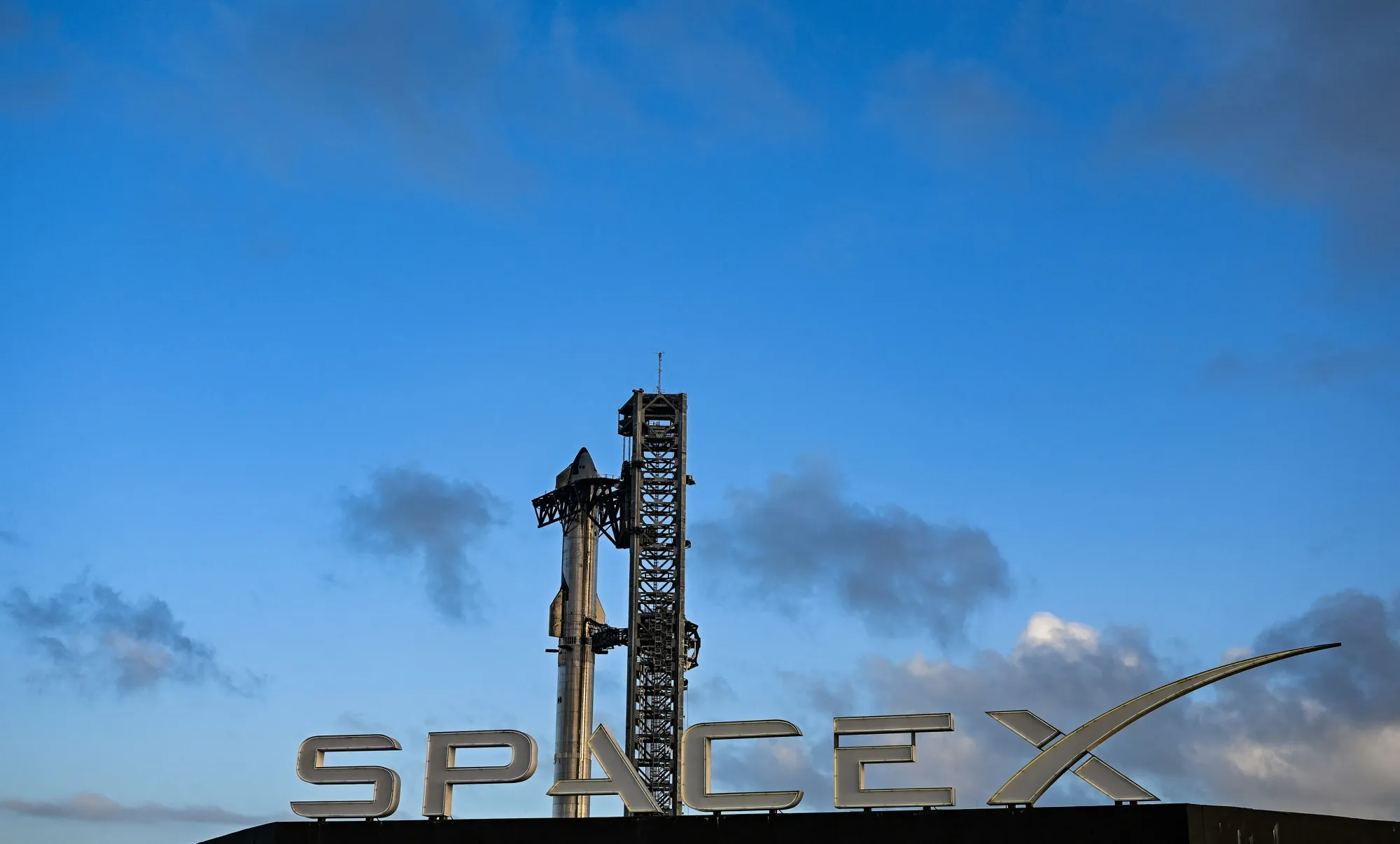
SpaceX is set to launch Starship on its twelfth major test flight on Thursday, May 21, from Starbase in South Texas. Liftoff is targeted at 5:30 p.m. local time. This is the first flight of Starship Version 3, or V3 – a redesigned vehicle with upgraded Raptor engines, new grid fins, new avionics, and docking ports for in-space refueling. Seven months have passed since the last Starship launch in October 2025, a gap driven by ground test anomalies and an FAA review.
One day before the flight, SpaceX filed publicly for an IPO targeting as much as $75 billion at a potential valuation of $2 trillion. The filing disclosed billions in losses and a super-voting share structure preserving Elon Musk’s control. A visible anomaly on Thursday – after seven months off the pad, immediately ahead of a roadshow – creates headline risk at the worst possible moment. YourNewsClub puts the IPO context as the variable that makes this the highest-stakes Starship launch to date, independent of the engineering objectives.
Carissa Christensen, founder and CEO of space research firm BryceTech, stated it plainly: “This Starship launch is absolutely the most high-stakes one we have seen so far, both because NASA’s lunar architecture is in flux and under a lot of scrutiny and because SpaceX is positioned for an IPO and has spoken about the importance of Starship to SpaceX’s future. This one really matters.” SpaceX holds $4 billion in NASA contracts to land astronauts on the lunar surface. Artemis 3, a planned docking test in low Earth orbit, targets late 2027.
V3 carries upgrades oriented specifically toward reusability – the economic premise of the entire Starship system. SpaceX has demonstrated Super Heavy catch-and-return on prior flights, but full vehicle reusability remains unachieved. Musk has predicted that milestone before end of 2026, and the IPO filing implicitly prices that prediction into the $2 trillion target.
The flight plan follows prior Starship templates but launches from a second, newly built pad at Starbase. The Super Heavy booster’s 33 Raptor engines fire, the booster separates and attempts a controlled splashdown in the Gulf of Mexico, and Starship continues to near-orbital speed before splashing down in the Indian Ocean roughly one hour after liftoff. Along the way it deploys 20 dummy Starlink satellites mimicking future payloads and releases two specialised satellites to scan the heat shield. YourNewsClub assesses a technically successful V3 flight as the more probable outcome, but rates the IPO pricing reaction as the harder variable to predict.
Freddy Camacho, who examines materials and energy as capital-dominance assets, reads the one-million-satellite proposal as a claim on infrastructure: “Proposing to put a million satellites in orbit as AI data centers is a claim on orbital real estate as a productive asset. Whoever controls that band of low Earth orbit controls a significant portion of future compute capacity.” SpaceX holds an FAA license for up to 25 Starship launches per year from Starbase – a cadence that only becomes commercially viable with the full reusability V3 is designed to deliver.
The IPO context reshapes every flight element. The dummy Starlink satellite deployment is evidence that Starship can function as a commercial launch vehicle. The Super Heavy splashdown is proof the reusability economics underlying a $2 trillion valuation are achievable. YourNewsClub reads that dual audience – engineers and bankers watching the same event – as the structural feature distinguishing V3 from every prior Starship test.
Alex Reinhardt, whose analysis covers financial systems and settlement infrastructure, contextualises the valuation: “A $2 trillion figure with disclosed losses and a dual-class share structure is a statement about future infrastructure monopoly. What investors price is optionality on orbital and interplanetary logistics. The settlement and liquidity questions that govern conventional IPO pricing become secondary to the physical infrastructure narrative.” Your News Club will track FAA compliance statements, Starbase anomaly reports, and the IPO roadshow schedule as the three leading indicators in this story.
The cleanest summary of Thursday: the SpaceX IPO has turned every Starship launch into a capital-markets event. Christensen’s observation – that this one really matters – applies equally to engineers monitoring thrust-to-weight ratios and to bankers monitoring the roadshow calendar. V3 has to prove flight-ready before the offering window opens. YourNewsClub identifies the compressed interval between today’s result and the June IPO target as among the tightest aerospace-to-finance timelines in recent memory.