
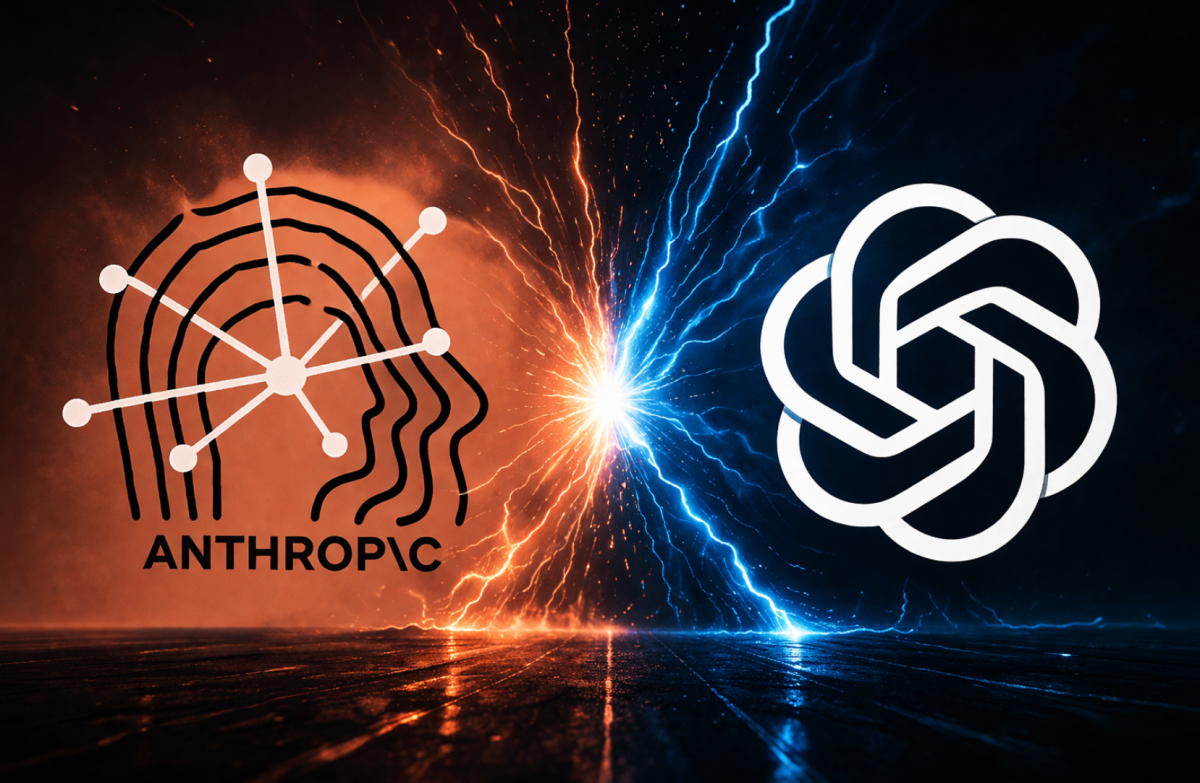
OpenAI’s towering $852 billion valuation is drawing internal skepticism just as competition intensifies, raising uncomfortable questions about whether the company’s trajectory can justify its price. Within investor circles, as noted in discussions reflected by YourNewsClub, confidence appears less unanimous than headline figures suggest, particularly as the firm pivots toward enterprise clients while attempting to defend its position against fast-rising rivals.
Anthropic has rapidly emerged as the most immediate pressure point. Its annualized revenue reportedly surged from $9 billion at the end of 2025 to $30 billion by March, fueled largely by enterprise demand for coding-focused AI tools. That pace of expansion reframes the competitive landscape, especially given that Anthropic’s valuation, hovering around $380 billion, now appears comparatively conservative. Some investors privately argue that backing OpenAI at current levels implies a future IPO valuation exceeding $1.2 trillion – a threshold that demands near-flawless execution.
The contrast extends beyond private negotiations into secondary markets, where appetite for Anthropic shares has intensified while OpenAI equity trades at a noticeable discount. That divergence reflects not only growth expectations but also perceived clarity of product-market fit. Anthropic’s focus on developer tools aligns directly with enterprise spending priorities, whereas OpenAI continues to balance consumer visibility with enterprise monetization. In ongoing editorial work at YourNewsClub, this divergence frequently surfaces as a central fault line shaping investor sentiment.
Jessica Larn, who studies macro-level technology policy and infrastructure impact of AI, views the situation through a structural lens. She points to how enterprise adoption increasingly hinges on predictable integration into existing systems rather than experimental capabilities. From that angle, firms that anchor themselves in core workflows – such as software development pipelines – gain a measurable advantage. OpenAI’s broader platform ambitions, while expansive, introduce complexity that may slow enterprise conversion.
Historical parallels add another layer of concern. Sam Altman’s earlier experience at Y Combinator included episodes where aggressive valuation growth outpaced sustainable business fundamentals. Some companies eventually justified their valuations, but others struggled under the weight of expectations. That pattern now echoes in investor discussions around OpenAI, where scale alone no longer guarantees confidence. Observations circulating through YourNewsClub conversations suggest that capital is becoming more selective, favoring clarity over ambition.
Alex Reinhardt, specializing in financial systems and liquidity control through digital protocols, emphasizes how valuation narratives increasingly depend on capital efficiency rather than sheer growth metrics. He notes that investors are scrutinizing how quickly companies convert funding into durable revenue streams. In that framework, OpenAI’s record $122 billion fundraising round signals strength, yet also raises the bar for performance. The larger the capital base, the narrower the margin for strategic missteps.
OpenAI’s leadership continues to project confidence. CFO Sarah Friar has framed the massive funding round as a validation of long-term trust, reinforcing the company’s belief in its enterprise strategy. Still, comparisons to past technology cycles persist, including references to Netscape – a once-dominant player overtaken despite early leadership. Such analogies resonate not because they predict identical outcomes, but because they highlight how quickly technological advantage can erode.
For the broader AI market, the situation introduces a recalibration phase. Valuations no longer rise solely on narrative momentum; they now face closer alignment with revenue durability, product specialization, and infrastructure integration. As the competitive gap narrows, the narrative tracked by Your News Club increasingly centers on execution discipline rather than visionary scale, signaling a shift in how the next phase of AI leadership will be determined.