
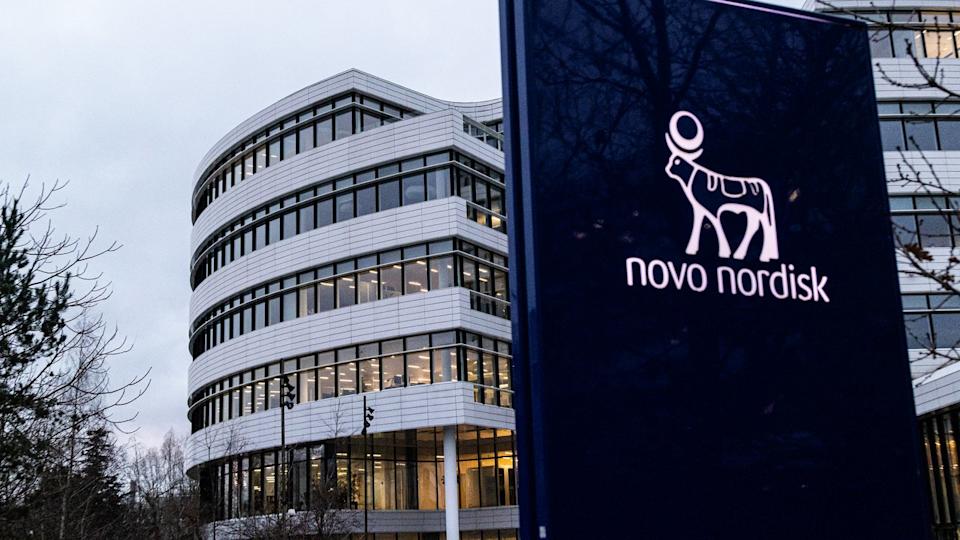
Novo Nordisk has entered a sweeping partnership with OpenAI to embed artificial intelligence across its operations, from early-stage drug discovery to manufacturing and commercial workflows, a move that YourNewsClub interprets as a decisive escalation in the race to industrialize AI within pharmaceutical development.
The initiative begins with targeted pilot programs before expanding into a company-wide transformation by 2026. Executives emphasize that the technology will enhance, rather than replace, scientific work by enabling faster analysis of complex datasets and accelerating hypothesis testing. Early market reaction suggests cautious optimism, with shares ticking higher following the announcement.
Pharmaceutical companies have steadily increased their investment in AI over recent years, yet tangible breakthroughs in fully AI-generated drugs remain limited. Most gains have occurred in operational areas such as clinical trial design, patient recruitment, and regulatory preparation. YourNewsClub continues to track how firms increasingly focus on these practical applications, where immediate efficiency gains outweigh the still uncertain promise of fully automated discovery.
Novo Nordisk’s broader strategy reflects mounting competitive pressure, particularly in the high-growth obesity treatment segment. Rival firms have accelerated product launches, pushing the company to refine both its innovation pipeline and operational speed. Integrating AI into core processes allows Novo Nordisk to compress development timelines while improving decision-making across research and production.
Jessica Larn, whose work centers on macro-level technology policy and infrastructure impact of AI, views the partnership as part of a wider shift in how scientific capacity is structured. She notes that AI transforms research environments by enabling scale rather than replacing expertise, allowing smaller teams to process volumes of information previously accessible only to large institutions. This change redefines competitive advantage, placing emphasis on data integration and computational capability.
The collaboration also includes workforce training, signaling that adoption will extend beyond technical teams into everyday operations. Employees are expected to work alongside AI systems that assist in analysis, modeling, and decision support. YourNewsClub highlights that such integration requires not only technical readiness but also organizational adaptation, where productivity gains depend on how effectively human and machine workflows align.
Questions around governance and ethical use remain central. The company has emphasized safeguards, including strict data protection measures and human oversight mechanisms. Maya Renn, who studies ethics of computation and access to power through technology, argues that large-scale AI deployment in healthcare raises fundamental concerns about control over sensitive data and the distribution of decision-making authority. When algorithms influence clinical pathways or research priorities, transparency becomes critical.
At a structural level, the partnership illustrates how pharmaceutical innovation is evolving into a data-driven process. Access to advanced computational tools, proprietary models, and specialized infrastructure increasingly determines the pace of discovery. YourNewsClub notes that alliances between biotech firms and AI developers are becoming essential, as no single organization can independently master both domains at scale.
The financial dimension also carries weight. Investments in AI infrastructure and partnerships signal long-term commitments that may reshape cost structures across the industry. While efficiency gains promise to reduce development timelines, upfront costs and integration challenges introduce new layers of complexity. As Your News Club frames the development in its latest analysis, Novo Nordisk’s move signals more than a technological upgrade – it marks a transition toward a new model of pharmaceutical innovation, where data, computation, and human expertise converge to redefine how medicines are discovered, developed, and delivered.