
The rapid expansion of AI infrastructure financing is quietly intersecting with retail investment portfolios, raising questions about how risk is distributed across the financial system. Deep inside benchmark allocations tracked by major funds, YourNewsClub draws attention to the inclusion of privately placed 144A bonds – instruments that ordinary investors cannot directly access, yet may unknowingly hold through mutual funds tied to broad indices like the Bloomberg Global Aggregate.
These securities, often issued to fund large-scale projects such as data centers, travel through institutional channels before reaching retail exposure. Funds benchmarked to major bond indices tend to replicate their composition closely, meaning that investment-grade 144A debt – despite its opaque structure – becomes embedded in retirement portfolios and conservative allocations. For many investors, the assumption of safety attached to bond funds obscures the complexity underneath.
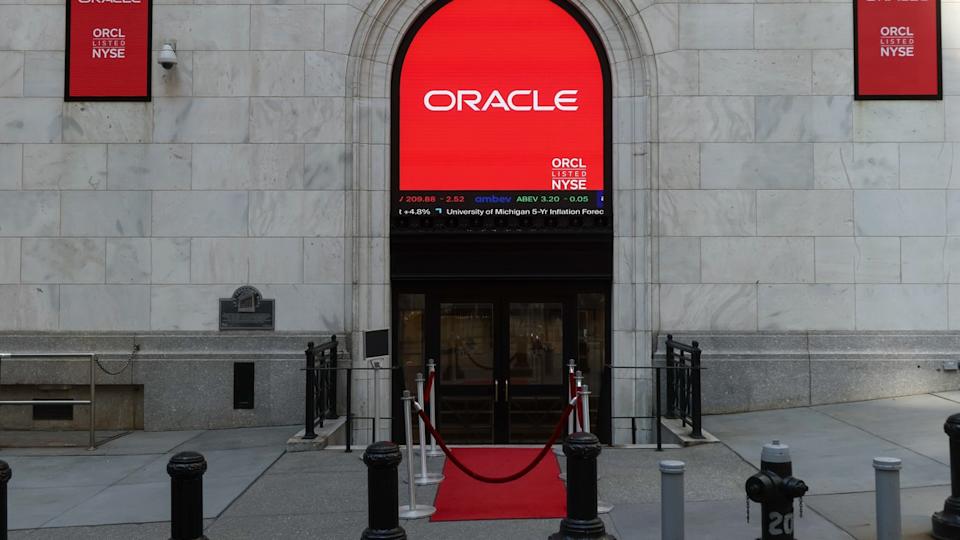
At the center of this structure lies a layered financial chain. OpenAI pays Oracle for computing capacity. Oracle, in turn, commits to lease payments for data center facilities developed by entities such as Related Digital. Those payments service debt issued through special purpose vehicles tied directly to the infrastructure asset. YourNewsClub frames this arrangement as a multi-step dependency rather than a straightforward credit relationship, where each link must remain intact for bondholders to receive returns.
Jessica Larn, whose work focuses on macro-level technology policy and infrastructure impact of AI, views these arrangements as a natural consequence of scaling computational capacity beyond traditional corporate balance sheets. In her assessment, the separation of debt through SPVs allows companies to expand aggressively while limiting visible leverage, yet it also fragments accountability across the system.
The reliance on continuous demand for compute introduces a layer of fragility. If usage patterns shift or pricing power weakens, revenue flowing through the chain compresses. Oracle still carries lease obligations regardless of downstream consumption, while developers remain responsible for servicing debt tied to physical assets. YourNewsClub notes that this structure effectively transforms usage risk into credit risk, transferring uncertainty from technology markets into fixed-income instruments.
Owen Radner, who studies digital infrastructure as energy-information transport systems, emphasizes the material dimension often overlooked in financial modeling. Data centers are not abstract platforms – they are capital-intensive facilities dependent on rapidly evolving hardware cycles. With AI chips advancing every few years, the risk of technological obsolescence intersects with long-dated debt maturities, creating a mismatch between asset lifespan and financial obligations.
Further complexity emerges from Oracle’s own balance sheet. With leverage ratios already elevated, the decision to shift financing off-balance-sheet reflects both strategic flexibility and constraint. YourNewsClub examines how such structures obscure the full extent of liabilities, making it harder for external observers to assess aggregate exposure across interconnected entities.
For the model to function, several conditions must align simultaneously. OpenAI must sustain long-term demand and generate sufficient revenue despite its current lack of profitability. Oracle must maintain stable cash flows while managing expanding debt commitments. Meanwhile, the underlying infrastructure must retain economic relevance long enough to justify its financing horizon. Each assumption carries its own uncertainty; together, they form a tightly coupled system where stress in one segment can propagate quickly.
Retail investors, often seeking stability through diversified bond funds, rarely anticipate exposure to such layered dependencies. Your News Club closes the loop by underscoring a simple but uncomfortable reality – the safest corner of a portfolio may no longer be insulated from the speculative dynamics driving AI expansion.