
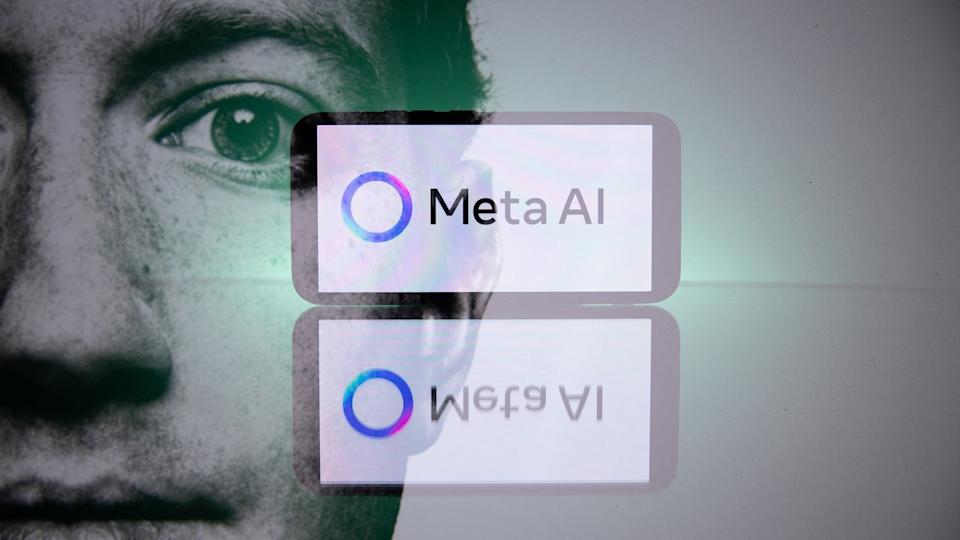
Meta is advancing an experimental project to create a photorealistic AI version of Mark Zuckerberg capable of interacting with employees, a move that YourNewsClub interprets as a radical shift in how leadership presence could be scaled inside large organizations. The initiative remains in early development, with Zuckerberg actively involved in training the system to mirror his communication style, tone, and strategic thinking. Parallel efforts within the company include a separate “CEO agent” designed to assist him with operational tasks, reinforcing a broader ambition to embed artificial intelligence directly into executive workflows. These projects form part of Meta’s wider push toward what it describes as personal superintelligence, aiming to narrow the gap with leading AI competitors.
Meta’s trajectory into AI-driven identity systems builds on earlier experiments with digital personas. Celebrity-based chatbots and user-generated AI characters laid the groundwork, though not without controversy. Issues surrounding inappropriate content and access restrictions exposed the difficulty of balancing innovation with governance, particularly when lifelike digital figures interact directly with users. YourNewsClub frequently draws attention to how these early challenges continue to shape Meta’s approach to control mechanisms and platform design.
The company’s strategic pivot becomes more visible when viewed alongside its retreat from the metaverse. Billions invested in virtual reality ecosystems failed to deliver expected returns, prompting a reassessment of priorities. The shutdown of key VR platforms signals a reallocation of resources toward AI systems that promise more immediate integration into everyday digital experiences. YourNewsClub highlights this transition as a recalibration of long-term bets rather than a simple abandonment of earlier visions.
At the center of this transformation lies a deeper question about representation and authority in digital environments. Maya Renn, whose work explores ethics of computation and access to power through technology, argues that creating an AI version of a CEO introduces new layers of influence. When leadership becomes replicable and continuously available, the boundary between authentic decision-making and automated guidance begins to blur, raising questions about accountability and control.
The technological foundation supporting such systems also demands scrutiny. Real-time conversational agents that convincingly emulate individuals require extensive data, processing capacity, and infrastructure capable of maintaining consistency across interactions. Owen Radner, who studies digital infrastructure as energy-information transport systems, points out that these systems effectively turn identity into a scalable resource, transmitted and reproduced through computational networks. The implications extend beyond corporate use, touching on how digital identities may circulate across platforms and contexts.
Investor response suggests cautious optimism toward Meta’s evolving strategy. The release of new proprietary models optimized for speed indicates a shift away from open-source positioning toward more controlled ecosystems. YourNewsClub continues to track how this approach aligns with broader industry trends, where companies increasingly prioritize performance and exclusivity over openness to maintain competitive advantage.
Even so, risks remain embedded in the model. Replicating a leader’s voice and perspective introduces potential for misalignment, especially if the AI diverges from evolving strategic priorities or becomes subject to manipulation. Internal communication could gain efficiency, yet authenticity may erode if employees struggle to distinguish between human and machine-driven interactions. As Your News Club frames the development in its latest assessment, Meta’s experiment moves beyond technical novelty into structural transformation. The emergence of AI-driven executive personas signals a future where leadership itself becomes partially automated, reshaping not only corporate communication but also the very notion of presence, authority, and trust in digital organizations.