
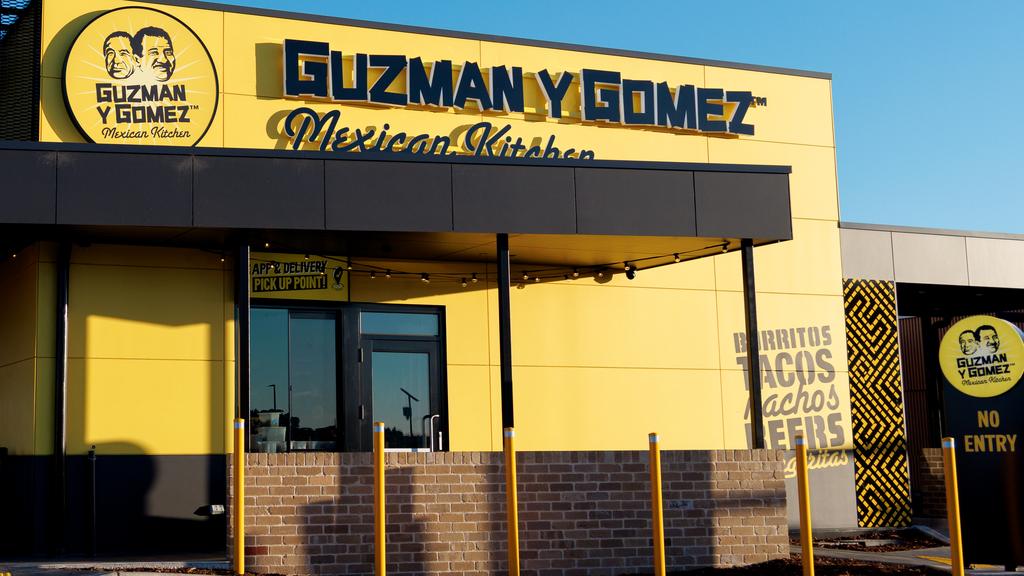
Australian burrito chain Guzman y Gomez Ltd. is closing its Chicago restaurants immediately and exiting the United States, founder and co-CEO Steven Marks announced on Friday, May 22. The shares jumped as much as 21% in early Sydney trading. Marks had personally spent three months in Chicago in a final attempt to stabilise the business. As recently as early April, the company was describing new outlets as showing revenue growth. None of that was enough.
YourNewsClub clocks the admission as unusually blunt. “The US business is unlikely to deliver the performance that would justify continued investment of shareholder capital,” Marks said. He was congratulated twice on the analyst call. A former hedge-fund trader who worked at SAC Capital and Cheyne Capital before moving to Australia in the early 2000s, Marks told analysts it had not been easy. Starting with suburban drive-throughs had made brand recognition difficult in a dense urban market with no existing presence.
The failure was structural from the start. Guzman y Gomez’s format works in Australian suburban drive-through settings. It did not translate to Chicago. At the end of March 2026, the US segment consisted of eight restaurants against 242 in Australia, 23 in Singapore, and five in Japan. The most shorted stock on Australia’s S&P/ASX 200, with roughly a quarter of shares bet against, was now pulling the plug.
Josh Gilbert, lead analyst for the Asia Pacific region at eToro, put it directly: “What markets don’t forgive is open-ended losses with no end in sight, and that’s what the company’s US operations had become.” The exit crystallises a $30 million to $40 million writedown charge. Without US losses, analysts at Morgan Stanley including Melinda Baxter estimate next-year earnings land roughly 10% above previous forecasts. Australian underlying earnings reach approximately A$85 million for the year ending June, up 29% from the prior year.
RBC Capital Markets analyst Michael Toner had upgraded the stock the previous day, citing the Australian expansion story – not the US. Citigroup said it had long been skeptical of US prospects. YourNewsClub marks the share price move as rational rather than celebratory: investors priced the removal of an indefinite liability, not approval of the failure itself. The shares at A$20.67 still sit below the 2024 IPO price of A$22, which means the full domestic growth story remains uncaptured.
Freddy Camacho, who examines political economy and capital as dominance assets, draws a hard line: “The US fast food market is one of the most capital-intensive competitive environments on earth. Entering as a suburban drive-through with no brand recognition is not a calculated risk – it is an asymmetric bet with poor expected value. The interesting question is not why they exited, but why it took three years.”
Guzman y Gomez now joins Bunnings and Crown Resorts in a recent pattern of Australian businesses burning capital on failed offshore replications. Bunnings retreated from the UK; Crown pulled back from Asia. The pattern reflects the difficulty of replicating formats built for Australian consumer density in markets with different competitive structures – not individual incompetence.
Alex Reinhardt, who examines financial systems and settlement infrastructure, frames the capital-allocation logic clearly: “A company with domestic earnings growing 29% and a foreign segment burning cash without a breakeven path faces a straightforward present-value calculation. Exiting is not retreat – it is repricing the domestic asset correctly.” YourNewsClub reads into Friday’s share price reaction confirmation that the market had already written off the US venture and was waiting for management to catch up.
The long-term domestic target of 1,000 Australian restaurants – roughly four times the current 242 – now becomes the unobstructed focus. Marks said the company remains open to international markets but on different terms and with different models. Singapore and Japan remain active. New markets may follow. But the Chicago model – suburban drive-throughs in a city with no existing brand presence – is not the template for any of them.
Your News Club expects GYG to trade at or above its A$22 IPO price within 12 months if Australian comparable sales hold above 3%, which the current trajectory supports. The writedown charge clears in the next reporting cycle. The domestic story is now the only story. Whether Marks can execute the 1,000-restaurant plan from his home market, without the distraction of a US turnaround attempt consuming his time and the group’s capital, is the only question left to answer.