
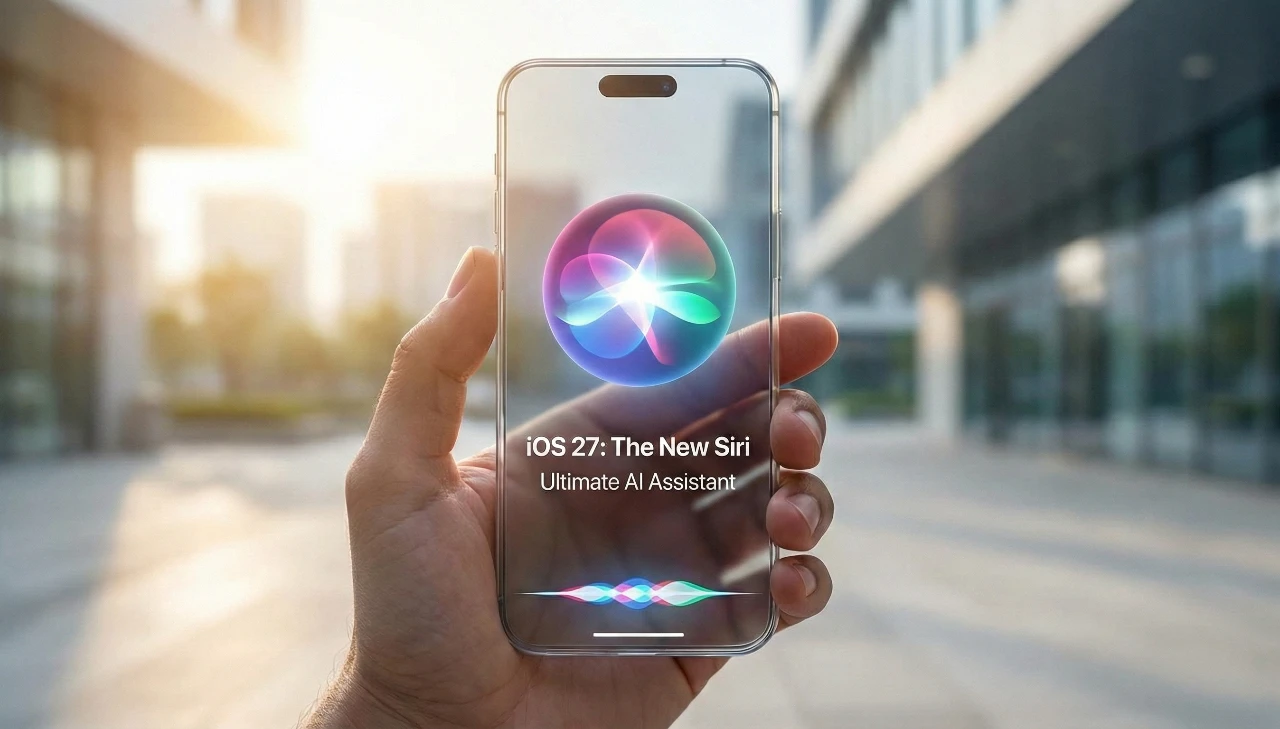
Apple is about to do something that no other major AI assistant on the market does, and almost nobody outside Cupertino is discussing it. According to Mark Gurman, the revamped Siri app coming in iOS 27 will include an option to auto-delete chat history. Not export it. Not anonymize it. Delete it. The detail dropped on May 17 in Gurman’s Power On newsletter, and the rest of the Apple coverage focused on whether the new Siri would ship as a beta after a two-year delay. The privacy feature got buried. YourNewsClub treats that feature as the actual story here, and the rest of the launch as scaffolding around it.
The context matters. Siri has been the joke of the AI assistant world for about four years. ChatGPT, Gemini and Claude raised the bar on what conversational AI feels like, and Siri stayed where it was. Apple promised a smarter Siri at WWDC 2024. It did not ship. Apple promised it again. It still did not ship. The current target is a beta launch with iOS 27 next month, which means Apple is publicly admitting that its flagship voice assistant still is not ready after two years of delays. That is not a great look. That is also the context in which the auto-delete feature suddenly makes a lot of sense.
Maya Renn, who studies ethics of computation and access to power through technology, cut to it: “Every other major AI assistant on the market wants your memory because memory is the moat. The more a system knows about you, the harder it gets to switch away. Apple is doing the opposite. They are betting that a meaningful slice of users would rather have a chatbot that forgets than a chatbot that remembers everything. That’s a real position. It isn’t a strong position on capability. It is the only differentiated position Apple has access to right now, and it could be the one that matters in two or three years when the regulators catch up to the memory question.”
The technical detail merits attention. Auto-delete works on a timer the user sets. Conversations vanish after the window expires. Apple’s servers keep no permanent record, and no training feedback loop uses user inputs to improve the next model. The contrast with OpenAI’s memory feature is stark. ChatGPT now pulls from past conversations, uploaded files and Gmail to personalize answers. Google’s Gemini leans on Workspace integration. Anthropic’s Claude can connect to QuickBooks, HubSpot and a growing list of business tools. Apple takes the opposite tack on purpose. The pitch is not “we have the best AI”. The pitch is “we have an AI that doesn’t remember you, and you might prefer that”. YourNewsClub identifies this divergence as the real fault line of the 2026 assistant market.
Alex Reinhardt, who covers financial systems, settlement infrastructure and liquidity control through digital protocols, sees the broader implication: “Data minimization is moving from compliance posture to product strategy. The EU AI Act, the new US state privacy frameworks, and the federal pre-deployment evaluation requirements all push in the same direction. Apple is reading the regulatory weather correctly. Whether or not the auto-delete Siri wins on capability, it positions Apple to be the default choice when corporate IT departments and regulated industries start asking which AI assistant they can actually deploy without legal review. That market is bigger than the consumer chatbot market most people focus on.”
A Genmoji upgrade sits tucked into the same iOS 27 reveal. Apple is adding Suggested Genmoji that generate automatically from user photos and commonly typed phrases. It is a small feature, but it signals where Apple thinks AI should live for most users. Not as a wide-open chat surface. As ambient assistance baked into the things people already do. YourNewsClub finds this framing more revealing than the auto-delete headline because it answers a deeper question. Apple is not trying to win the assistant war on Anthropic’s or OpenAI’s terms. The company is trying to redefine the war on terms that map to its existing strengths.
The risks are real and Apple knows it. Shipping the new Siri in beta means admitting publicly that the product still is not fully baked. Power users who care about capability will leave for ChatGPT, Gemini or Claude, and most of them already have. Developers who need to build on top of a reliable assistant API will keep building on someone else’s stack. The auto-delete feature won’t change that equation. What it might do is hold onto the segment of users who care more about privacy than capability, which is smaller than the total addressable market but still meaningful, especially in Europe.
Reactions on social media have been mixed. One developer on X joked that auto-deleting chats is cool but Siri first needs to survive a conversation longer than three prompts without acting confused. That tension captures the launch. Apple is trying to win on a feature that does not fix the underlying capability problem, and the question is whether enough users care about privacy to make the trade-off worth it. YourNewsClub is polling SMB owners this week on which AI assistant they would actually deploy in regulated settings, and the early returns suggest Apple’s positioning has more traction in industries like healthcare and legal services than the consumer commentary implies.
Zoom out and the iOS 27 Siri story is not really about Siri. It is about whether the AI assistant market splits into two camps over the next two years. On one side, the memory-first players who optimize for stickiness and personalization. On the other side, Apple, betting that a meaningful slice of the market wants the opposite. The bet is contrarian and the execution risk is real. Apple has made contrarian bets work before, and the regulatory wind sits at its back. The Cupertino beat at Your News Club will be watching WWDC next month for the signal on how seriously the rest of the industry takes this position.