
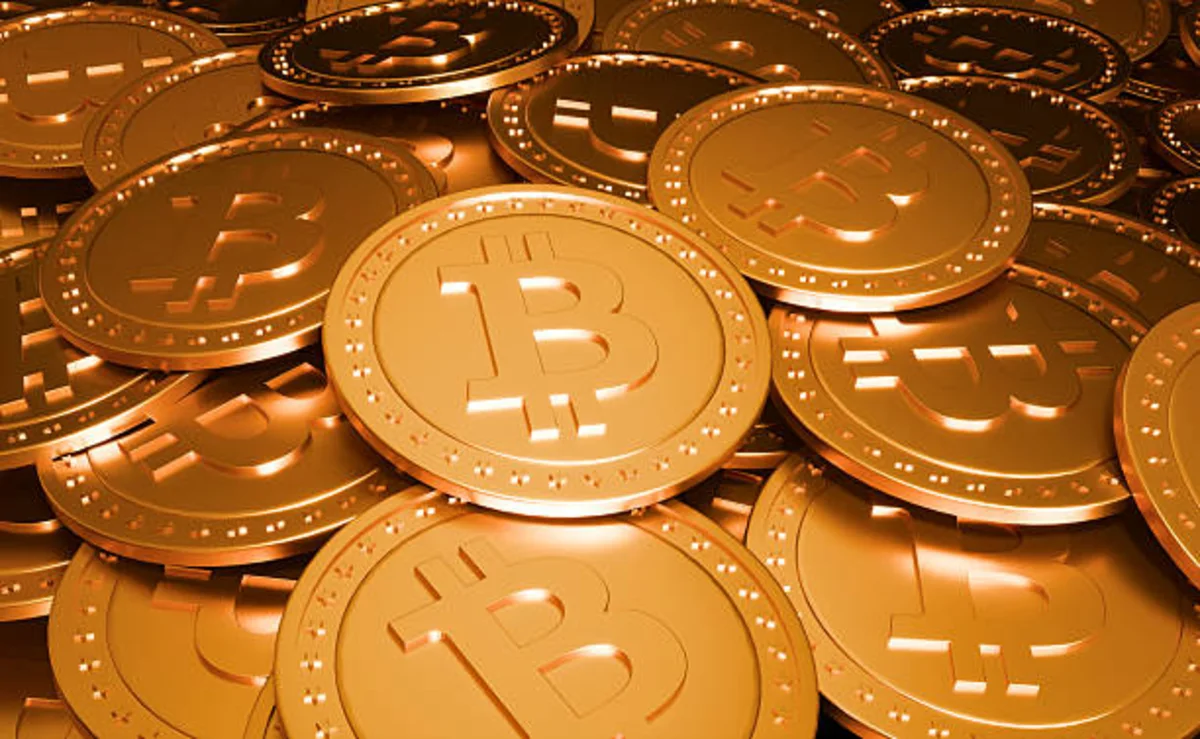
Bitcoin opened at $61,492.99 on Friday, up 2.5% from Thursday’s opening price, and climbed to $61,853.72 by mid-morning – its strongest level in roughly two weeks. Ethereum opened at $1,698.37, up 5.6% on the day, and moved up to $1,731.87 over the same window, with ether up almost 10% on the week and solana near 19%. The rally followed a June jobs report that missed expectations: the U.S. economy added just 57,000 jobs against forecasts of roughly 115,000, while unemployment ticked down to 4.2%. YourNewsClub isolates the mechanism at work as not economic strength but its opposite: a weak jobs number reduces the probability the Federal Reserve raises interest rates at its coming meeting, and lower-rate expectations are what is pulling capital back into risk assets, crypto included.
The move follows a rough June. Bitcoin fell to a 21-month low earlier in the week before rebounding, driven in part by a short squeeze that liquidated roughly $281 million in bearish positions over 24 hours, nearly double the liquidations on the long side. Crypto traders had flagged a historical pattern ahead of this move: bitcoin’s red Junes have tended to be followed by green Julys, a seasonal tendency now playing out for a second consecutive year. YourNewsClub treats the short-squeeze mechanics as the more immediate driver of Friday’s specific price action, with the jobs report functioning as the catalyst that triggered the squeeze rather than as new information about crypto’s underlying fundamentals.
The broader capital-rotation story matters as much as the daily print. Outflows from bitcoin ETFs, a stronger dollar, and heavy investor rotation into AI-linked semiconductor and memory stocks have weighed on crypto prices through most of 2026, pulling bitcoin down from its October 2025 all-time high of $126,198.07. Fed Chair Kevin Warsh’s recent comments that inflation risks have eased further supported the rally, and market trackers reported memory and semiconductor stocks losing momentum this week even as bitcoin rebounds – a signal some traders read as capital beginning to rotate back out of the AI trade and into crypto.
Alex Reinhardt, who tracks financial systems and settlement infrastructure through digital protocols, places the rate-expectations mechanism at the center: “Crypto’s correlation to rate expectations has tightened, not loosened, as the asset class has matured. A soft jobs report today functions almost identically to a soft jobs report for equities: it repriced the probability distribution for Fed policy, and bitcoin moved on that repricing before most traders had time to read the payroll number’s actual composition.” Freddy Camacho, who studies the political economy of computation, materials, and energy as dominance assets, draws the capital-rotation frame: “The 2026 story in risk assets has largely been AI infrastructure absorbing capital that would otherwise have flowed into crypto. Any week where semiconductor momentum fades and bitcoin simultaneously rallies is worth watching for a longer rotation, not just a single data point.”
Options markets are showing less conviction than spot prices suggest. Traders remain split on whether the bounce reflects a durable shift or a short-covering rally that could reverse once positioning normalizes, according to derivatives desks tracking the move. Your News Club benchmarks next week’s Fed commentary, rather than any single crypto-specific catalyst, as the data point most likely to determine whether July’s rebound extends or fades: this rally was built on rate expectations, and it will be re-tested the moment those expectations are revised.