
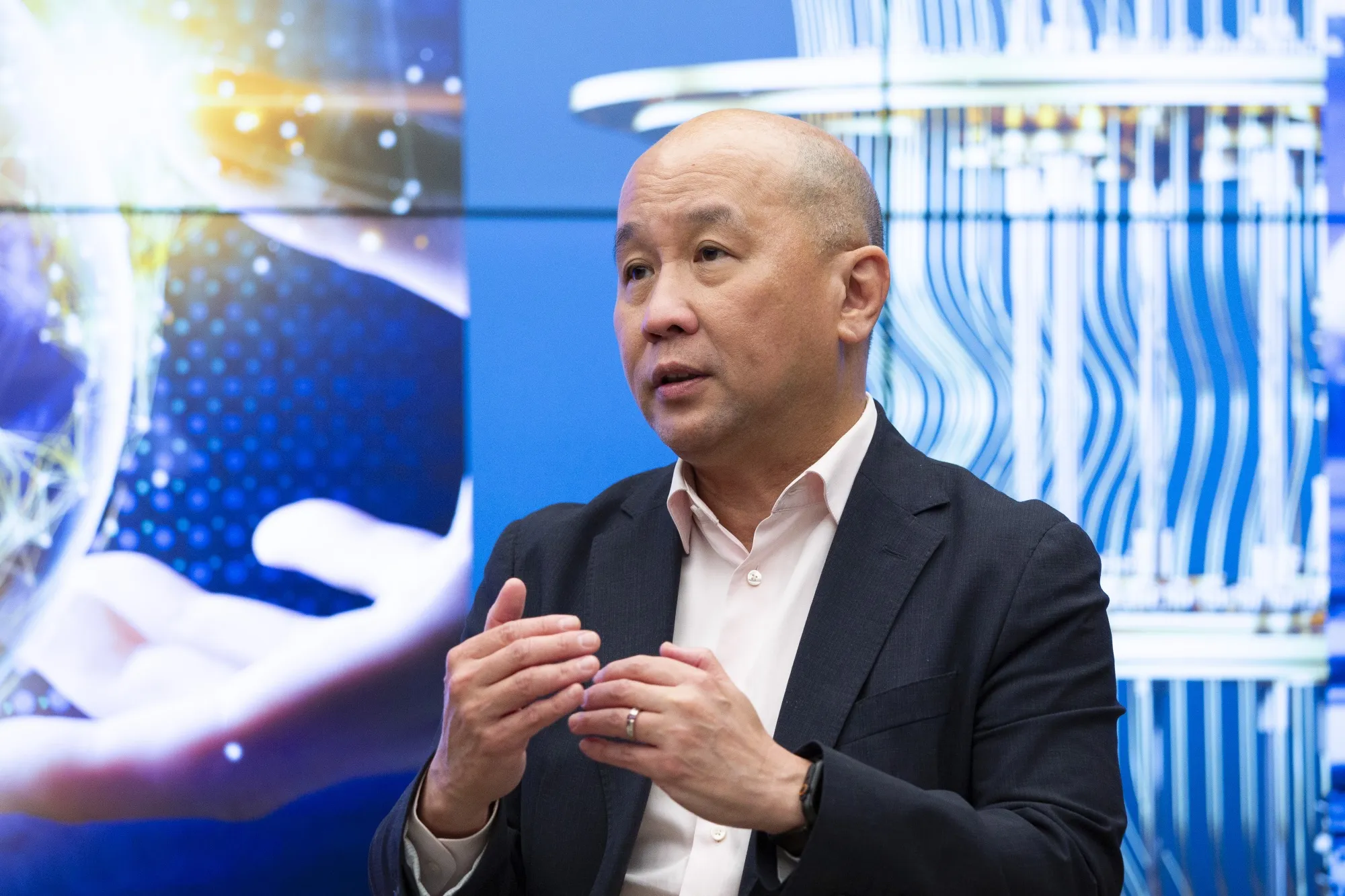
Phil Tseng, chief executive of BlackRock TCP Capital Corp, is in the process of leaving the firm after the publicly traded business development company marked down net asset value twice this year – by 19% in January and a further 5% in May – and the Manhattan US Attorney’s office opened a probe into its valuation practices. Federal prosecutors have been questioning executives. Tseng remains employed for now; the timing of his departure has not been finalised and no public announcement has been made. Both BlackRock and Tseng declined to comment. YourNewsClub identifies the valuation probe as the more structurally significant pressure: a NAV write-down is operationally painful but recoverable, while a federal investigation into how a publicly traded fund values its assets strikes at the compliance framework the BDC’s entire investor relationship depends on.
Tseng came to BlackRock via its 2018 acquisition of Tennenbaum Capital Partners. TCPC pools together private credit loans to middle-market companies and is externally managed by an indirect BlackRock subsidiary. BlackRock has spent years trying to build competitive scale in private credit, a market that has grown to approximately $1.8 trillion globally. TCPC represents the company’s legacy in that space – the vehicle it had before it acquired HPS Investment Partners for approximately $12 billion in 2025 specifically to extend its capabilities. Since the HPS deal closed, HPS executives have taken increasing day-to-day involvement in TCPC.
Goldman Sachs’ private credit fund honoured all Q2 redemption requests at roughly 3.2% outflows. Nuveen Churchill and Oaktree reported withdrawals of 3.1% to 4.5%. Those figures suggest TCPC’s difficulties reflect specific loan selection and valuation decisions rather than a category-wide crisis. YourNewsClub notes that contrast as the detail most damaging to any general-market explanation for TCPC’s problems.
Alex Reinhardt, who tracks financial systems and settlement infrastructure through digital protocols, draws the regulatory exposure: “A federal valuation probe at a publicly traded BDC is unusually direct scrutiny in a market that relies on internal valuation methodologies with limited external verification. If the inquiry results in charges or a settlement requiring changes to how TCPC marks assets, it could establish a disclosure precedent affecting all externally managed BDCs.” Maya Renn, whose work focuses on the ethics of computation and access to power through technology, frames the investor information gap: “Investors in a publicly traded BDC who acted on NAV disclosures that may have been inaccurate were making decisions on a false basis. The probe’s significance extends beyond any individual fund manager to the reliability of private credit NAV reporting as a category.”
YourNewsClub ranks the US Attorney’s inquiry as the single most consequential open variable in the TCPC story, because its outcome will determine whether Tseng’s departure resolves the fund’s most serious exposure or whether the investigation continues to apply pressure to BlackRock’s broader private credit operations regardless of who runs TCPC next.
BlackRock’s broader private credit ambition is not at risk from TCPC alone. The $12 billion HPS acquisition in 2025 gave BlackRock a genuinely competitive private credit platform, and HPS’s track record and institutional relationships are entirely separate from TCPC’s legacy loan book. The reputational and regulatory exposure from TCPC is localised rather than systemic for BlackRock as a whole – which is partly why Tseng’s departure is possible without triggering broader alarm about the firm’s alternative credit capabilities.
The BDC structure itself adds a layer of complexity that the write-downs and probe make newly visible. As a publicly traded vehicle, TCPC is required to distribute at least 90% of its taxable income as dividends – a structure that limits its ability to retain capital against losses and makes it more dependent on the quality of its underwriting than a private fund with more discretion over distributions. Your News Club calls the next TCPC board meeting following any formal Tseng departure announcement as the first opportunity for the company to signal whether HPS executives will assume management, whether an outside replacement will be appointed, or whether the fund itself will be restructured or wound down.