
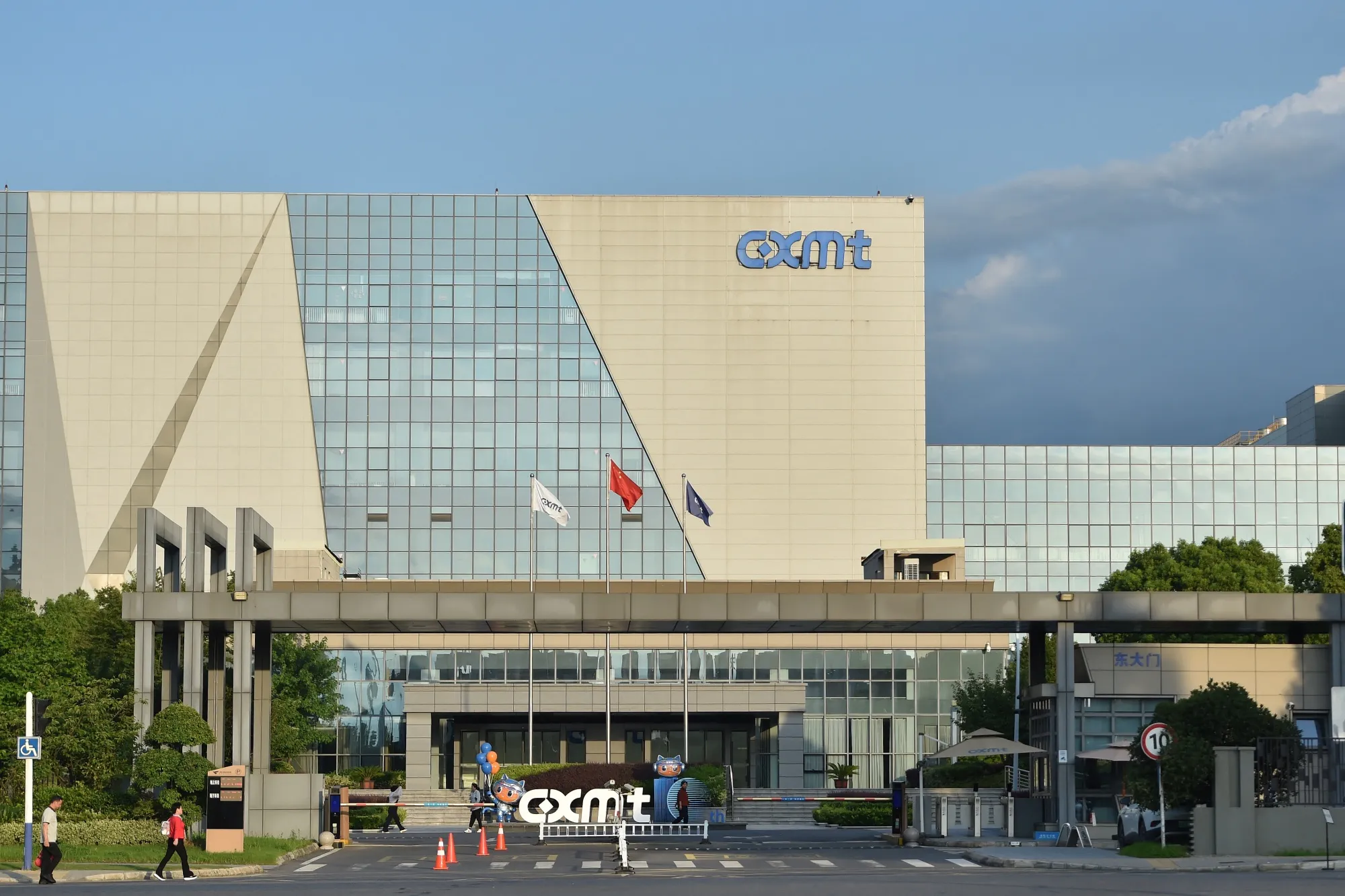
CXMT Corp., the Hefei-based DRAM chipmaker formerly known as ChangXin Memory Technologies, began trading on the Shanghai Star Market on Monday in China’s largest-ever semiconductor IPO, raising 66.6 billion yuan – approximately $9.8 billion. The company’s valuation at the IPO price reached approximately 580 billion yuan ($85.7 billion). The retail portion was oversubscribed 212 times, with individual investors submitting 7.07 trillion yuan worth of orders – approximately 10 times the retail order book of SpaceX’s US listing in June. Sell-side analysts at Huaxi Securities project a market value of 5 trillion yuan at 40 times 2026 earnings, with revenue estimated to more than double to 572.7 billion yuan by 2028. CXMT’s revenue surged to 50.8 billion yuan in Q1 2026, up more than 700% year-on-year, as the global DRAM cycle turned sharply upward on AI server demand. YourNewsClub logs the 212-times retail oversubscription figure as the metric that most clearly captures the nationalist and financial sentiment driving Chinese investor appetite for the listing: individual investors submitted 10 times the order book of SpaceX, the largest US IPO in recent history, for a domestic chip company that is years behind its South Korean competitors in the most commercially valuable memory category.
CXMT holds approximately 8% of the global DRAM market, according to Counterpoint Research, behind Samsung (36%), SK Hynix (29%), and Micron (24%). In high-bandwidth memory – the DRAM variant most critical to Nvidia GPU performance – CXMT has no significant commercial production. SK Hynix holds approximately 58% of the global HBM market and is Nvidia’s primary supplier. US export controls prohibit the sale of HBM to Chinese buyers, creating a strategic motivation for CXMT to develop domestic HBM capability, but CXMT’s access to the advanced tools SK Hynix and Samsung use for HBM production is restricted by the same export controls.
CXMT’s IPO proceeds will fund capacity expansion and HBM3-equivalent chip development. The company has been working with Chinese equipment suppliers Naura Technology, Maxwell, and U-Preseason on assembly and bonding tools. Earlier CXMT DDR5 testing by third-party reviewers found the chips less performant and consistent than SK Hynix production at equivalent specifications, suggesting the yield gap is material rather than marginal. YourNewsClub ranks CXMT’s ability to produce HBM at competitive yields as the single most commercially important technical milestone separating the company’s current valuation from the 5 trillion yuan projection, since HBM is where the highest margins exist in the memory market and where CXMT currently has no commercial position.
Owen Radner, who models digital infrastructure as energy-information transport systems, draws the supply chain independence argument: “Even if CXMT cannot produce HBM at SK Hynix quality, the ability to supply Chinese AI companies with domestic DRAM reduces the vulnerability of China’s AI infrastructure buildout to foreign supply disruptions or political export decisions.” Freddy Camacho, who studies the political economy of computation and capital as dominance assets, frames the valuation risk: “CXMT at $85 billion is priced at roughly one-tenth of SK Hynix at a comparable point in that company’s development, which sounds modest until you account for the fact that CXMT is several technology generations behind in the most commercially valuable memory segment and faces equipment constraints SK Hynix did not face. The retail oversubscription reflects national champion enthusiasm; the institutional allocation will reflect a harder-edged technology gap assessment.”
YourNewsClub clocks Monday’s trading debut share price as the first market-determined signal of whether the institutional allocation that cleared at the IPO price holds under the pressure of the retail oversubscription unwinding in secondary trading, since the gap between retail expectations and institutional allocation has historically been where Chinese mega-IPO share prices find their near-term equilibrium.
A successful CXMT listing also creates pipeline momentum for Yangtze Memory Technologies, Baidu’s chip unit Kunlunxin, and potentially DeepSeek, which was reported to be considering filing for an IPO as early as 2026. Whether that pipeline materialises at comparable valuations, or whether CXMT proves to be a unique national-champion premium that does not transfer to other semiconductor companies, is the broader market question Monday’s debut begins to answer. Your News Club seats CXMT’s first disclosed HBM production milestone – whenever announced – as the commercial event that will most directly determine whether the 5 trillion yuan analyst projection is a realistic roadmap or a bull case built on assumptions that the company’s current technical position does not yet support.