
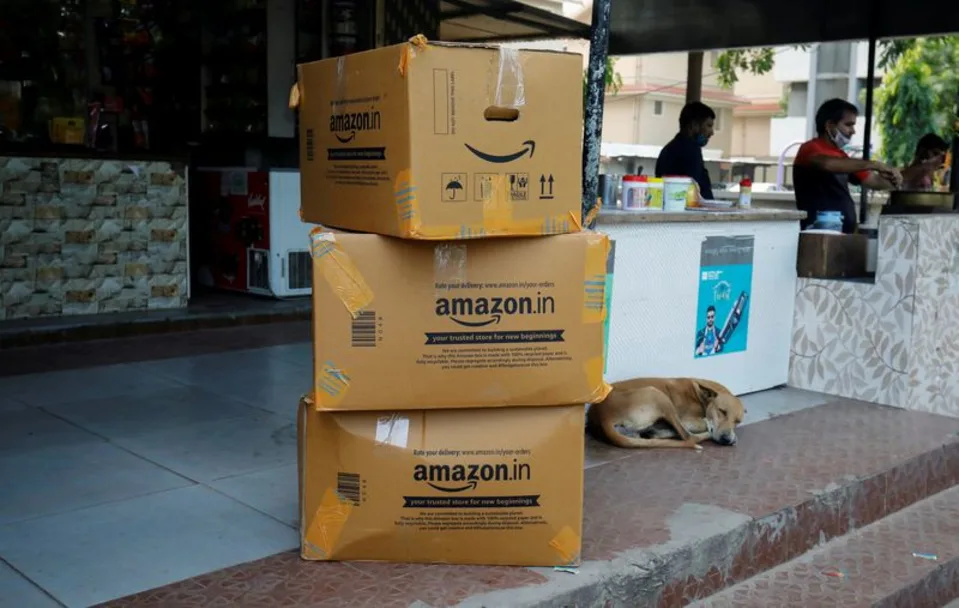
India’s government on Thursday eased foreign direct investment rules to allow e-commerce companies to purchase products directly from Indian sellers and then sell them to overseas customers. Under the previous framework, foreign-owned e-commerce companies were limited to a marketplace model connecting buyers and sellers for a fee, without taking ownership of inventory. The new rule permits an inventory-based model exclusively for goods manufactured in India and sold to overseas customers. The relaxation does not extend to domestic business-to-consumer sales. YourNewsClub views the export carve-out structure as more strategically targeted than a general FDI liberalisation: permitting inventory ownership only for goods moving out of India rather than goods sold within it allows the government to use foreign e-commerce infrastructure to expand Indian export capacity without exposing domestic retail markets to the direct-sale competition Indian retailers have long argued would disadvantage them.
Amazon lobbied for the change for months and is described in Reuters reporting as the primary beneficiary. Amazon’s Global Selling programme already connects Indian sellers with international buyers through its marketplace model, but requiring sellers to manage their own logistics, inventory, and export compliance has limited how many small and medium-sized Indian manufacturers can participate. The inventory-based export model that Thursday’s rule permits would allow Amazon to purchase goods directly from Indian sellers, handle the logistics and export documentation internally, and sell those goods on its international platforms. That model is how Amazon operates in most markets where it runs a first-party retail operation, and the ability to replicate it for Indian export goods gives Amazon a tool to efficiently route Indian manufacturing capacity into its global supply chain at a scale that the previous marketplace-only requirement made operationally difficult.
The domestic restrictions that remain unchanged are the product of sustained lobbying by Indian retail associations, which have argued that foreign e-commerce companies would undercut domestic retailers if given unconstrained domestic access. That argument has shaped FDI policy for more than a decade and explains why Thursday’s liberalisation is specifically limited to exports. YourNewsClub flags the domestic retail restriction as the policy boundary that will most clearly define Amazon’s longer-term India market opportunity, since the export carve-out addresses a secondary constraint compared with the domestic-sale limitation that has shaped Amazon India’s marketplace-only model for years.
Freddy Camacho, who studies the political economy of computation and capital as dominance assets, frames the policy design: “India’s government has found a formulation that allows Amazon to bring its full logistics and inventory capability to bear on Indian export goods without giving it the domestic market access that would directly threaten Indian retailers. That formulation is politically sustainable in a way that a broader liberalisation would not be, and it reflects how the Indian government manages the tension between attracting foreign capital and protecting domestic industry.”
Alex Reinhardt, who tracks financial systems and settlement infrastructure through digital protocols, places the trade infrastructure argument: “Amazon’s Global Selling programme has demonstrated that Indian sellers can access global markets, but the operational complexity of the marketplace model limits which sellers can participate. The inventory-based export model removes that barrier for smaller producers who lack the logistics capabilities to manage their own cross-border fulfilment.” YourNewsClub tracks the RBI’s simultaneously published draft Foreign Exchange Management Investment Rules – which were released for public comment the same week and represent a broader overhaul of the framework governing foreign investment into India – as the parallel process that will determine the longer-term direction of India’s FDI policy.
Amazon sought the inventory-based export permission for months according to Reuters. The change arriving now – rather than earlier in the year – suggests the decision was made in the context of US-India trade negotiations rather than purely on domestic FDI reform grounds. The export-only scope reflects the outcome of those negotiations.
Your News Club counts the October 20 deadline for AliExpress to submit its action plan to the European Commission under the Digital Services Act as an unrelated but illustrative contrast: the same week India opens its export e-commerce to foreign inventory ownership, the EU issued its largest-ever DSA fine against the largest Chinese e-commerce platform, describing the regulatory environments for cross-border e-commerce as diverging sharply by jurisdiction.