
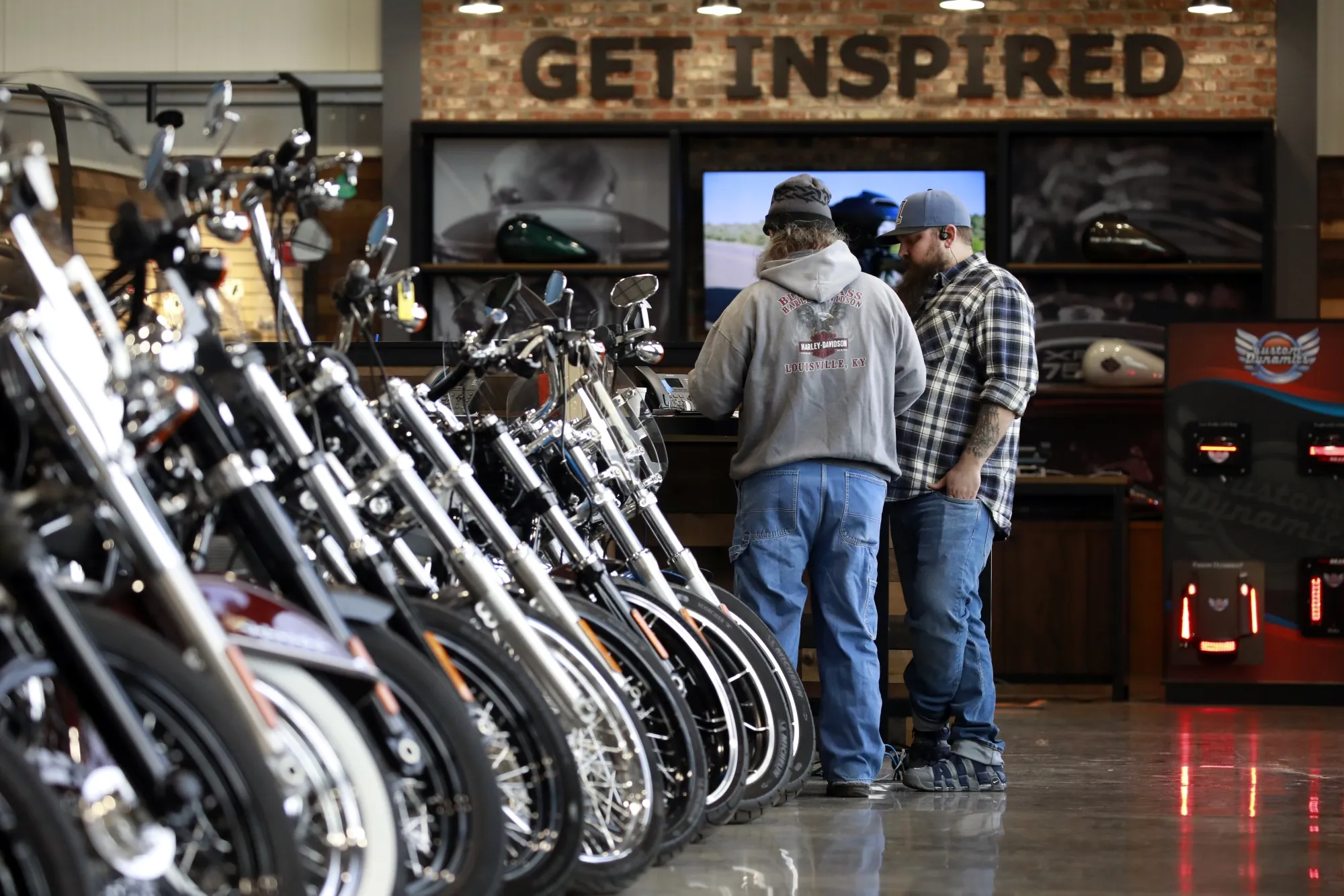
Harley-Davidson reported second-quarter 2026 results Thursday that missed analyst revenue expectations despite beating on adjusted earnings per share. Consolidated revenue fell 6% to $1.23 billion against estimates of approximately $1.26 billion. Net income dropped 26% to $80 million. Diluted EPS of $0.75 beat the consensus estimate of $0.64. The motorcycle segment posted revenue of $1.104 billion – up 6% year over year but below the Street estimate of $1.164 billion. The Harley-Davidson Financial Services segment saw its operating income margin collapse to 18.5% from 27.1% a year earlier, pulling consolidated operating income down 32% and driving most of the revenue miss. YourNewsClub logs the HDFS margin collapse as the most commercially significant element in Thursday’s results: Harley’s financial services business is the margin buffer that allows competitive motorcycle pricing, and an 8.6 percentage point compression in a single quarter describes either structural loan book deterioration or a pricing decision to sustain motorcycle competitiveness by subsidising financing costs.
Global motorcycle shipments increased 9% year over year to 39,209 units, and worldwide retail motorcycle sales edged up 1% to 42,467 units. North American retail sales rose 3% to 29,751 units, driven by strength in the Touring and Sport categories and demand for the 2026 model lineup. CEO Artie Starrs described the quarter as reflecting strength in the company’s domestic retail business, a continued focus on healthy dealer inventory levels, and progress under its “Back to the Bricks” strategy. That strategy involves reviving classic Harley-Davidson design language and launching models powered by smaller engines to attract younger and less experienced riders, which alters the product mix toward lower-priced units. Gross margin fell to 27.5% from 28.6% a year earlier, reflecting higher raw material costs from metals and inputs essential to motorcycle manufacturing, the adverse mix effect from the product shift toward smaller bikes, and foreign exchange headwinds.
Harley-Davidson raised its full-year 2026 guidance for global motorcycle retail sales to 133,500 to 138,500 units, up from the previous 130,000 to 135,000 range. The company also raised full-year guidance for HDMC and HDFS operating income, suggesting management views the HDFS margin compression as a timing effect that will partially reverse in the second half. Dealer inventory of new motorcycles ended Q2 down 17%, which the company characterised as healthier – fewer units sitting at dealerships means less discounting pressure. YourNewsClub ranks the HDFS margin recovery guidance as the most consequential claim in Thursday’s outlook: if the financial services segment returns to margins in the 25% to 27% range in Q3 and Q4, the guidance raise is credible; if it remains compressed, it will prove premature.
Alex Reinhardt, who tracks financial systems and settlement infrastructure through digital protocols, places the financial services dimension: “When HDFS operating income margin compresses by nearly 9 percentage points in a quarter, it raises the question of whether the company is subsidising retail demand through its financial services arm to sustain motorcycle sales volume that the ‘Back to the Bricks’ strategy requires.”
Freddy Camacho, who studies the political economy of computation and capital as dominance assets, frames the tariff picture: “Harley’s domestic manufacturing base is a competitive advantage in the current tariff environment, but it does not protect the company from raw material cost inflation, which is what is actually compressing its gross margin.” YourNewsClub clocks the Q3 2026 earnings release – scheduled for late October – as the first opportunity to assess whether the HDFS margin recovery management described in Thursday’s guidance materialises, and whether the raised retail sales guidance translates into the unit volumes that would validate the “Back to the Bricks” strategy’s demand assumptions.
North American retail sales rose 3%, but global retail sales rose only 1%, implying flat or declining performance in international markets. The “Back to the Bricks” strategy is specifically designed to attract younger American riders, but Harley’s global growth opportunity depends on markets where that nostalgic design language has less resonance and smaller models compete against a wider range of domestic alternatives.
Global dealer inventory down 17% and North American retail sales up 3% together describe a market where demand is marginally growing and supply is being deliberately constrained to maintain pricing discipline. Your News Club seats that combination as the structural precondition for the full-year guidance raise to be credible, since a tighter inventory position with modestly growing retail demand implies less end-of-cycle discounting in the second half of 2026.