
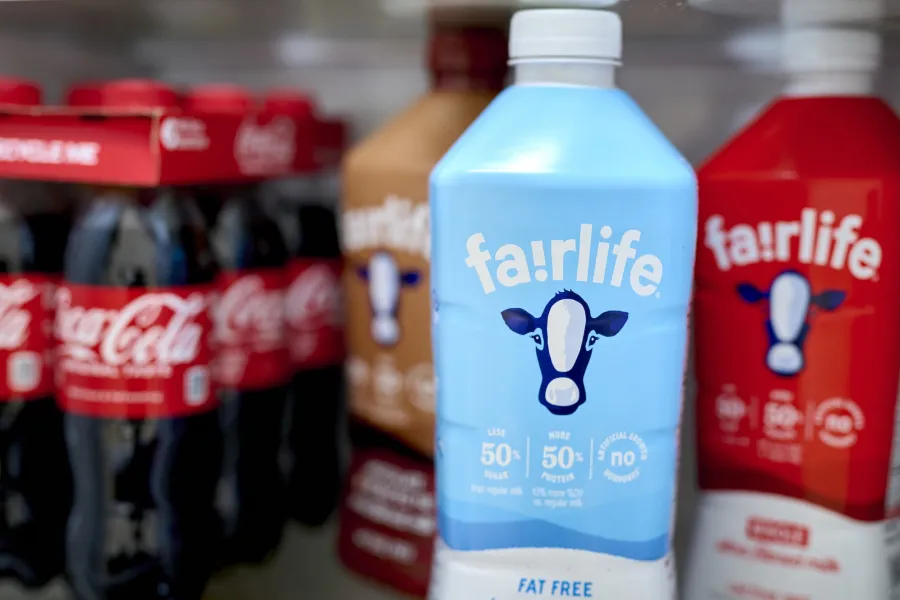
Coca-Cola disclosed Thursday that its Fairlife dairy subsidiary was hit by a ransomware attack that has forced the company to suspend U.S. production, after Fairlife identified unauthorized third-party access to a portion of its systems, including production-related systems. In a filing with the Securities and Exchange Commission, Coca-Cola said it activated its incident response and business continuity protocols immediately, brought in outside cybersecurity advisors, and notified law enforcement, while stressing that product quality and safety haven’t been affected. Fairlife’s Canadian production has not been impacted, and the company has not disclosed how the attackers gained access, whether a ransom has been demanded, or when U.S. production might resume – a gap YourNewsClub notes is itself the most immediate practical concern for grocery buyers and retailers stocking Fairlife’s shelves right now, well ahead of any question about the attackers’ identity or motive.
Fairlife is a significant piece of Coca-Cola’s portfolio, not a peripheral brand: the ultra-filtered milk and protein-shake business posted an estimated $4 billion in sales in 2024, built substantially on riding the same high-protein consumer wave that’s reshaped much of the food industry. That scale is worth pairing with an admission the filing itself makes explicit: Coca-Cola says it hasn’t yet determined whether the incident is “reasonably likely to materially affect the Company,” a standard disclosure hedge that tells you less about the attack’s actual severity than about how early the investigation still is. A company with a fully scoped incident either commits to a materiality determination or explicitly rules one out; Coca-Cola is doing neither yet.
Ransomware attacks against food and beverage manufacturers carry a track record of extended disruption specifically because production-line control systems, unlike office IT, often can’t simply be patched or isolated without halting physical output entirely. Past incidents at Arizona Beverages in 2019 and food distributor UNFI last year both produced weeks-long production disruptions and, in UNFI’s case, visibly empty grocery shelves – a pattern this incident is, so far, following closely, and one YourNewsClub spots early given that Fairlife’s suspension has already stretched past its initial disclosure with no restoration timeline offered, mirroring the early days of both prior incidents before their multi-week disruptions became clear.
The operational stakes are clearer this early than the technical ones, a gap YourNewsClub clocks as typical of the first days after any production-system ransomware disclosure, when legal and investor-facing obligations move faster than any public technical accounting. Freddy Camacho, who studies the political economy of computation, materials, and energy as dominance assets, notes the supply-chain exposure this reveals: “A single ransomware attack halting an entire product line’s national production is a story about how concentrated and digitally interdependent food manufacturing has become, not just about Fairlife’s specific security posture. The operational technology running a modern dairy plant is now deeply networked, and that connectivity is exactly what makes a plant vulnerable to the same kind of attack that used to be confined to office systems.” Maya Renn, whose work focuses on the ethics of computation and access to power through technology, places the disclosure-timing angle: “Coca-Cola’s SEC filing is doing real work here – this isn’t a voluntary transparency choice, it’s a legal disclosure obligation triggered by the incident’s materiality to investors. The gap between what a company is required to disclose to regulators and what it chooses to tell consumers directly is often wide, and grocery shoppers are far more likely to notice empty shelves than to read a filing explaining why.”
The production halt’s practical impact will show up first on store shelves rather than in any further corporate disclosure: Fairlife products, including its Core Power protein shakes and ultra-filtered milk lines, are distributed nationally, and a multi-week suspension at the scale Arizona Beverages and UNFI experienced would be enough to create visible shortages well before Coca-Cola updates the public on the investigation’s findings.
Whether this incident resolves within days or drags into the multi-week range past precedents suggest is the detail that will determine how seriously to weigh this against Coca-Cola’s broader dairy strategy, and it’s a timeline Your News Club benchmarks directly against Arizona Beverages and UNFI: a short disruption is a rounding error against a $4 billion brand, but a UNFI-length outage would meaningfully dent a full quarter of Fairlife’s output during peak demand for high-protein dairy products.