
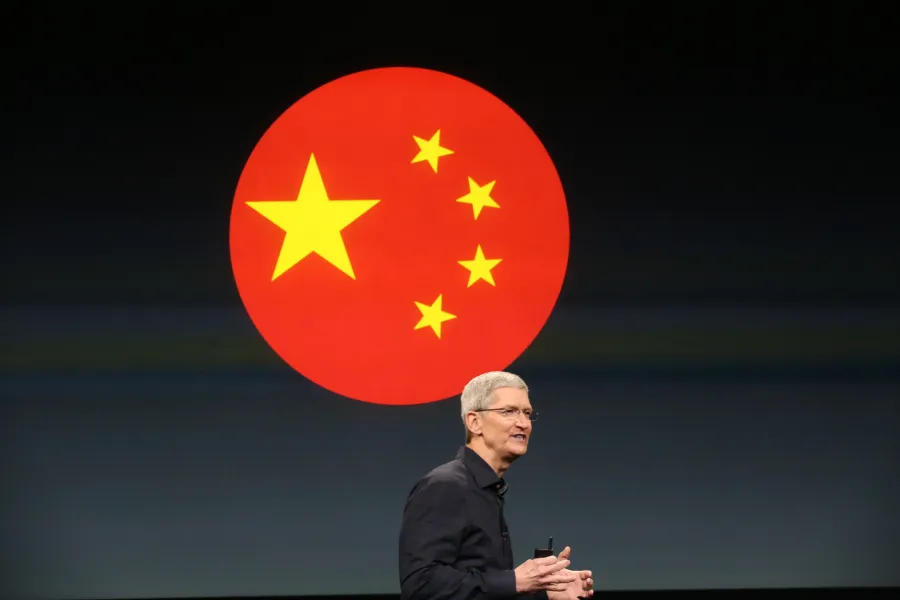
China’s Cyberspace Administration approved Apple Intelligence for launch in the country on Wednesday, clearing the way for Apple to integrate Alibaba’s Qwen AI model into iOS, iPadOS, macOS, and visionOS for Chinese users, ending a wait that stretches back to Apple Intelligence’s original 2024 debut in other markets. An Alibaba spokesperson confirmed the integration, saying Qwen would be “integrated into Apple Intelligence experiences” with capabilities including text and image understanding and generation, though neither company specified a launch date. YourNewsClub marks what’s actually being approved here: not Apple’s own AI models, which power Apple Intelligence everywhere else, but a wholesale substitution of Alibaba’s Qwen model underneath Apple’s interface, a structure required by Chinese regulations rather than one Apple chose voluntarily.
The deal caps a longer search: Apple reportedly explored partnerships with Baidu and other domestic AI developers before settling on Alibaba, each attempt complicated by the technical work of adapting a foundation model to Apple’s interface and to Chinese regulatory requirements for generative AI specifically. Outside China, Apple Intelligence routes its more complex requests to OpenAI’s ChatGPT; in China, that role goes to Qwen instead, making China the one major market where Apple’s flagship AI feature runs on a foundation model neither Apple nor an American company controls end to end.
The timing carries real commercial weight for Apple, which posted 28% growth in Greater China sales in the most recent quarter and recently regained the No. 2 position in China’s smartphone market following a shopping-festival discount push. Chinese consumers have been able to buy the latest iPhones without the AI features that have anchored Apple’s marketing everywhere else for nearly two years, a gap domestic Android competitors including Huawei and Xiaomi didn’t share, since Beijing has approved their own on-device generative AI services for some time. YourNewsClub weighs that two-year feature gap as the more commercially urgent problem this approval solves than the regulatory approval itself: Apple has been selling a visibly incomplete flagship product in its second-largest market for nearly two years, and closing that gap matters more to near-term device upgrades than the compliance milestone alone.
Freddy Camacho, who studies the political economy of computation, materials, and energy as dominance assets, draws out the sovereignty angle: “Every foreign AI product entering China now runs on Chinese-approved, Chinese-hosted model infrastructure by regulatory design, not by choice. That’s a structural concession Apple had no real alternative to making if it wanted its AI features available in its second-largest market at all, and it’s a preview of how AI sovereignty requirements are going to reshape every multinational’s product architecture, not just Apple’s.”
Owen Radner, who models digital infrastructure as energy-information transport systems, places the technical-integration angle: “Swapping the model underneath a product interface sounds simple, but Apple Intelligence’s features were built around the specific behavior of Apple’s own models and OpenAI’s ChatGPT. Getting Qwen to perform comparably across the exact same feature set, in a market where user expectations were already shaped by nearly two years of feature gap, is a nontrivial integration problem independent of the regulatory approval itself.” YourNewsClub benchmarks the market reaction as more informative than the regulatory approval itself: Alibaba’s U.S.-listed shares jumped roughly 6% and Apple’s stock hit a new high on the news, a combined reaction that signals investors read this less as a compliance formality and more as the actual unlock for a stalled product category in a market both companies badly needed a foothold in.
Your News Club clocks the still-unannounced launch date as the detail that will determine whether this approval converts into an actual sales catalyst or simply removes a regulatory blocker without near-term commercial impact: China’s smartphone upgrade cycles respond to concrete feature availability, not regulatory milestones, and Apple hasn’t yet said when Chinese users will actually be able to use any of this.