
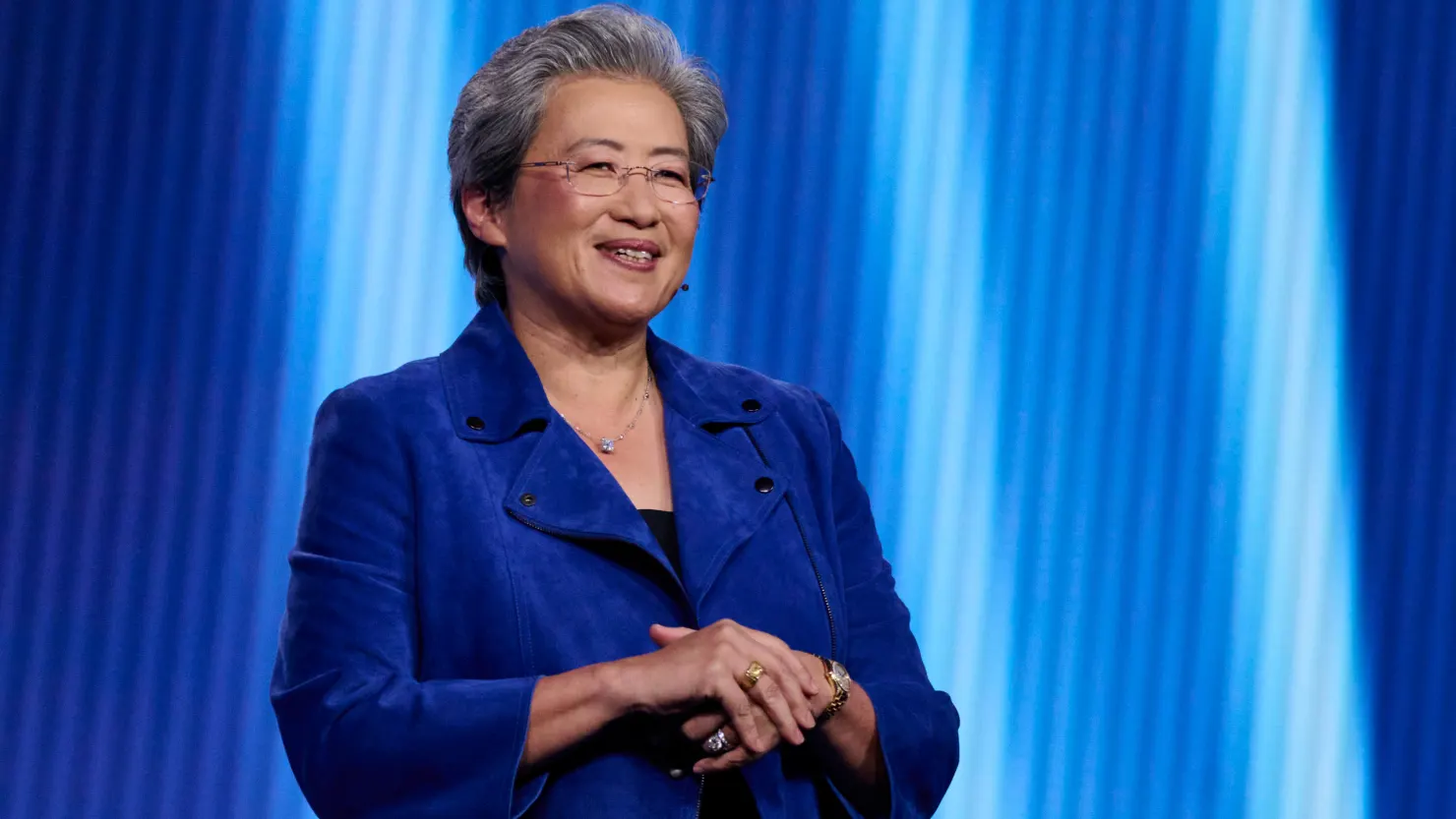
Advanced Micro Devices announced on Thursday, May 21, a commitment of more than $10 billion to Taiwan’s semiconductor and AI ecosystem. YourNewsClub catalogues the figure as the largest single public AI-infrastructure investment commitment in Taiwan’s supply chain this year – arriving the morning after Nvidia’s earnings and as AMD shares sit roughly double their January 2026 level. CEO Dr. Lisa Su stated in Thursday’s press release that global customers are rapidly scaling AI infrastructure to meet growing compute demand.
The investment spans four named partner categories. ASE Technology Holding and its unit SPIL cover embedded fan-out-based 2.5D packaging – the process that links chiplets and determines interconnect bandwidth between compute and memory. Sanmina handles system manufacturing. Inventec, Wiwynn, and Wistron cover server system integration. The common thread is AMD’s Helios rack-scale AI platform, on track for multi-gigawatt deployments starting in the second half of 2026. The AMD Instinct MI450X GPU is also on track for H2 2026 deployment alongside Helios.
Owen Radner, who studies digital infrastructure as energy-information transport systems, draws a line between what AMD announced and a conventional capacity deal: “The packaging investment is the real tell. Chiplet architectures and 3D hybrid bonding are not product features – they are infrastructure decisions that lock in interconnect geometry for the next five years. AMD is not buying capacity. It is building a network topology.” High-bandwidth memory integration and 3D hybrid bonding work together to increase interconnect bandwidth at the rack scale that large AI training runs demand.
The investment is as much about supply-chain security as technology. Taiwan Semiconductor Manufacturing Co. produces chips for Nvidia, Apple, AMD, and most major fabless chipmakers. Concentrating AMD’s packaging and assembly footprint close to TSMC fabs shortens delivery cycles, reduces logistics exposure in a geopolitically sensitive region, and deepens the preferential-allocation relationships that matter most during capacity-constrained periods. YourNewsClub flags that competitive dimension as the part of the announcement the dollar figure tends to obscure.
Stack this up against Nvidia’s product cycle. Nvidia is transitioning hyperscaler customers from H100 to Blackwell. AMD needs Helios and MI450X to land on schedule to compete for contracts currently in play. Data center customers are actively seeking alternatives to single-vendor AI chip dependency, and AMD has been the primary beneficiary of that diversification impulse. The company’s shares have roughly doubled year-to-date in part because that impulse is real and growing.
Jessica Larn reads the geopolitical dimension without hedging: “The $10 billion figure is a policy statement. At that scale, AMD signals to Washington and Taipei simultaneously that it intends to be structurally embedded in Taiwan’s ecosystem. That kind of investment does not reverse course cheaply – which is exactly the point.” YourNewsClub treats the H2 2026 Helios deployment schedule as the single most important verification point in this story. A slip to early 2027 would coincide with AMD’s heaviest Taiwan capital commitment period and could compress margins at an uncomfortable moment.
Su made the timeline explicit: multi-gigawatt deployments starting in the second half of 2026. That language is specific enough that missing it will show up in the earnings commentary. For Helios to hit that schedule, ASE and SPIL need to ramp the 2.5D packaging capacity AMD’s chiplet architecture requires without queuing behind TSMC’s other major customers.
The EU Chips Act and the US CHIPS and Science Act both attempt to pull advanced semiconductor activity westward. AMD’s announcement moves in the opposite direction, reinforcing the existing Taiwan cluster rather than diversifying away from it. That is a deliberate choice about where the manufacturing science actually lives. YourNewsClub finds that contrast – Western policy pulling one way, AMD’s capital pulling the other – as the structural tension that makes the investment strategically interesting beyond the chip-competition story.
Three variables to watch in H2 2026: whether Helios achieves the multi-gigawatt deployment milestone on schedule; whether MI450X shipments reach the hyperscaler customers AMD has been cultivating as Nvidia alternatives; and whether the ASE-SPIL packaging ramp meets volume requirements without constraint. Your News Club places those three checkpoints as the operational tests that will validate or challenge the $10 billion logic before year-end.