
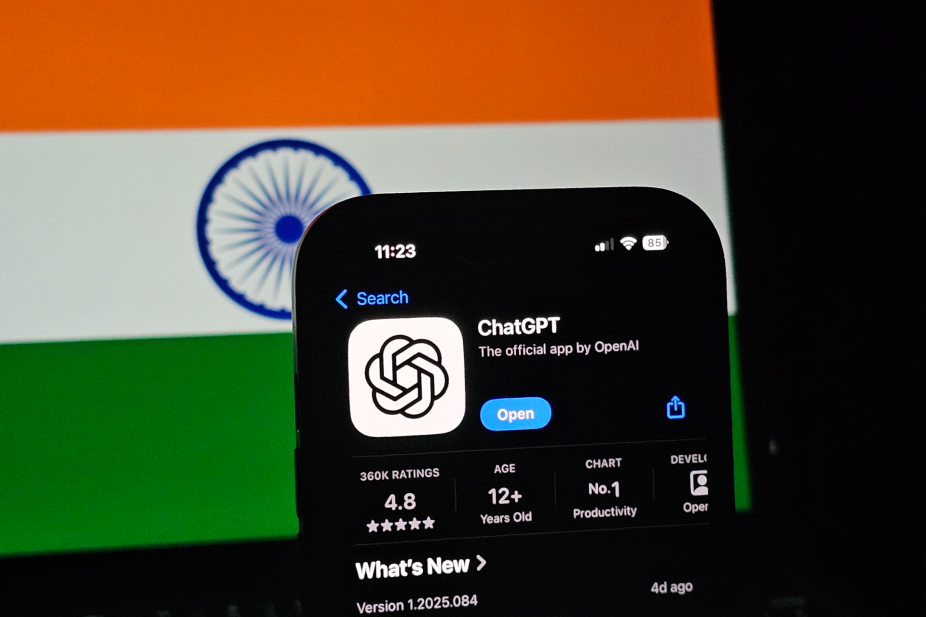
OpenAI’s latest image-generation upgrade has quickly turned India into its largest user base, with ChatGPT Images 2.0 gaining traction through highly visual, personalized use cases rather than purely functional demand, a shift that YourNewsClub interprets as a sign of how generative AI tools increasingly blend utility with identity-driven expression. Early company data points to strong activity in India, even as global growth remains uneven.
The release introduced more advanced prompt handling, improved multilingual text rendering, and iterative “thinking” capabilities that allow users to refine outputs. These upgrades arrive during a broader phase of competition in AI-generated visuals, where providers race to improve realism, language support, and creative flexibility. India’s scale plays a defining role here, with millions of downloads recorded during the launch window, far outpacing more mature markets such as the United States.
Yet global engagement metrics tell a more restrained story. App downloads rose modestly overall, while daily activity and session growth barely moved, indicating that existing users experimented without dramatically increasing usage frequency. In contrast, several emerging markets recorded sharp spikes in new installs, suggesting a wave of curiosity-driven adoption rather than sustained engagement. YourNewsClub treats this divergence as a key signal – scale and intensity do not necessarily move together in AI product cycles.
Jessica Larn, who specializes in macro-level technology policy and infrastructure impact of AI, sees India’s dominance less as a temporary spike and more as a structural outcome of demographic scale combined with mobile-first digital behavior. Large populations interacting primarily through smartphones tend to embrace visual tools quickly, especially when language barriers diminish through improved text rendering. In that sense, infrastructure readiness meets cultural demand, creating pockets of rapid adoption that traditional metrics struggle to capture.
Patterns of usage further complicate the picture. Rather than focusing on productivity or enterprise outputs, many users lean toward self-representation – stylized portraits, fantasy imagery, and social media-ready visuals dominate early activity. YourNewsClub views this behavior as a reminder that generative AI often enters markets through entertainment and identity before expanding into more formal applications. At the same time, competition continues to intensify. Rival models from major technology firms have already gained traction in similar regions, reinforcing India’s position as a testing ground for image-based AI adoption. Improvements such as accurate rendering of non-Latin scripts open additional layers of accessibility, widening the potential user base beyond English-centric ecosystems.
Maya Renn, who focuses on ethics of computation and access to power through technology, argues that these patterns raise deeper questions about who benefits from generative systems. When users primarily create personal or aesthetic outputs, platforms accumulate behavioral data and engagement signals that may later shape more commercially valuable applications. YourNewsClub increasingly connects this dynamic to a broader shift, where user creativity fuels platform intelligence in ways that remain unevenly distributed.
Even within India, engagement growth appears relatively measured compared to download volumes, hinting at an early-stage exploration phase rather than entrenched daily usage. Meanwhile, sharper growth in countries like Pakistan and Indonesia suggests that first-time exposure still drives the most visible spikes, particularly when new features capture public attention. Your News Club positions this rollout as an illustration of how AI adoption fragments across regions – some markets generate scale, others generate momentum, and only a few convert both into sustained engagement. The trajectory of ChatGPT Images 2.0 may depend less on raw user numbers and more on whether these early creative use cases evolve into habitual behaviors that anchor long-term growth.