
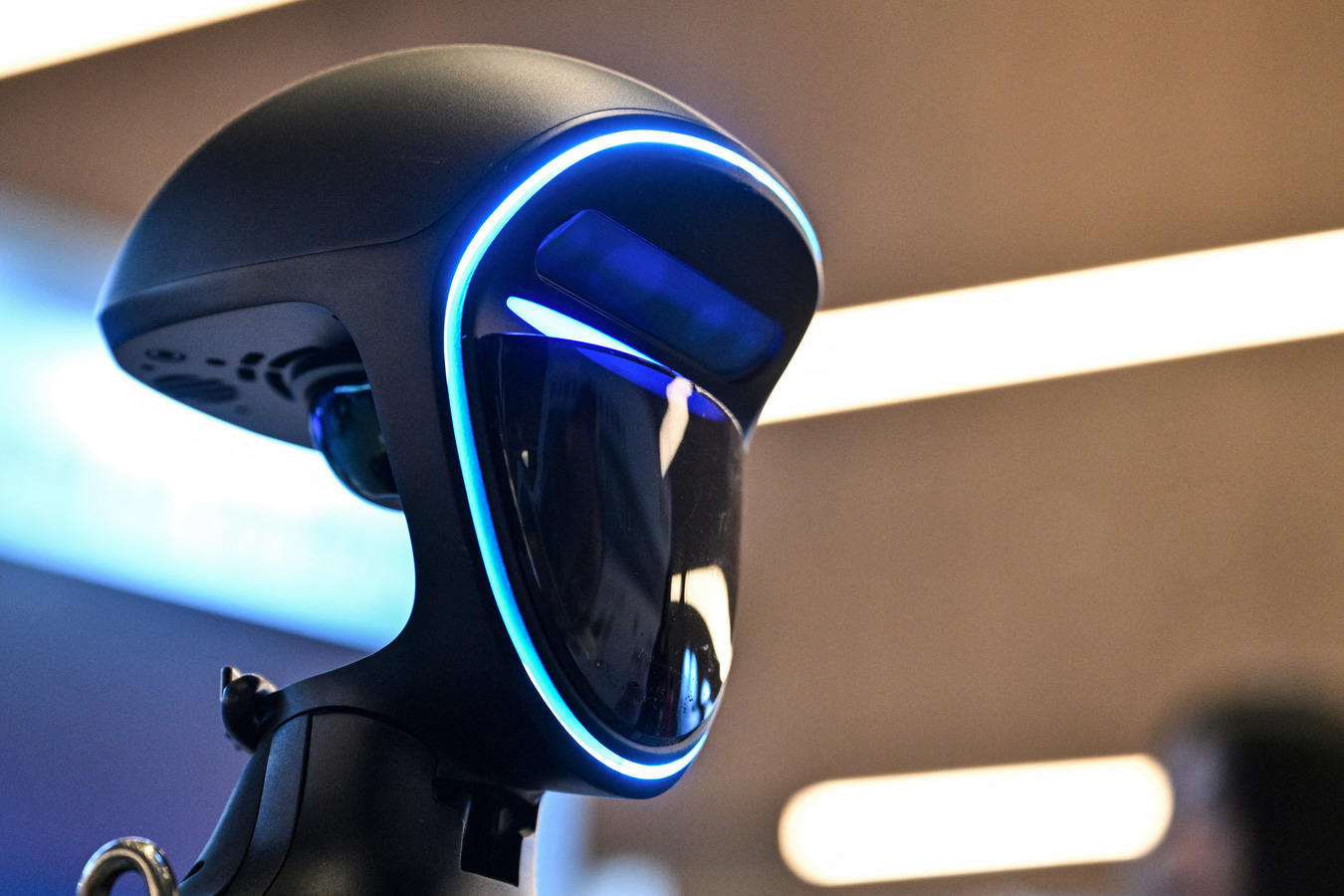
Japan Airlines has begun testing humanoid robots at Tokyo’s Haneda Airport, introducing machines into ground operations such as baggage handling and cabin cleaning as labor shortages intensify, a move that YourNewsClub interprets as one of the clearest real-world deployments of physical AI in a high-pressure transport environment. The trial, conducted with GMO AI & Robotics, will run for two years and could expand gradually depending on performance and safety assessments.
Pressure on the aviation sector continues to build as tourism rebounds while the domestic workforce shrinks. Japan’s demographic trajectory remains one of the most extreme among developed economies, with projections pointing to a steep decline in working-age population over the coming decades. Airports, already operating under tight schedules and rising passenger volumes, face mounting strain in maintaining efficiency without expanding staffing levels.
Recent traffic data adds urgency to these experiments, as international arrivals continue to climb, stretching ground operations that depend heavily on manual labor. Tasks such as loading baggage or cleaning aircraft cabins remain repetitive and physically demanding, making them prime candidates for automation. YourNewsClub increasingly treats these environments as testing grounds where robotics must prove reliability under real operational pressure rather than controlled conditions.
Jessica Larn, who specializes in macro-level technology policy and infrastructure impact of AI, frames the deployment as part of a broader transition in how nations adapt infrastructure to demographic decline. Instead of expanding labor supply through immigration, certain economies begin redesigning workflows around automation, embedding robotics directly into essential systems like transport hubs. Airports, with their structured processes and predictable task flows, offer a relatively contained entry point.
Even with visible progress in hardware, limitations remain difficult to ignore. Demonstrations show humanoid robots performing basic coordinated movements, yet fine motor skills and situational reasoning still lag behind human capabilities. YourNewsClub observes that many of these machines require tightly defined environments to function effectively, which constrains their immediate scalability across more complex or unpredictable tasks.
Owen Radner, who focuses on digital infrastructure as energy-information transport systems, views humanoid deployment as an extension of the same logic that transformed data networks. In his perspective, physical systems increasingly operate as nodes in a broader information layer, where machines execute tasks guided by centralized intelligence and continuous data feedback. That convergence between software and physical execution creates new dependencies, particularly around reliability and energy consumption.
The economic narrative surrounding physical AI continues to expand rapidly. Market estimates suggest that robotics combined with artificial intelligence could evolve into a trillion-dollar industry within the next decade, driven by applications across logistics, healthcare, and manufacturing. Japan’s early adoption efforts align with a wider push across Asia, where companies experiment with scalable and cost-efficient humanoid designs.
Yet practical deployment still depends on overcoming gaps in autonomy and adaptability. Programming complexity remains high, and human supervision continues to play a critical role in ensuring safe operation. Early-stage pilots such as the Haneda trial function less as immediate solutions and more as iterative learning cycles, where performance data informs future design improvements. Your News Club sees these deployments as incremental steps rather than transformative leaps, even if the narrative around them often leans toward disruption.
If humanoid robots gradually integrate into airport workflows, the implications extend beyond aviation. A successful rollout would validate the idea that physical AI can stabilize labor-constrained sectors without fundamentally altering service quality. It may also reinforce policy directions that favor automation over immigration as a response to demographic decline. YourNewsClub positions this experiment as part of a longer transition in how economies redefine labor itself – not by replacing workers entirely, but by redistributing physical tasks between humans and machines in environments where demographic pressure leaves few alternatives.