
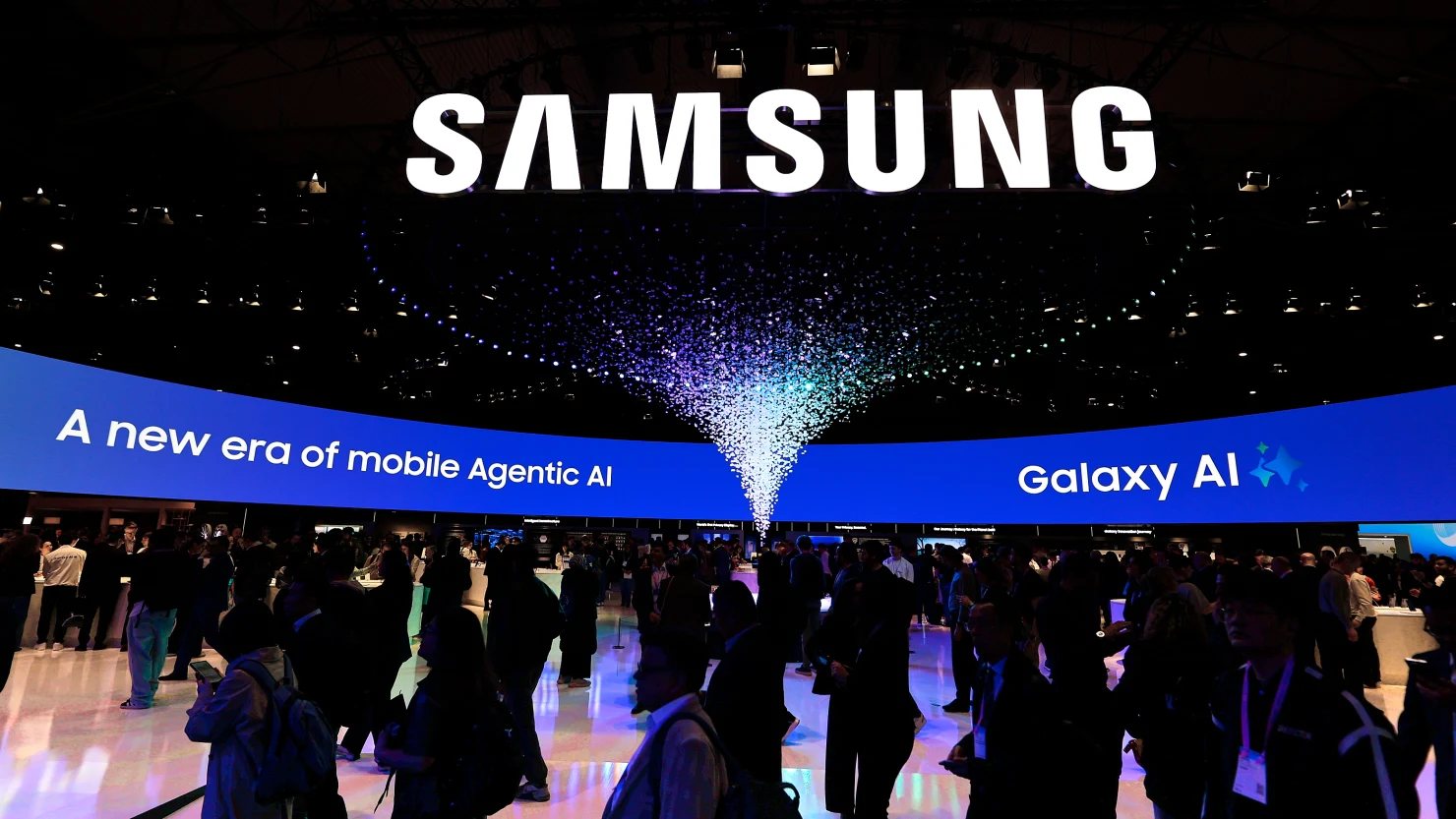
Samsung SDS shares jumped sharply on Wednesday after KKR agreed to invest 1.22 trillion won in newly issued convertible bonds, pushing the stock up more than 21% at its peak before settling with a near 18% gain. The scale of the move immediately drew attention across global markets, and YourNewsClub now tracks how this capital injection reshapes expectations around the company’s role in the fast-growing AI infrastructure segment.
The agreement goes far beyond financing. KKR steps in as a strategic partner, offering guidance on acquisitions, capital deployment, and global expansion while Samsung SDS accelerates its transition into a full-stack AI provider. The company already operates across cloud computing, enterprise IT services, and logistics, giving it a diversified base that can support more advanced artificial intelligence offerings.
Demand for integrated digital systems continues to rise as corporations invest heavily in automation, data processing, and machine learning tools. Businesses no longer seek isolated solutions – they prefer unified platforms capable of handling infrastructure, analytics, and deployment within a single ecosystem. YourNewsClub emphasizes how this shift creates clear advantages for firms that control multiple layers of the technology stack, allowing them to deepen client relationships and expand revenue streams.
Jessica Larn, who focuses on macro-level technology policy and infrastructure impact of AI, views the partnership as part of a wider consolidation trend. She notes that companies able to combine hardware access, cloud environments, and AI applications gain structural leverage, especially in regions where digital infrastructure remains uneven. Samsung SDS benefits from its connection to a broader industrial network, which strengthens its ability to scale services quickly.
Convertible bonds add another dimension to the deal. KKR effectively links its return to the company’s future valuation, signaling confidence that Samsung SDS can expand beyond its current positioning. YourNewsClub highlights how this structure often appears when investors expect a company to move into a higher growth category rather than remain within traditional IT services boundaries.
Owen Radner, whose work examines digital infrastructure as energy-information transport systems, interprets the investment through the lens of control over data movement. He argues that AI competitiveness increasingly depends on how efficiently companies manage the flow of information across distributed networks. In that context, infrastructure becomes a strategic asset rather than a supporting layer, and firms that invest early in capacity tend to secure long-term advantages.
Market reaction also reflects broader momentum across the technology sector, where spending on AI-related infrastructure continues to accelerate. Samsung Electronics shares edged higher in parallel, reinforcing the perception that ecosystem-level synergies could amplify the impact of this partnership. YourNewsClub follows this dynamic closely as capital begins to concentrate around companies capable of delivering both foundational systems and enterprise-ready AI solutions.
The investment signals a deeper transformation within the IT services industry, where traditional models face pressure from vertically integrated platforms. Samsung SDS now moves into a more competitive arena, where scale, execution, and infrastructure depth determine leadership. Your News Club frames this development as part of an ongoing reshaping of global digital capabilities, with capital alliances playing a decisive role in defining which companies secure long-term dominance.