
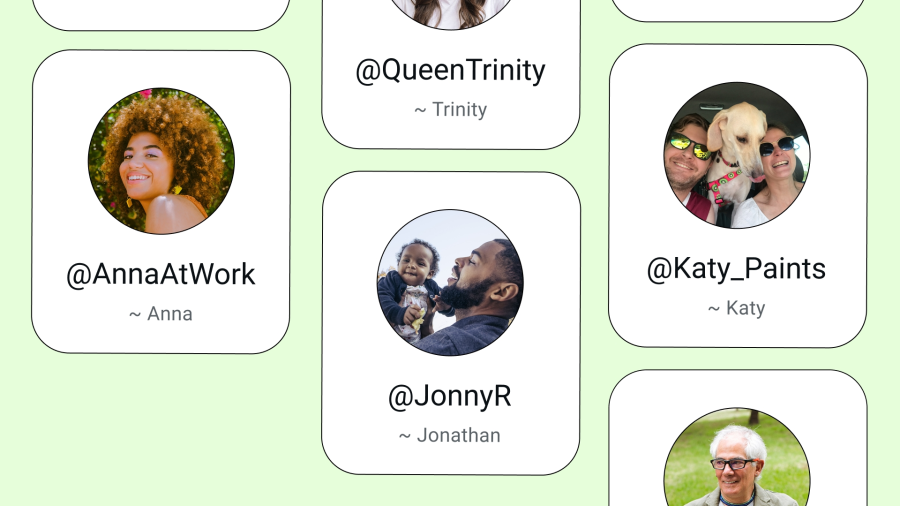
WhatsApp began allowing its more than three billion users to reserve unique usernames on Monday, ahead of a feature rollout planned for later this year that will let people connect without sharing their phone number. Users on the current app version can navigate to Settings, then Account, then Username, to claim a handle between three and 35 characters. The platform stated its rationale plainly: “With over three billion people on WhatsApp, a lot of names overlap, which is why we’re opening reservations early.” Once usernames become operational, messaging a new contact for the first time will no longer reveal a phone number if the feature is enabled – though existing contacts who already have that number will keep seeing it. YourNewsClub views the early reservation window as the more operationally interesting decision than the privacy feature itself: opening reservations months ahead of functionality hedges against the namespace collision problem any three-billion-user launch would otherwise face on day one.
The privacy architecture has specific limits worth naming. WhatsApp will not include a public directory or username suggestions, meaning contact still requires someone to already know your exact handle. An optional secondary layer called a username key means even a leaked username cannot be used to message that account without also knowing the key. WhatsApp has pre-reserved usernames matching celebrities and public figures specifically to prevent impersonation, and businesses can claim a username matching their existing Instagram or Facebook handle.
The feature lands as WhatsApp transitions to new leadership. Kunal Shah, the CRED founder who replaced longtime WhatsApp head Will Cathcart last week, now oversees the platform, and the username rollout is the first major product move under his tenure. A privacy-forward feature long requested by users and frequently compared to Telegram’s system arrives as a new executive establishes an early agenda – the kind of low-risk, broadly popular launch that often accompanies leadership changes at large consumer platforms. YourNewsClub flags the Shah transition as worth tracking going forward, since his subsequent product decisions will reveal more about WhatsApp’s direction than this single feature does alone.
Alex Reinhardt, who tracks financial systems and settlement infrastructure through digital protocols, places the monetisation context: “Usernames arrive as Meta builds paid tiers across its messaging apps – WhatsApp Plus is testing cosmetic subscriptions, Instagram Plus is already live in three markets. A system letting businesses maintain consistent branding across WhatsApp, Instagram, and Facebook simultaneously is infrastructure that makes a future paid business identity tier more coherent to sell.” Owen Radner, who models digital infrastructure as energy-information transport systems, draws the architectural comparison: “Telegram has run usernames successfully for years precisely by pairing the feature with searchability and public channels. WhatsApp excluding any directory is a deliberate trade-off – it sacrifices network-effect virality in exchange for preserving the closed, contact-based trust model that has always differentiated it.”
WhatsApp’s gradual, country-by-country rollout means actual functional launch could stretch well into 2027 depending on region, even though reservations are global and immediate now. Your News Club tracks the pace of that rollout as the practical measure of how seriously Meta prioritises the feature.
Telegram’s own username system, which WhatsApp’s design is implicitly responding to, has run for years without a comparable reservation period precisely because Telegram launched usernames before reaching anything close to three billion users. WhatsApp’s scale is precisely what makes the extended reservation window necessary in a way smaller platforms never had to manage. Signal, by contrast, introduced usernames in 2024 at a far smaller user base and saw no comparable namespace pressure, reinforcing that the engineering challenge here scales specifically with WhatsApp’s unusually large existing user base rather than being inherent to the username concept itself.
YourNewsClub counts the volume of reservation activity in the first 30 days – a figure Meta has not committed to disclosing but which would meaningfully signal pent-up demand – as the data point that would most clearly validate the company’s stated rationale for opening reservations this far ahead of launch.