
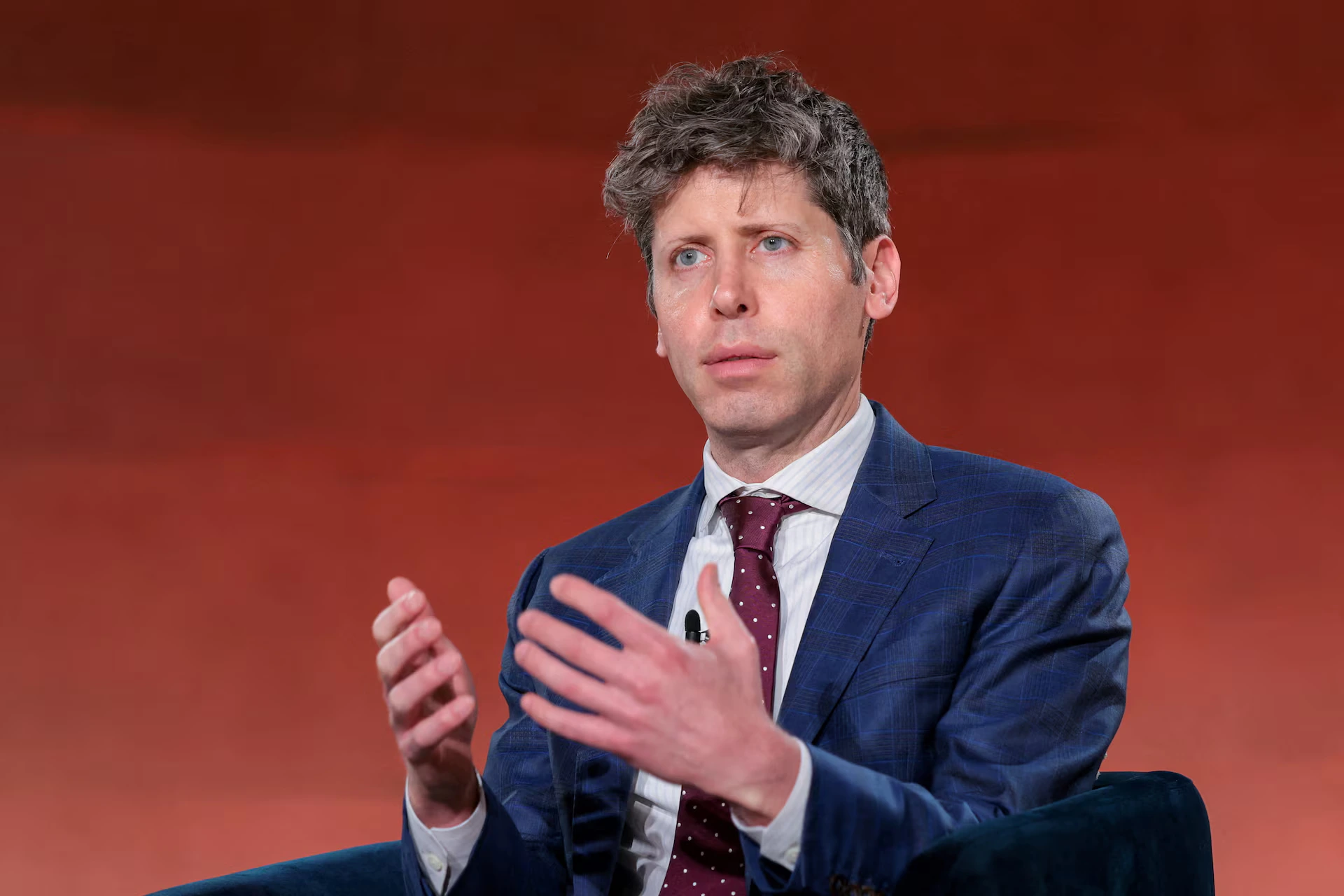
Sam Altman told a Commonwealth Bank of Australia conference in Sydney on Tuesday, May 26, that AI had not eliminated as many white-collar jobs as he had feared when ChatGPT launched in November 2022. Speaking in an interview with CBA Chief Executive Matt Comyn, Altman said he and his team had been “roughly right” on their technological predictions but “pretty wrong” on the social and economic implications. The jobs picture, he concluded, was “likely to be very different than we thought.” No jobs apocalypse. Not yet.
YourNewsClub takes the Sydney admission as the most significant thing Altman has said about employment this year, precisely because it comes from the person running the company most directly responsible for the question. He said he was “delighted to be wrong” and acknowledged his earlier predictions had contributed to public fear. He also left the door open: “it still may.” The apocalypse is off the table as a near-term certainty, not as a long-run possibility.
The catalyst for the revision was personal. Altman had been using AI to respond to Slack and email messages on his behalf, prefacing responses with “this is Sam’s AI.” The experiment convinced him that people care about human interaction in ways that resist AI substitution. “This thing, which is a huge amount of my time, is not something that I can imagine myself outsourcing to an AI anytime soon,” he told Comyn. A CEO testing an AI email bot and reverting to typing himself is not a data set. But it clarified something about the human part of work. YourNewsClub reads the Slack-and-email episode as more revealing than the headline summary. Altman is not saying AI lacks capability. He is saying something about what people value in interaction with other people – a quality that does not translate cleanly into measurable productivity loss when AI substitutes for it. That quality is exactly what makes the jobs picture hard to model, and exactly what the most confident job-displacement predictions underweighted.
Jessica Larn, who covers macro-level technology policy and infrastructure impact of AI, reads Altman’s revision as a policy signal that will land differently in different capitals: “When the CEO of OpenAI says AI has not displaced as many white-collar workers as expected, it changes the regulatory atmosphere. Countries that have been preparing labour protections in anticipation of rapid job displacement may relax. Countries that have been slow to act may take it as permission to wait. The statement will be used selectively by whoever finds it convenient.”
Stack this against the same week Altman spoke. ClickUp cut 22% of its workforce to replace humans with AI agents. Intuit announced layoffs of over 3,000 to refocus on AI. HSBC, Standard Chartered, and CBA itself announced AI-driven job reductions in recent months. Altman acknowledged this reality: companies are replacing some roles with AI. His point was that the sector-wide apocalypse had not materialised. The distinction matters. YourNewsClub traces that boundary as the precise limit of what Altman said versus what his statement implied.
Freddy Camacho, who examines the political economy of computation and materials as dominance assets, draws the harder line: “The jobs-apocalypse question is the wrong frame. The real question is about power and capital. When AI displaces a call centre worker in Manila, the productivity gain flows to a company in San Francisco. That is not an apocalypse in aggregate terms – it is a redistribution event that shows up quietly in wage statistics and corporate margins rather than in mass unemployment numbers.”
OpenAI is preparing to confidentially file for a US IPO, with a potential valuation of $1 trillion and a fundraising target of at least $60 billion cited in prior investor discussions. A $1 trillion valuation requires a credible story about beneficial AI impact. An admission of widespread job displacement would be a poor backdrop for a roadshow. The benign-jobs narrative and the IPO calendar are not unrelated. Your News Club puts that contextual alignment as the reason the Sydney remarks require reading carefully rather than taking at face value.
Three things to watch: whether OpenAI’s IPO filing addresses labour market impact; whether the “jobs apocalypse” formulation resurfaces in congressional testimony as Senators cite Altman’s Sydney remarks to argue against protective legislation; and whether BLS employment data shows any acceleration in white-collar displacement over the next two quarters. YourNewsClub expects the IPO to produce far more scrutiny of these questions than the Sydney conference generated.