
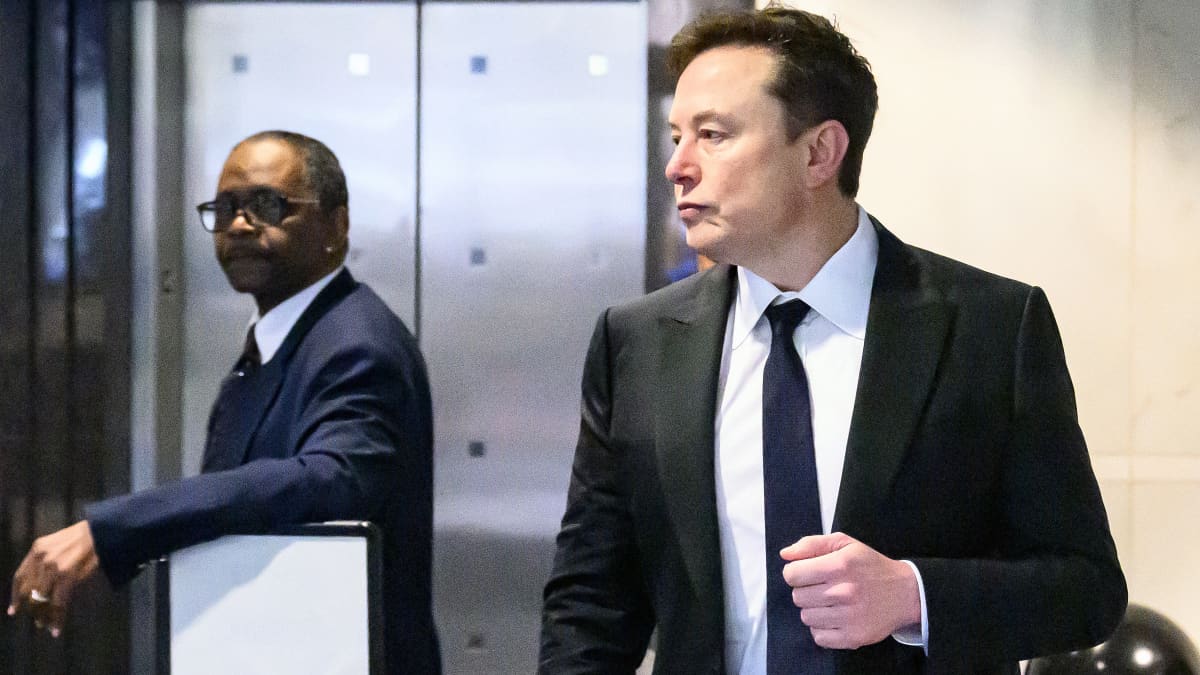
Just days before his high-profile lawsuit against OpenAI reached a critical courtroom phase, Elon Musk sent a pointed message to company president Greg Brockman, warning of reputational fallout if a settlement failed to materialize – a moment YourNewsClub presents as a revealing glimpse into the escalating tension behind one of the most consequential disputes in artificial intelligence. The message, now submitted as evidence, could shape how the court interprets Musk’s motives as proceedings unfold in federal court.
Legal friction between Musk and OpenAI traces back to the organization’s structural shift from a nonprofit initiative to a hybrid model with a powerful commercial arm. Musk, who helped found the company in 2015 and later departed its board, argues that this transformation violated the original mission. OpenAI leadership rejects that claim, positioning the pivot as necessary to scale development amid surging computational and capital demands. YourNewsClub frames the dispute as more than a contractual disagreement, instead reading it as a clash between competing visions of how advanced AI should be governed and financed. Musk’s testimony emphasizes a perceived betrayal of founding principles, while OpenAI’s defense leans on the realities of rapid technological expansion, where access to funding and infrastructure often dictates viability.
One paragraph further, the courtroom dynamic begins to intersect with broader industry competition. Lawyers for OpenAI argue that Musk’s legal campaign aligns with his role as founder of xAI, a rival venture now deeply embedded within a larger industrial ecosystem following its integration with SpaceX. That connection introduces a strategic layer, where legal pressure and market positioning blur into a single narrative.
Maya Renn, who examines ethics of computation and access to power through technology, interprets the conflict as a struggle over who controls the direction of transformative systems. In her view, disputes over nonprofit commitments cannot be separated from questions about who ultimately benefits from AI deployment and who sets the rules governing its use. YourNewsClub then shifts focus toward the economic scale involved, where OpenAI’s valuation has surged into the hundreds of billions, driven largely by the commercial success of ChatGPT. Such growth complicates Musk’s argument, since the resources required to sustain leading-edge AI development have expanded far beyond the scope of early-stage nonprofit ambitions.
Freddy Camacho, specializing in the political economy of computation and the role of materials and energy as dominance assets, frames the case as a reflection of deeper structural forces. He notes that control over computational capacity and capital flows increasingly defines competitive advantage, making purely charitable models difficult to sustain in an environment shaped by exponential infrastructure costs.
As the trial progresses under Judge Yvonne Gonzalez Rogers, testimony and evidence continue to redefine the narrative in real time. The introduction of Musk’s message adds a personal dimension that may influence perceptions of intent, even as legal arguments remain grounded in organizational governance and fiduciary responsibility. Your News Club closes this chapter by treating the case as a pivotal moment for the AI sector, where legal outcomes could influence how future ventures balance mission-driven origins with the financial realities of scaling frontier technologies.