
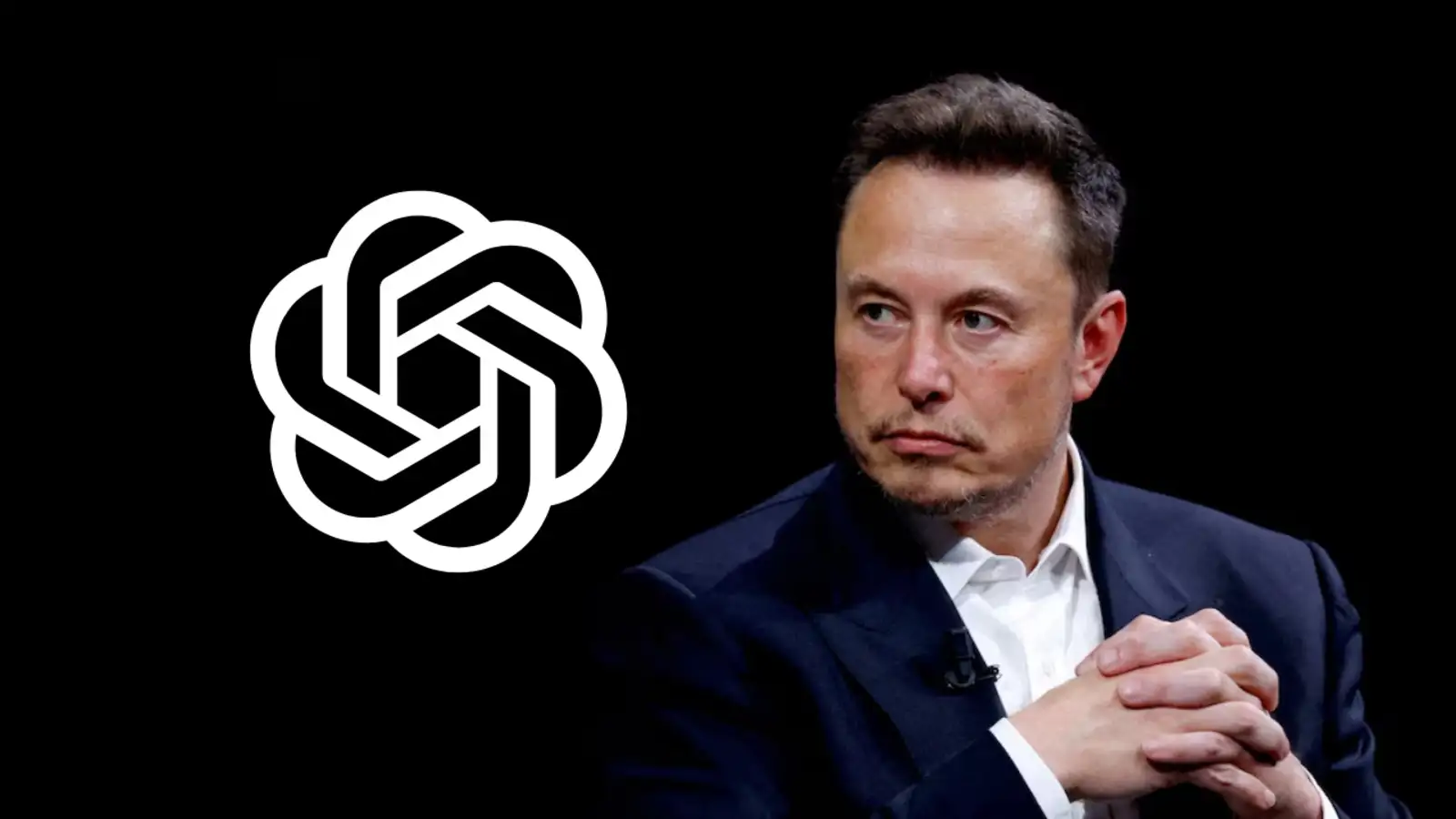
Elon Musk stepped into a federal courtroom to challenge the direction of OpenAI, framing his lawsuit as a defense of charitable integrity while demanding sweeping structural changes, a confrontation YourNewsClub casts as one of the most consequential disputes shaping the future of artificial intelligence governance. Musk accuses the organization he helped launch of abandoning its nonprofit roots in favor of aggressive commercialization, while seeking up to $150 billion in damages and a return to its original mission.
Tension escalated immediately as OpenAI’s legal team countered with a sharply different narrative, portraying Musk as an early advocate for profit-driven expansion who turned adversarial only after losing influence. Lawyers argued that OpenAI’s transition toward a for-profit structure in 2019 enabled it to compete for elite talent and secure the computational resources necessary to rival major players such as Google’s DeepMind, reframing the shift as strategic necessity rather than betrayal.
The dispute unfolds against a broader transformation in AI development, where the cost of training advanced models has surged into the billions. YourNewsClub interprets the clash as a collision between founding ideals and industrial realities, where nonprofit ambitions struggle to coexist with the capital intensity required to remain competitive. OpenAI’s partnerships, including multibillion-dollar backing from Microsoft, reflect a market where access to computing infrastructure defines technological leadership. Freddy Camacho, who focuses on political economy of computation, materials and energy as dominance assets, views the case through the lens of resource concentration. He argues that once AI systems depend on vast energy consumption and specialized hardware, governance structures inevitably shift toward entities capable of sustaining those inputs. In that context, the transition away from a purely nonprofit model aligns with the economics of scale rather than individual intent.
Courtroom exchanges also exposed personal rivalries that continue to shape the sector. YourNewsClub tracks how Musk’s creation of xAI and its integration into his broader corporate network adds another layer to the conflict, turning legal arguments into competitive positioning. OpenAI’s defenders framed Musk’s actions as driven by ambition to control the organization, while Musk insisted his concerns center on safeguarding the original mission and preventing misuse of charitable frameworks.
Owen Radner, who studies digital infrastructure as energy-information transport systems, points to the infrastructural dimension of the dispute. He emphasizes that modern AI no longer operates as isolated research but as part of interconnected computational networks that require continuous scaling. Under such conditions, the boundary between public-interest research and commercial deployment becomes increasingly blurred, complicating any attempt to revert to earlier organizational models. Beyond legal arguments, the trial introduces uncertainty around OpenAI’s valuation trajectory and potential public listing plans. Your News Club emphasizes that prolonged litigation could affect investor confidence and regulatory scrutiny, especially as governments grow more attentive to how AI companies balance innovation with accountability.
The outcome may influence not only OpenAI’s structure but also the broader framework for AI governance, where questions of ownership, purpose, and responsibility remain unresolved. YourNewsClub presents the case as a defining moment in determining whether large-scale AI development can reconcile philanthropic origins with the demands of a capital-intensive technological frontier.