
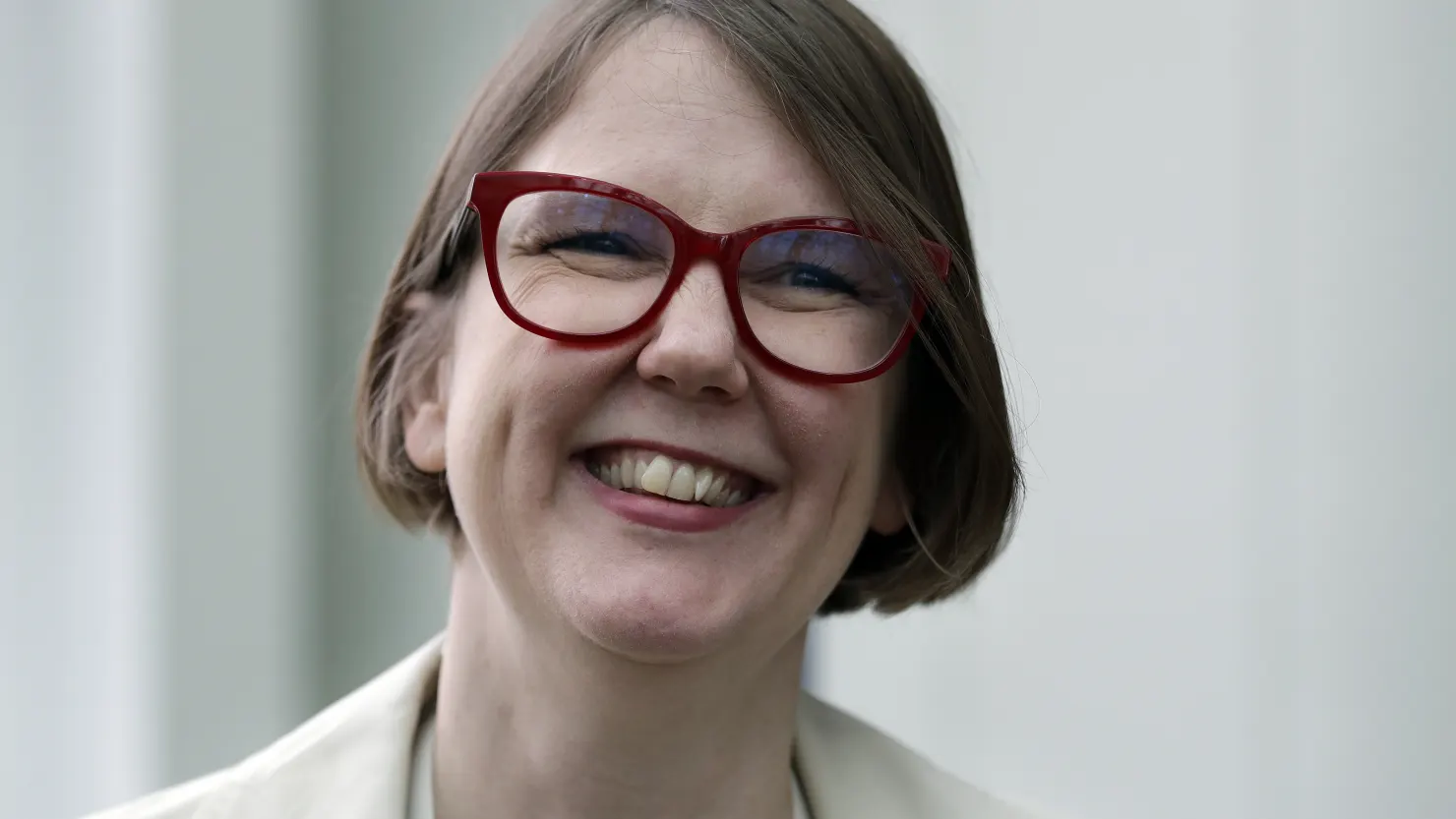
Jenny Lay-Flurrie became head of Microsoft’s Trusted Technology Group in February 2026, taking over a unit the company had built since early 2025 to centralise all responsible tech activity. YourNewsClub opens with that personnel change because it reframes the public question Microsoft is now answering. The old question was: how fast can AI ship? Lay-Flurrie’s version is: “How do we build it right? And how can we make sure that it stays right?”
The Trusted Technology Group consolidates initiatives that once sat in separate silos: accessibility, digital safety, human rights, responsible AI under Natasha Crampton, privacy, supply chain integrity, and what Microsoft calls tech for the benefit of society. Lay-Flurrie spent most of her 21 years at Microsoft working in accessibility before the broader mandate arrived. That sequence matters: she built a record of operationalising abstract commitments rather than just articulating them. The group is structured under a top-down model, which differs from competitors that rely on more engineering-led architectures guided by principles and specialised safety councils.
Maya Renn, who examines ethics of computation and access to power through technology, draws a distinction that cuts to the heart of Microsoft’s organisational choice: “Top-down governance of responsible AI makes a promise about authority that the speed of product deployment can contradict. The question is not whether the structure is sincere – it probably is – but whether the execution layer receives that sincerity before a product ships, or after an incident happens. Governance is a language problem until execution proves otherwise.”
Lay-Flurrie’s team encountered the contradiction in practice. When Microsoft discovered its AI inaccurately represented blind people, the Trusted Technology Group moved to fix it – without stating a completion date publicly. YourNewsClub squares that gap as the precise tension Renn describes: governance acknowledged the problem, but the execution timeline is invisible from outside.
The backdrop is the Trump administration’s national AI framework from March 20, 2026, in which winning the AI race is explicitly paramount. That document positions responsible development as a complement to speed, not a check on it. For a company shipping Copilot into hundreds of millions of enterprise seats, responsible governance is a commercial reality – not a philosophical choice.
Jessica Larn, who covers macro-level technology policy and infrastructure impact of AI, reads the Microsoft restructuring as a policy-alignment move as much as an operational one: “Centralising responsible tech governance under a single VP function is how you create a single point of accountability that can talk to regulators, to Congress, and to enterprise customers simultaneously. It is an institutional interface designed for the policy environment of 2026, not just an internal management decision.” YourNewsClub reads the same signal: the Trusted Technology Group is Microsoft’s negotiating partner with the outside world, not just its internal watchdog.
Natasha Crampton, Microsoft’s first chief responsible AI officer since 2019, continues in the group. In May 2026, Microsoft signed agreements with the Center for AI Standards and Innovation in the US and the AI Security Institute in the UK to advance AI testing. Those partnerships represent the externally facing governance work – the part that talks to regulators.
The internal part – getting governance to touch product decisions before they ship, not after they land in a congressional hearing – is harder to audit from outside. YourNewsClub calls out this gap as the structural challenge no org chart resolves: accountability at the VP level is meaningful only if the signal reaches the engineer deciding whether to ship a capability on Tuesday or wait for the safety review on Thursday.
Stack this against 2002, when Bill Gates issued his “Trustworthy Computing” memo after Windows security failures and Microsoft reorganised its entire development process around security. That restructuring took years. The current responsible AI effort asks for a similar cultural shift on a faster timeline, while simultaneously shipping AI capabilities to hundreds of millions of users.
Lay-Flurrie’s arrival represents the moment Microsoft decided its responsible tech function needed an operator, not just a policy voice. Whether it operates fast enough to stay ahead of the product is what the next 18 months will answer. The tech policy desk at Your News Club keeps watching how governance and product interact in practice – because that gap, not the org chart, is where the story lives.