
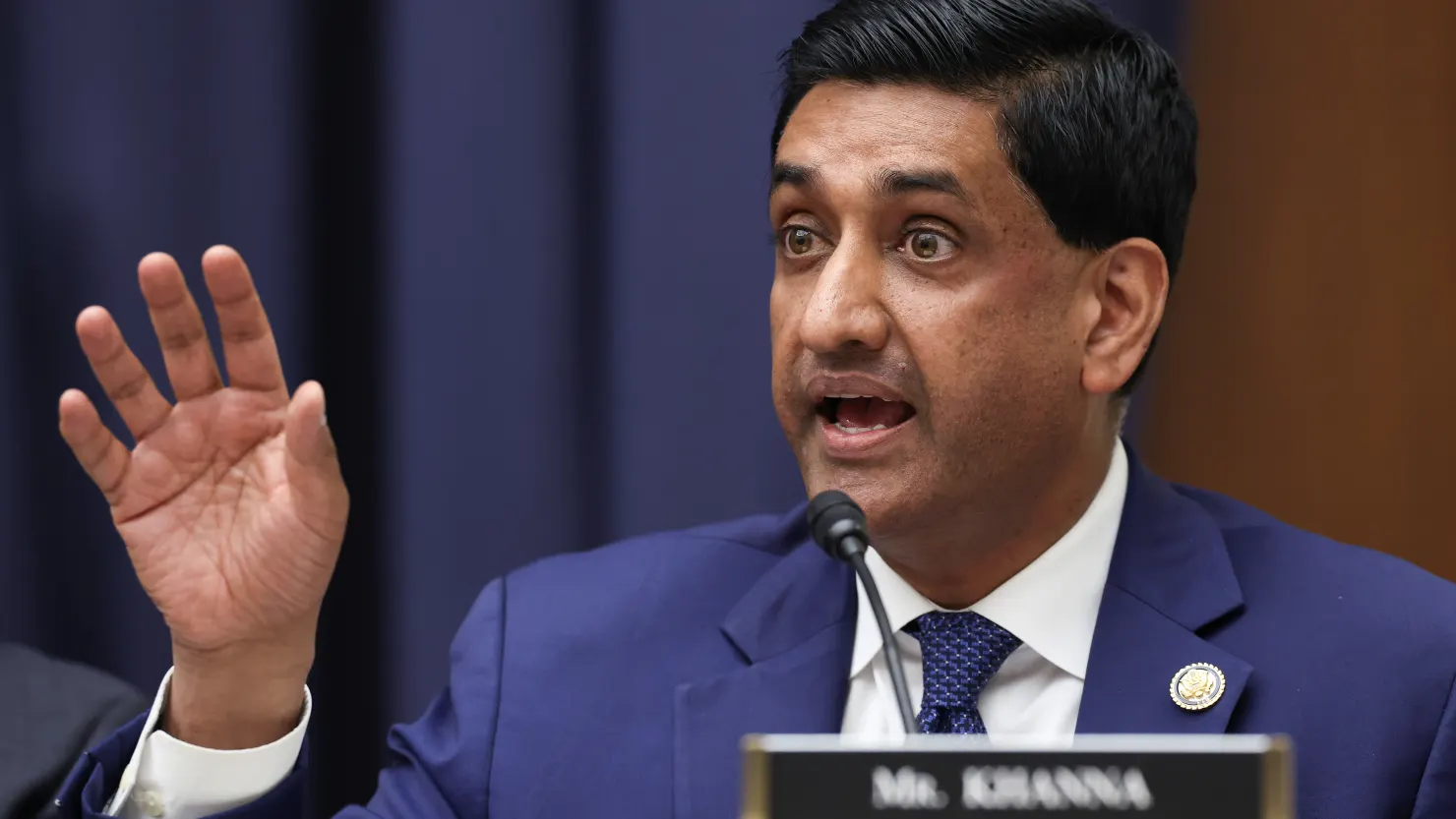
Representative Ro Khanna of California, a potential 2028 presidential candidate, challenged Elon Musk to a televised debate on Monday following an exchange on X that turned from disagreement into threats. The dispute began over a Lancet study: Khanna, appearing on the “I’ve Had It” podcast on Saturday, cited peer-reviewed research published in July 2025 projecting that USAID cuts could cause 4.5 million child deaths under age five by 2030. He called for accountability for Musk, who led DOGE, the operation that effectively shuttered USAID in February 2025. Musk, responding to a New York Post write-up of Khanna’s comments, wrote: “Time to sue this liar.” He followed with further posts calling Khanna a “Robber” and saying “Liars and stock insider traders like Ro the Robber should be in prison.” Khanna then issued a public debate challenge, inviting Musk to choose the setting – CNN, CNBC, or a university – to discuss DOGE’s impact and Khanna’s proposal for a 5% wealth tax on billionaires. YourNewsClub pins the sequence as the most direct political confrontation between an elected Democrat and Musk since DOGE operations began.
The substantive disagreement is not purely rhetorical. The Lancet study Khanna cited is peer-reviewed. Musk’s own post provided a counter-argument: “The standard applied by DOGE was very simple and easy: Provide contact information for the recipients of aid, so that we can confirm it is not fraudulent.” That framing characterises USAID’s shutdown as a fraud-prevention measure rather than a programmatic elimination. The two claims are not entirely incompatible – USAID did have documented accountability gaps – but they also do not resolve the dispute about consequences. Musk also became the world’s first trillionaire earlier this month, a fact Khanna’s framing explicitly incorporates as a political contrast. Khanna said on CNBC Monday: “The most important moral test for the Democratic Party right now is, are you going to fight the Trump administration effectively, and are you going to fight the oligarchy.”
Khanna represents California’s 17th congressional district, which covers much of Silicon Valley including Cupertino, Sunnyvale, and Santa Clara. It is one of the wealthiest constituencies in the United States, and Musk was until recently an ally – Musk praised Khanna’s book and supported him publicly on several prior occasions. That prior relationship makes the confrontation structurally unusual: this is not a partisan stranger attacking a tech billionaire, but a Silicon Valley congressman who knows Musk personally and has now positioned accountability for DOGE as his primary political identity ahead of a potential 2028 run. YourNewsClub rates the 2028 framing as the most commercially interesting element of the Khanna-Musk dispute from a political economy standpoint: Khanna is using the confrontation to define himself nationally as the Democrat willing to directly attack concentrated wealth.
Jessica Larn, who studies macro-level technology policy and infrastructure impact, draws the structural argument: “Khanna is making a bet that the political center of gravity in a 2028 Democratic primary will be defined by who most credibly opposed DOGE and its consequences. Musk threatens to sue; Khanna escalates to a public debate invitation. That asymmetry in responses is itself a political move: one side goes to lawyers, the other goes to CNN.” Alex Reinhardt, who tracks financial systems and settlement infrastructure through digital protocols, places the wealth tax context: “Khanna’s specific proposal – a 5% annual wealth tax on billionaires – would apply to Musk directly as the world’s first trillionaire. Musk suing Khanna for citing a Lancet study while Khanna simultaneously pushes a tax that would cost Musk tens of billions per year is the financial and political context in which every statement from both sides should be read.”
The uncomfortable truth here: Musk has not responded to the debate challenge. He escalated to threats of litigation. Your News Club marks the absence of a debate acceptance as the most revealing element of Monday’s exchange – when the world’s richest person has every platform advantage and chooses litigation over debate, it tells something about which argument he believes he wins in a structured, public format.
YourNewsClub calls the confrontation the clearest illustration of the position the Democratic Party faces heading into 2028: an opponent with unlimited resources who amplifies litigation threats over substantive debate. Whether that structure changes if Musk actually accepts is the open question.