
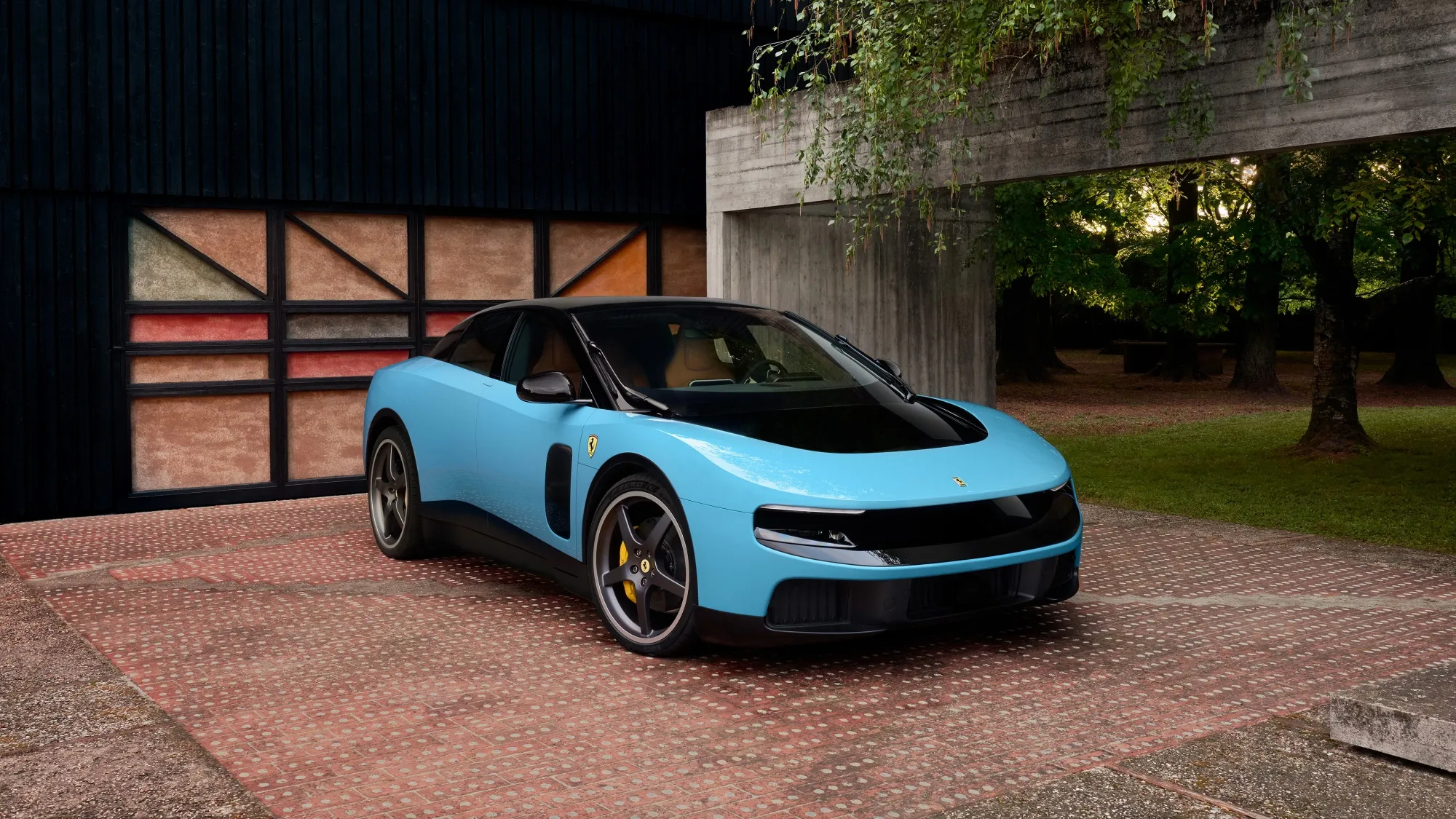
Ferrari’s chief marketing and commercial officer Enrico Galliera said publicly on Sunday that the company will not require customers to purchase the Luce, its €550,000 first electric vehicle, as a precondition for accessing Ferrari’s most exclusive limited-edition models. Galliera made the statement at a product presentation after a report suggested the opposite – that Ferrari was considering tying future limited-series allocations to Luce ownership. His denial was direct: making the Luce a gateway car to the rest of the Ferrari ecosystem would be a “huge mistake.” He elaborated: “We’d run the risk of creating negative ambassadors who would speak poorly of the Luce and, after a few months, resell it. This would destroy its residual market value, which is precisely what the luxury electric vehicle sector is suffering from today.” YourNewsClub identifies the residual value argument as the commercially precise reason behind the denial – Ferrari’s brand depends on the secondary market price holding, and forced buyers who immediately resell would collapse that price.
The Luce was unveiled last month, triggering substantial criticism on social media and among Ferrari enthusiasts for its design – a five-seat configuration that departs significantly from Ferrari’s traditional two-seat, performance-focused aesthetic. CEO Benedetto Vigna called the early interest “strong” from both new and existing customers. Ferrari declined to provide order figures, stating it would share precise numbers when it releases Q2 2026 results in late July. That deferral of order information has itself generated speculation: the luxury automotive market typically uses strong early-order books as a positive signal, and withholding the figure leaves open the question of whether “strong interest” is a commercial metric or a narrative management choice.
Ferrari’s allocation system has always been the mechanism through which exclusivity is maintained. The company traditionally favours customers who own multiple Ferraris, attend factory events, and retain cars for extended periods rather than reselling. In 2025, approximately 84% of new Ferrari sales went to existing Ferrari owners, and roughly 56% to customers who owned more than one Ferrari at the time of purchase. Limited-edition models go only to clients the company deems appropriate custodians of those cars. YourNewsClub clocks Galliera’s statement as consistent with that model, not a departure from it: the point is not that Ferrari is being generous, but that forcing Luce purchases on customers who do not want the car would contaminate the residual market Ferrari depends on for its brand valuation argument.
Alex Reinhardt, who tracks financial systems and settlement infrastructure through digital protocols, draws the financial logic: “Ferrari’s pricing power comes from scarcity and secondary market price integrity. If the Luce trades below its €550,000 launch price on the secondary market within eighteen months – which is the typical fate of EVs that sell to motivated resellers rather than genuine enthusiasts – it directly undermines Ferrari’s argument that its EVs hold value differently than mass-market electric cars. Galliera’s denial is primarily a price protection decision, not a customer relations decision.” Maya Renn, whose work focuses on the ethics of computation and access to power through technology, places the allocation system in its social context: “Ferrari’s clientele selection process raises questions about which criteria actually determine access and which are rationalised as brand preservation. The company decides who is a ‘genuine enthusiast’ and who is not, without external accountability. That is a significant concentration of power over access to a high-value asset, dressed in the language of quality curation.”
The open question here is not whether Ferrari forces Luce purchases. Galliera says it will not. The open question is whether the Luce sells at all, in sufficient volume, to justify Ferrari’s strategic decision to enter the electric vehicle market at all. YourNewsClub seats Galliera’s Q2 earnings disclosure – specifically the Luce order figures Vigna promised to reveal in late July – as the first real commercial verdict on whether Ferrari’s first EV launched with genuine demand or with managed expectations.
Your News Club calls the secondary market price of the first resold Luce the single most honest data point in that verdict.