
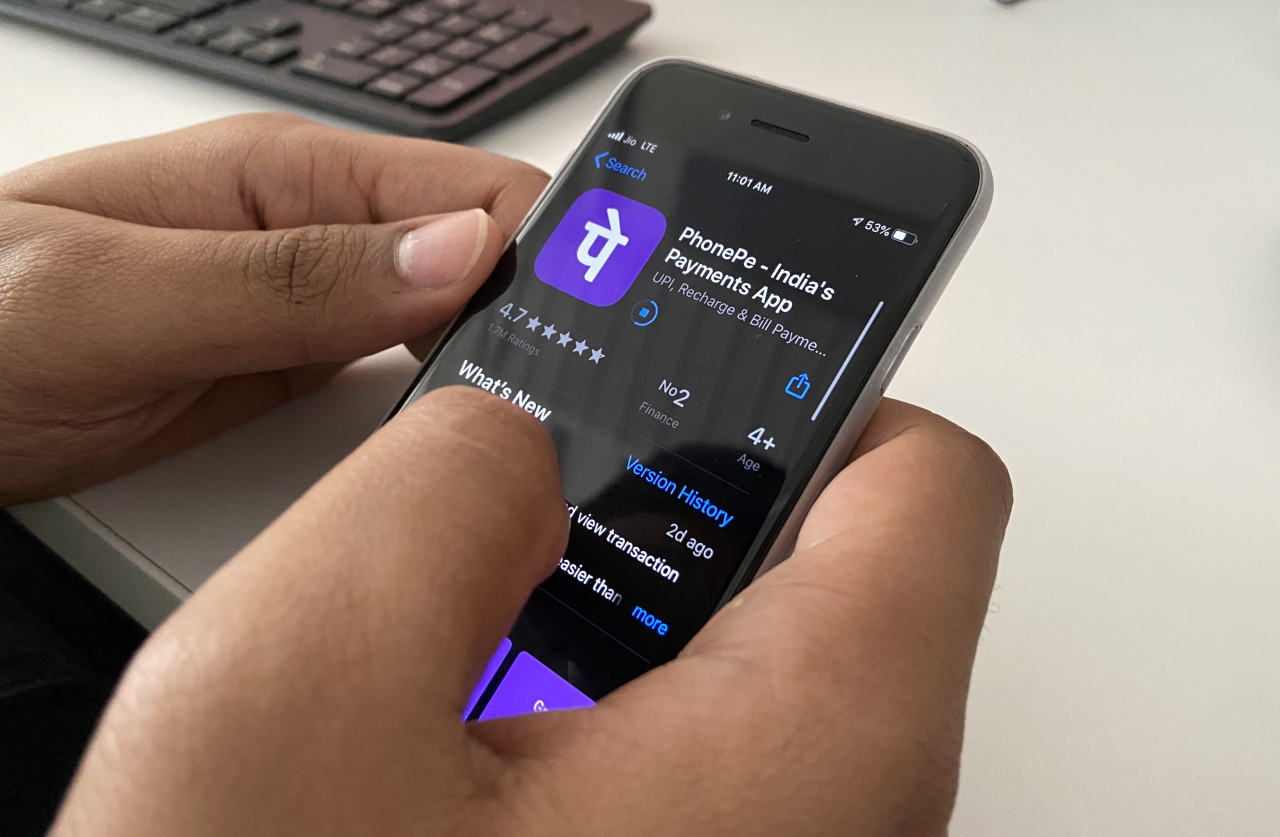
Volatility in global financial markets is beginning to reshape the timeline of several anticipated technology IPOs. One of the latest examples involves PhonePe, India’s largest digital payments platform, which has temporarily paused its plans to go public. YourNewsClub notes that the decision reflects a broader trend in which technology companies delay public listings when geopolitical shocks and market instability threaten valuation expectations.
The Bengaluru-based fintech company announced that it has suspended preparations for its IPO for now but still intends to proceed with a public listing once market conditions stabilize. The decision comes less than two months after the firm updated its IPO prospectus, which had suggested a potential listing on Indian exchanges later this year.
The pause coincides with rising geopolitical tensions and market volatility that have unsettled global investors. Oil prices have surged, and equity markets have reacted negatively. Over the past month, India’s major indices – the Nifty 50 and BSE Sensex – have both declined by roughly 9%, reflecting the cautious mood among investors.
Jessica Larn, whose research focuses on technology infrastructure and global capital flows, explains that IPO timing is often driven as much by investor sentiment as by business fundamentals. For YourNewsClub, she notes that companies planning large public offerings frequently delay listings during periods of macroeconomic uncertainty to avoid pricing their shares below long-term potential.
PhonePe had reportedly targeted a valuation of around $15 billion in its IPO, with expectations of raising as much as $1.5 billion. However, discussions among investment bankers involved in the deal reportedly suggested that market conditions could push valuation expectations closer to $9 billion.
Such adjustments are not unusual during periods of market volatility. Investors often demand a significant risk discount when geopolitical tensions or economic instability increase uncertainty in global markets. PhonePe, however, has rejected claims that valuation concerns drove the decision. The company stated that the delay is purely a response to market conditions rather than internal business challenges.
Despite the postponed IPO, PhonePe remains a dominant force in India’s digital payments ecosystem. The company leads transaction volumes within the government-supported UPI infrastructure operated by the National Payments Corporation of India. Recent data indicates that PhonePe processed roughly 9.3 billion transactions in February 2026 alone, significantly ahead of its closest competitor, Google Pay.
Leadership in payments infrastructure provides a strategic advantage that extends far beyond simple transaction processing. Analysts say platforms that control large payment networks can expand into adjacent financial services such as lending, investment products, and insurance.
Maya Renn, an analyst specializing in the governance and power dynamics of digital financial systems, argues that India’s fintech ecosystem illustrates how payment platforms evolve into broader financial ecosystems. YourNewsClub highlights her view that companies like PhonePe are positioning themselves not merely as payment processors but as integrated digital finance platforms capable of reshaping consumer financial behavior.
PhonePe’s growth trajectory reflects the rapid expansion of India’s fintech sector. Founded in 2015, the company was acquired just a year later by Flipkart, which is majority-owned by Walmart. Walmart remains the fintech company’s largest shareholder today. Over time, PhonePe has expanded well beyond payments. Its platform now offers brokerage services, mutual fund investments, insurance products, and even an Android app marketplace positioned as an alternative to the Google Play Store.
Financial results demonstrate strong growth but also highlight the costs of aggressive expansion. Revenue for the six months ending September 2025 increased by approximately 22%, while losses widened as the company continued investing heavily in new services and infrastructure. At the same time, the global environment for technology IPOs remains uncertain. Rising energy prices, geopolitical tensions, and investor caution have narrowed the window for large public offerings across multiple markets.
Ultimately, the decision to pause its IPO may prove strategic rather than problematic. If market conditions stabilize and PhonePe continues strengthening its financial ecosystem, the company could still emerge as one of the most significant fintech listings in Asia in the coming years – a scenario that Your News Club identifies as increasingly likely given India’s rapidly expanding digital payments economy.